The main purpose of this blog will be to track planetary extreme, or record temperatures related to climate change. Any reports I see of ETs will be listed below the main topic of the day. I’ll refer to extreme or record temperatures as ETs (not extraterrestrials).😜
Main Topic: Summary of Trump’s First Year of Anti-Environmentalism
Dear Diary. Yesterday we delved into an outline that Bill McKibben offered as a blueprint to start getting us out of the hole that Trump continues to dig on our climate during 2026. Today let’s see just exactly what the state of that hole is at the end of 2025.
The New York Time’s list of items that have made this environmental hole wider and deeper is very long. Trump has been a nasty evil worker, shoveling nonstop to ruin our environment:
How Trump’s First Year Reshaped U.S. Energy and Climate Policy – The New York Times
How Trump’s First Year Reshaped U.S. Energy and Climate Policy
The sweeping changes have affected everything from coal plant retirements to international diplomacy over shipping emissions.
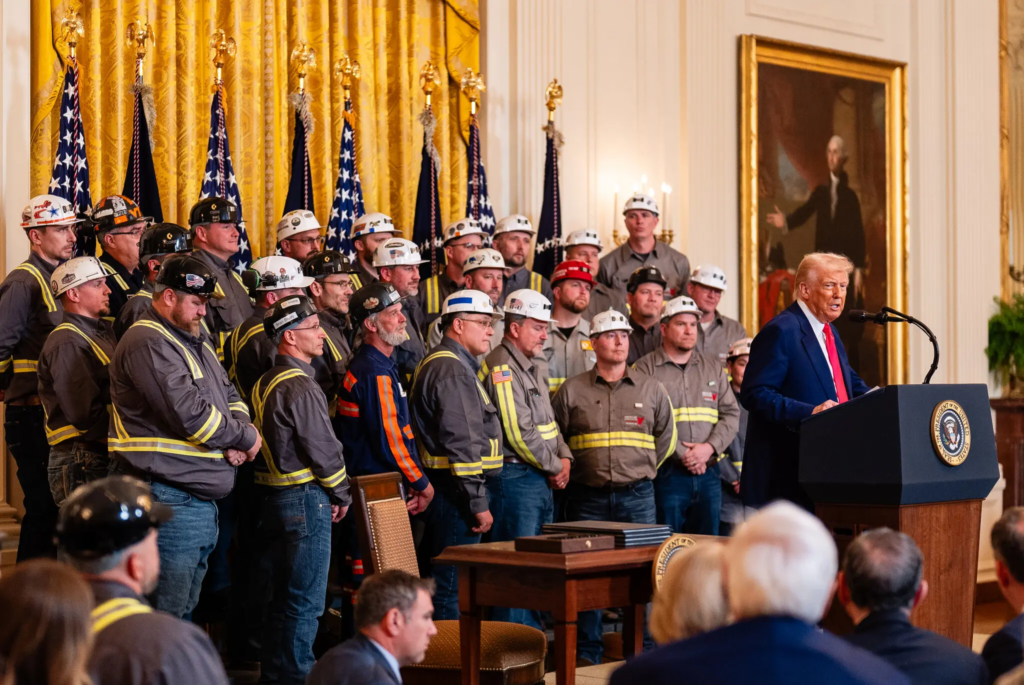
An “Unleashing American Energy” executive order signing at the White House in April.Credit…Eric Lee/The New York Times


By Brad Plumer Lisa FriedmanMaxine Joselow and Scott Dance
Reporting from Washington
Dec. 22, 2025
In his first year back in office, President Trump has rapidly reshaped America’s climate and energy landscape. His administration dismantled a wide range of climate and pollution regulations, began to overhaul how the federal government responds to disasters and gave a boost to fossil fuel production and nuclear power while attempting to curtail the growth of wind and solar energy.
The changes have reverberated far beyond the United States, as the administration has pressured other countries to abandon their own efforts to tackle global warming. Here’s a look at some of the biggest changes in U.S. energy and climate policy in 2025:
Environmental rules
Over the past year, the Environmental Protection Agency has moved to delay, ease or eliminate more than a dozen regulations governing air pollution, water contamination and planet-warming greenhouse gas emissions, a New York Times analysis found.
The Times analysis, based on research from Harvard Law School, Columbia Law School and other sources, counted four proposed rollbacks of air pollution rules. In June, for instance, the E.P.A. moved to repeal a Biden-era regulation that required coal-burning power plants to cut emissions of mercury, a neurotoxin.
Major E.P.A. rollbacks under Trump
Air pollution
June 11, 2025 |
Proposed Rule
Repeal of limits on mercury and other toxic pollutants from coal-fueled power plants
Aug. 25, 2025 |
Proposed Rule
Overrule of California’s emissions limits for trucks registered out of state
Sept. 9, 2025 |
Guidance
Allowing more kinds of construction activities without getting permits under the Clean Air Act
Dec. 3, 2025 |
Final rule
Extension of deadlines for iron and steel mills to reduce hazardous air pollutants
Greenhouse gas emissions
June 11, 2025 |
Proposed rule
Repeal of limits on greenhouse gas emissions at coal- and gas-fueled power plants
July 29, 2025 |
Proposed rule
Rescission of the 2009 endangerment finding on greenhouse gases and the resulting limits on emissions from cars
Nov. 26, 2025 |
Final rule
Delay of requirements for oil and gas companies to cut methane emissions
Sept. 12, 2025 |
Proposed rule
End of requirements for polluting facilities to disclose their annual greenhouse gas emissions
Sept. 30, 2025 |
Proposed rule
Relaxation of rules on climate superpollutants known as hydrofluorocarbons, or HFCs
Water pollution
May 14, 2025 |
Agency announcement
Delay of deadlines for water utilities to remove two types of “forever chemicals” from drinking water and rollback of limits on four related chemicals
July 17, 2025 |
Final rule
Delay of deadlines for electric utilities to clean up toxic coal ash landfills
Oct. 2, 2025 |
Proposed rule
Extension of deadlines for steam power plants to curb releases of wastewater
Nov. 17, 2025 |
Proposed rule
Removal of protections from millions of acres of wetlands and streams
Nov. 28, 2025 |
Proposed rule
Extension of deadlines for coal facilities to close large unlined coal ash ponds
Analysis of E.P.A. rollbacks by The New York Times
Five proposed rollbacks involved water-quality regulations. Last month, the E.P.A. said it would strip federal protections from millions of acres of wetlands and streams, a move made easier by a recent Supreme Court ruling. The agency also intends to give utilities an additional year to begin cleaning up coal ash landfills, which can leach toxic metals into nearby waterways.
Five of the changes would wipe out limits on the greenhouse gas emissions that are heating the planet. The most consequential of those changes came in July, when the E.P.A. said it would revoke the scientific determination that underpins the government’s legal authority to combat climate change.
That 2009 determination, known as the endangerment finding, concluded that greenhouse gases pose a threat to public health and welfare. The Obama and Biden administrations used that finding to set strict emissions limits on cars and power plants, which the Trump administration is in the process of undoing.
Daren Bakst, the director of the Center for Energy and Environment at the Competitive Enterprise Institute, a conservative research group, said the Trump administration was eliminating rules that raised costs for consumers. “Driving up energy costs, which is the result of such regulations, hurts the economy and all Americans,” he said.
But environmental activists and lawyers disagreed. “They’re not taking into account the very high costs of unchecked climate change,” said Jody Freeman, the director of Harvard Law School’s Environmental and Energy Law Program.
“It costs hundreds of billions of dollars to respond to climate-related disasters, which are also leading to rising insurance costs,” Ms. Freeman said. “Their accounting treats all of this as if it’s nothing.”
Taylor Rogers, a White House spokeswoman, said in a statement: “President Trump has been clear: he will not jeopardize our country’s economic and national security to pursue vague climate goals that are killing other countries.”
Energy
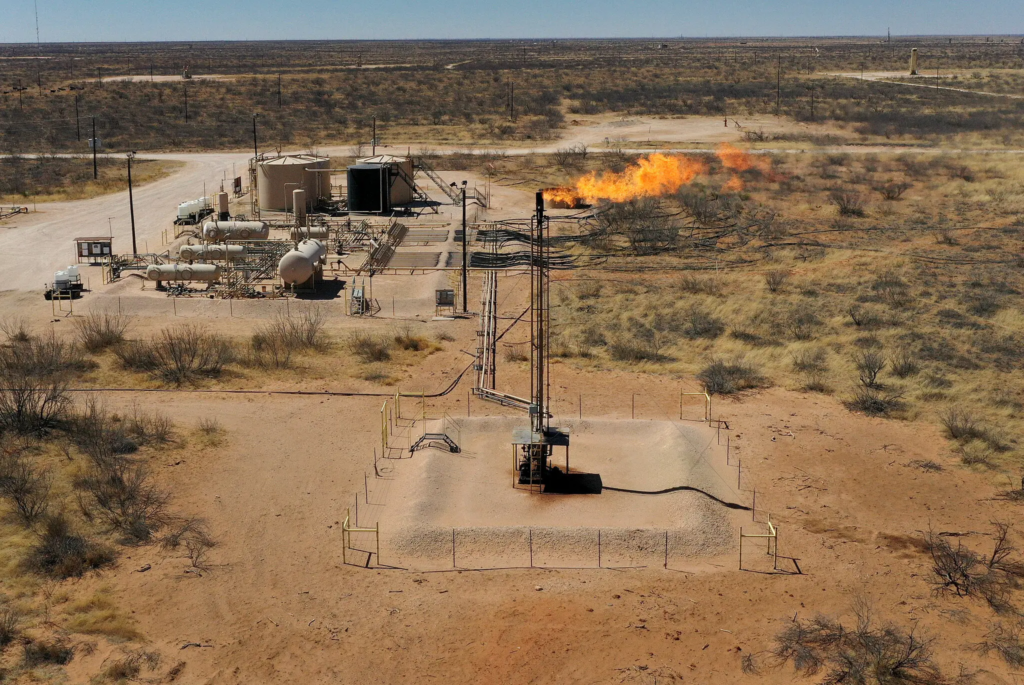
While Mr. Trump has promised to “drill, baby, drill,” U.S. oil production is still only slightly above the record levels that existed during the Biden administration.Credit…Joe Raedle/Getty Images
On his first day back in office, Mr. Trump promised to unleash U.S. energy production and lower prices by promoting fossil fuels like oil, gas and coal, while throttling renewable energy sources like wind and solar power.
His administration has followed through with dizzying speed. More than one billion acres of federal lands and waters have been offered for oil and gas drilling. The E.P.A. has revoked regulations that would have made it more difficult to build natural gas-fired power plants. The Energy Department has intervened to stop aging coal plants from retiring. Nuclear safety regulators have been ordered to more quickly approve reactors.
At the same time, Mr. Trump and his allies in Congress have repealed subsidies for solar panels, wind turbines and electric vehicles, while agencies have slowed or stopped federal approvals for new wind and solar projects. The administration has also repealed or blocked vehicle efficiency standards that would have forced automakers to shift away from gasoline-burning cars.
“The view was that with low-cost oil and gas available domestically, they would be able to increase supply and production quickly, and as a result, keep prices under check,” said Prakash Sharma, vice president for scenarios and technologies at Wood Mackenzie, an energy consulting firm.
The result has been a transformation of the nation’s energy sector.
Tech companies and utilities are easing off their climate goals and ordering gigawatts worth of new plants that will burn natural gas to produce electricity needed for enormous data centers. Some A.I. companies, like Nvidia, have praised Mr. Trump’s energy policies for helping their industry expand.
Exports of liquefied natural gas are also soaring to record levels, while coal consumption, which had been in steep decline, has seen a modest rebound this year.

The groundbreaking of a liquefied natural gas export facility in Calcasieu Parish, La., in September.Credit…Arathy Somasekhar/Reuters
Mr. Trump also promised to “drill, baby, drill” and has offered companies favorable tax and regulatory policies. To date, however, U.S. oil production is still only slightly above the record levels that existed during the Biden administration, as companies have also faced countervailing headwinds from the sagging price of crude oil worldwide and Mr. Trump’s tariffs.
The renewable energy industry, for its part, has seen considerable turmoil. Efforts to build giant offshore wind farms in the Atlantic Ocean have ground to a halt, and the Interior department on Monday paused leases for the only five projects still under construction. Hundreds of solar power projects now face potential delays in federal permitting. All told, companies canceled more than $32 billion in planned clean energy investments in 2025.
The majority of new power plants coming online this year will be wind, solar and batteries — in part because those projects were well underway before Mr. Trump took office. But analysts expect that in the future, the U.S. will produce less renewable energy than previously expected and more carbon dioxide, the main driver of global warming.
Administration officials have been able to point to lower gasoline prices this year as a sign that their policies have been successful. But Mr. Trump had also pledged to cut the price of electricity in half within 18 months of taking office. That looks unlikely: Electricity prices nationwide have increased 5 percent this year, faster than inflation. Experts say they are poised to jump again next year, and have warned that efforts to stifle wind and solar power could hike prices further.
In response, Ms. Rogers, the White House spokeswoman, said, “Fixing Joe Biden’s energy crisis has been a priority for President Trump since day one, and lowering energy costs for American families and businesses will continue to be a top priority in the new year.” She added that electricity prices were higher on average in Democratic-controlled states like California and Maine and lower in Republican-led states.
Climate science

The National Center for Atmospheric Research in Boulder, Colo.Credit…Mark Makela/Reuters
At a time when global average temperatures are rising fast, the Trump administration has defunded climate research, erased scientific data and removed terms like “climate change” from federal websites.
Since January, the Trump administration has closed the independent research arm of the E.P.A. and tasked remaining employees with approving the use of new chemicals. It has proposed to erase money for climate science in next year’s budget of the National Oceanic and Atmospheric Association, while eliminating climate laboratories and severe storm research.
It slashed funding and staffing for the National Climate Assessment, the federal government’s premier report on how global warming is affecting the country. Instead, Chris Wright, the energy secretary, selected five skeptics of climate science to write their own assessment of global warming. Their conclusion, that worries are overblown, was criticized by dozens of climate researchers who accused them of mischaracterizing scientific findings.
The administration also said it would break up the National Center for Atmospheric Research in Colorado, a world-leading Earth science research institutions.
“I would say one of the less well understood aspects of the damage Trump is doing is how long it will take to repair it after he’s gone, assuming that he is not succeeded by an equally anti-fact president,” said John Holdren, a Harvard University physicist who served as the White House scientific adviser in the Obama administration. “You can’t entirely recover from it.”
Climate diplomacy

When more than 100 nations were poised to approve a deal to slash pollution from cargo ships, the Trump administration launched a successful pressure campaign to halt it.Credit…Etienne Laurent/Associated Press
Mr. Trump has also tried to persuade other countries to scale back their own climate policies.
On his first day in office, Mr. Trump began the yearlong process of withdrawing the nation from the Paris climate agreement, a voluntary pact among nearly 200 countries to curb greenhouse gases and fight climate change.
Instead, the Trump administration has used trade policy to promote fossil fuels abroad. Over the past year, the United States has struck trade deals in which the European Union, South Korea and Japan have pledged to buy or invest billions of dollars in U.S. oil and liquefied natural gas.
Mr. Trump has criticized Europe and the United Nations for their climate policies and fought international agreements to limit greenhouse gases.
When more than 100 nations were poised to approve a deal to slash pollution from cargo ships, the Trump administration launched a successful pressure campaign to halt it. State Department officials threatened tariffs, visa restrictions, additional port fees, sanctions and personal reprisals against individual diplomats.
The Trump administration also sided with Russia, Saudi Arabia and Iran to block part of a United Nations report about the state of the planet because it called for phasing out fossil fuels and the use of plastics.
A new national security strategy the Trump administration released this month emphasizes the direction the United States will take for at least the next three years.
“Restoring American energy dominance (in oil, gas, coal, and nuclear) and reshoring the necessary key energy components is a top strategic priority,” it reads, adding, “We reject the disastrous ‘climate change’ and ‘Net Zero’ ideologies that have so greatly harmed Europe, threaten the United States, and subsidize our adversaries.”
Disaster response

Search and rescue personnel on the Guadalupe River in Center Point, Texas, after catastrophic flooding in July. Credit…Loren Elliott for The New York Times
The most costly wildfires in U.S. history were still smoldering in Los Angeles when Mr. Trump took office in January and began to reshape the Federal Emergency Management Agency.
Firings and buyouts early this year reduced FEMA’s staffing by 25 percent and left the agency without many of its most experienced leaders. Changes made by Kristi Noem, the homeland security secretary, including an edict that she personally approve spending exceeding $100,000, has slowed down delivery of many types of FEMA’s disaster, recovery and emergency preparedness aid. Through a year of upheaval, three different people have held the title of acting FEMA administrator.
The administration faced criticism early on after floods overwhelmed parts of Hill Country in central Texas. FEMA was slow to deploy search and rescue teams and to answer thousands of phone calls from flood survivors. Since then, however, there have been few large-scale tests of FEMA’s capacity.
At a recent cabinet meeting, Ms. Noem said FEMA was deploying aid “150 percent faster than ever before,” but it was not clear from agency reports on disaster spending where that figure came from and officials did not answer questions about it.
The agency’s future is currently in limbo after White House officials this month abruptly canceled a meeting at which a task force was set to unveil a set of recommendations to overhaul FEMA. Release of the task force’s report has been postponed indefinitely.
Abigail Jackson, a White House spokeswoman, said, “While federal assistance was always intended to supplement state actions, not replace those actions, FEMA’s outsized role created a bloated bureaucracy that disincentivized state investment in their own resilience. President Trump is committed to right-sizing the federal government while empowering state and local governments.”
In the meantime, work FEMA normally funds to help communities prepare to better withstand disasters also isn’t happening, despite a federal judge recently ruling the agency could not unilaterally cancel one key preparedness program.
“These are opportunities lost which will have profound effects in the years to come,” said Michael Coen, who served as FEMA’s chief of staff under the Biden and Obama administrations. “It’s almost like we’ve taken a pause on trying to build resilience.”

How Close Are the Planet’s Climate Tipping Points?
Brad Plumer is a Times reporter who covers technology and policy efforts to address global warming.
Lisa Friedman is a Times reporter who writes about how governments are addressing climate change and the effects of those policies on communities.
Maxine Joselow covers climate change and the environment for The Times from Washington.
Scott Dance is a Times reporter who covers how climate change and extreme weather are transforming society.
Here are some “ETs” recorded from around the planet the last couple of days, their consequences, and some extreme temperature outlooks, as well as any extreme precipitation reports:
Here is More Climate News from Sunday:
(As usual, this will be a fluid post in which more information gets added during the day as it crosses my radar, crediting all who have put it on-line. Items will be archived on this site for posterity. In most instances click on the pictures of each tweet to see each article. The most noteworthy items will be listed first.)