The main purpose of this blog will be to track planetary extreme, or record temperatures related to climate change. Any reports I see of ETs will be listed below the main topic of the day. I’ll refer to extreme or record temperatures as ETs (not extraterrestrials).😜
Main Topic: E.P.A. to Stop Considering Lives Saved When Setting Rules on Air Pollution
Dear Diary. A big benefit to finally switching to generating all power from renewable sources will be to eliminate air pollution from burning fossil fuels. Trump and his acolytes should care about this, but obviously they don’t. What they do want are continued profits from coal mining and oil extraction. So, it comes as no surprise that we are learning today about yet another policy weakening the government’s ability to produce health statistics of the atmosphere. The E.P.A. plans to stop tallying gains from the health benefits caused by limiting air pollution with the goal that the public won’t learn about how unhealthy the burning of fossil fuels is in reality.
Here are details from the New York Times:
E.P.A. to Stop Considering Lives Saved by Limiting Air Pollution – The New York Times
E.P.A. to Stop Considering Lives Saved When Setting Rules on Air Pollution
In a reversal, the agency plans to calculate only the cost to industry when setting pollution limits, and not the monetary value of saving human lives, documents show.
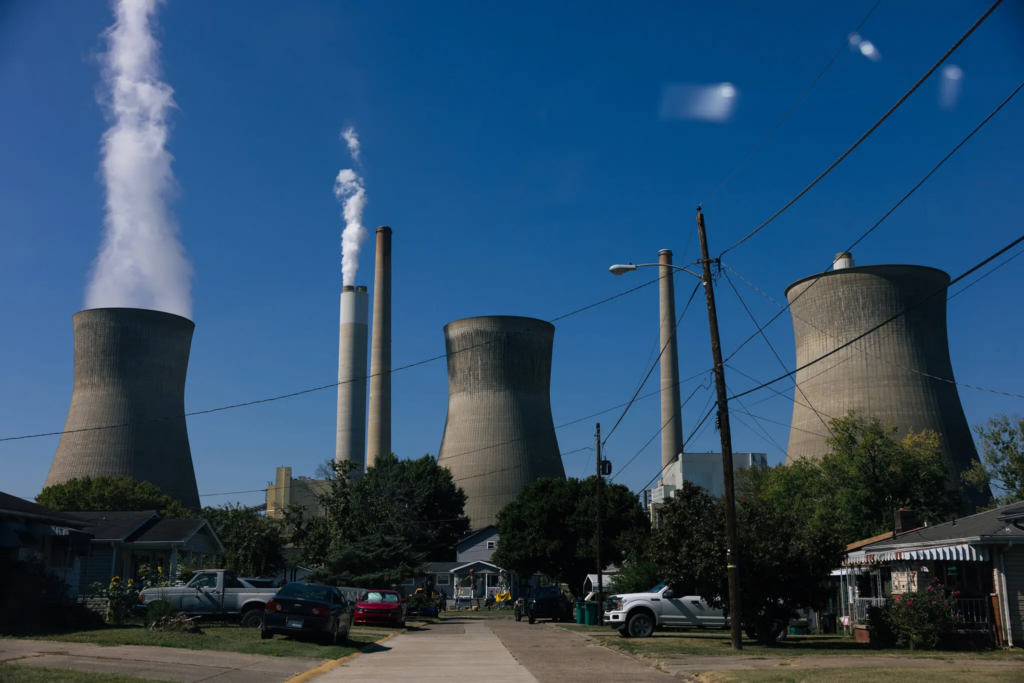
The change could make it easier to repeal limits on pollutants from coal-burning power plants, oil refineries, steel mills and other industrial facilities. Credit…Alyssa Schukar for The New York Times

Reporting from Washington
Jan. 12, 2026
For decades, the Environmental Protection Agency has calculated the health benefits of reducing air pollution, using the cost estimates of avoided asthma attacks and premature deaths to justify clean-air rules.
Not anymore.
Under President Trump, the E.P.A. plans to stop tallying gains from the health benefits caused by curbing two of the most widespread deadly air pollutants, fine particulate matter and ozone, when regulating industry, according to internal agency emails and documents reviewed by The New York Times.
It’s a seismic shift that runs counter to the E.P.A.’s mission statement, which says the agency’s core responsibility is to protect human health and the environment, environmental law experts said.
The change could make it easier to repeal limits on these pollutants from coal-burning power plants, oil refineries, steel mills and other industrial facilities across the country, the emails and documents show. That would most likely lower costs for companies while resulting in dirtier air.
Fine particulate matter, or PM2.5, refers to particles less than 2.5 micrometers in diameter, small enough to penetrate deep into the lungs and enter the bloodstream. Ozone is a smog-causing gas that forms when nitrogen dioxide and volatile organic compounds are emitted from power plants, factories and vehicles and mix in the air on hot, sunny days.
Long-term exposure to both pollutants is linked to asthma, heart and lung disease, and premature death. Even moderate exposure to PM2.5 can damage the lungs about as much as smoking.
Under the Biden administration, the E.P.A. tightened the amount of PM2.5 that could be emitted by industrial facilities. It estimated that the rule would prevent up to 4,500 premature deaths and 290,000 lost workdays in 2032 alone. For every $1 spent on reducing PM2.5, the agency said, there could be as much as $77 in health benefits.
But the Trump administration contends that these estimates are doubtful and said the E.P.A. would no longer take health effects into account in the cost-benefit analyses necessary for clean-air regulations, according to the documents. Instead, the agency would estimate only the costs to businesses of complying with the rules.
Over the past four decades, Republican and Democratic administrations have used different estimates of the monetary value of a human life in cost-benefit analyses. But until now, no administration has counted it as zero.
“The idea that E.P.A. would not consider the public health benefits of its regulations is anathema to the very mission of E.P.A.,” said Richard Revesz, the faculty director of the Institute for Policy Integrity at New York University School of Law.
“If you’re only considering the costs to industry and you’re ignoring the benefits, then you can’t justify any regulations that protect public health, which is the very reason that E.P.A. was set up,” said Mr. Revesz, who led the White House Office of Information and Regulatory Affairs under President Joseph R. Biden Jr.
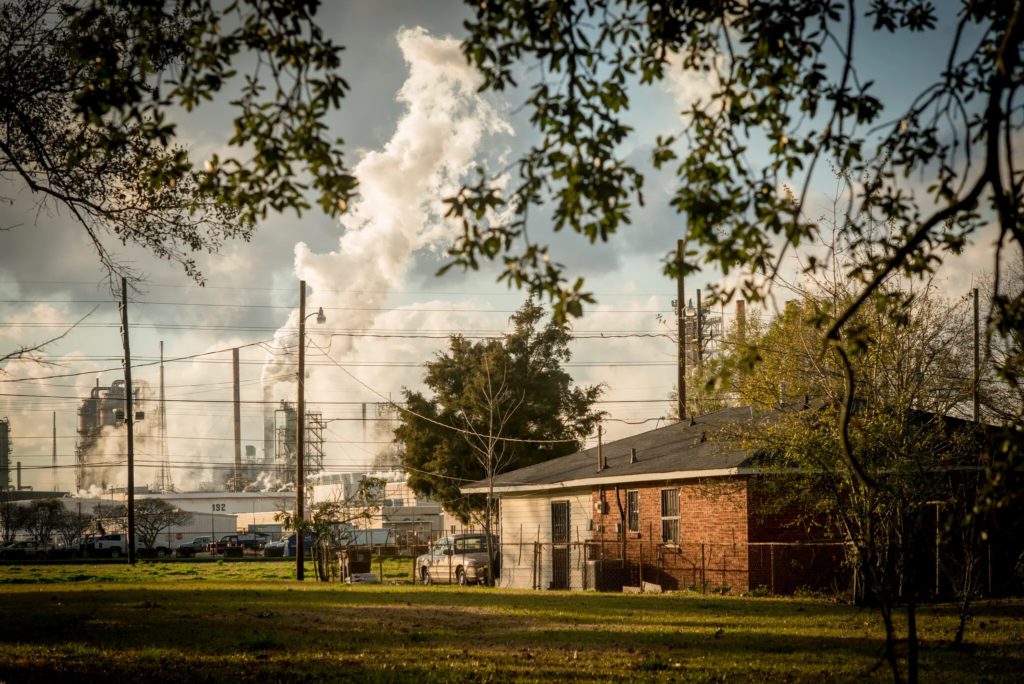
The Biden administration’s E.P.A. had calculated that for every $1 spent on reducing PM2.5, there could be as much as $77 in health benefits. Credit…Emily Kask for The New York Times
Carolyn Holran, an E.P.A. spokeswoman, said in an email that the agency was still weighing the health effects of PM2.5 and ozone, but wouldn’t be assigning them a dollar value in cost-benefit analyses. “E.P.A., like the agency always has, is still considering the impacts that PM2.5 and ozone emissions have on human health,” Ms. Holran said. “Not monetizing does not equal not considering or not valuing the human health impact.”
In a Dec. 11 email reviewed by The Times, an E.P.A. supervisor wrote to his employees that political appointees in the Office of Air and Radiation planned to insert language about the “uncertain” benefits of reducing PM2.5 and ozone in all new clean-air rules.
The language states that “historically, the E.P.A.’s analytical practices often provided the public with false precision and confidence regarding the monetized impacts of fine particulate matter (PM2.5) and ozone.” It says that “to rectify this error, the E.P.A. is no longer monetizing benefits from PM2.5 and ozone.”
This language will appear in documents called regulatory impact analyses that accompany new rules, according to the email. It will apply to all proposals by the E.P.A.’s Office of Air and Radiation, including the forthcoming repeal of limits on greenhouse gas emissions from power plants.
The head of the E.P.A.’s air and radiation office, Aaron Szabo, said at his Senate confirmation hearing that he had a personal stake in clean-air rules because he suffers from cystic fibrosis. “Because of my lung disease, I have always been acutely aware of air quality,” he said.
Mr. Szabo is a former registered lobbyist for the oil and chemical industries. His clients at the firm Faegre Drinker Biddle & Reath included the American Fuel and Petrochemical Manufacturers, a trade association for oil refiners that has opposed stricter PM2.5 standards.
The U.S. Chamber of Commerce, the nation’s largest business lobbying group, has also pushed for the E.P.A. to fix what it has described as problems with its cost-benefit analyses. Neil Bradley, the executive vice president and chief policy officer at the chamber, wrote in 2018 that the agency should be more transparent about “uncertainty in cost and benefit estimates, particularly with respect to health benefits estimates.”
Marty Durbin, the president of the Global Energy Institute at the chamber, said in an emailed statement, “We appreciate the efforts of this administration to rebalance regulations with a common-sense approach. We look forward to examining the proposal from E.P.A.”
The change could address longstanding criticism from business groups, which have argued that the government gives too much weight to the benefits of reducing PM2.5 when setting limits on other pollutants like mercury and lead, said Jeffrey Holmstead, the former head of the E.P.A.’s Office of Air and Radiation under President George W. Bush and an energy lawyer at Bracewell LLP. (Technology that captures mercury and lead from power plant smokestacks would also reduce PM2.5 emissions.)
The EP.A.’s new approach is likely to draw legal challenges and could ultimately make rollbacks of pollution limits more vulnerable in court, legal experts said.
James Goodwin, the interim co-executive director and policy director at the Center for Progressive Reform, an advocacy group, said the move appeared to ignore the 2015 Supreme Court case Michigan v. E.P.A. In the majority opinion, Justice Antonin Scalia wrote that if an agency considers the benefits of a regulation, it must also consider the costs, and vice versa.
“Scalia was making the point that you can’t judge a regulation’s reasonableness just by looking at one side of the ledger,” Mr. Goodwin said.
The Trump administration has taken other, smaller steps to overhaul the cost-benefit analyses underpinning environmental rules.
In May, the White House ordered agencies to stop considering the economic damage caused by climate change when crafting regulations, except in cases where it is “plainly required” by law. That directive effectively shelved a powerful tool, known as the “social cost of carbon,” that the Biden administration had used to strengthen limits on carbon emissions from cars and power plants.
Maxine Joselow covers climate change and the environment for The Times from Washington.
Here are some “ETs” recorded from around the planet the last couple of days, their consequences, and some extreme temperature outlooks, as well as any extreme precipitation reports:
Here is More Climate News from Monday:
(As usual, this will be a fluid post in which more information gets added during the day as it crosses my radar, crediting all who have put it on-line. Items will be archived on this site for posterity. In most instances click on the pictures of each tweet to see each article. The most noteworthy items will be listed first.)