The main purpose of this ongoing blog will be to track global extreme or record temperatures related to climate change. Any reports I see of ETs will be listed below the main topic of the day. I’ll refer to extreme or record temperatures as ETs (not extraterrestrials).😜
Main Topic: Companies Either Weather Climate Risk Now or Pay for It Later
Dear Diary. Within capitalism there is one consistent item that has been with us for thousands of years. Pay now or pay with interest later. That adage has caused people with not enough money to buy things like homes or furniture a lot of heart burn trying to pay off debt. The same is now true for climate. Pay for it now by limiting emissions and adapting to harsher conditions or suffer worse consequences.
I came upon a Reuters article yesterday indicating that companies need to prepare or adapt to worse heat and other results from our long-term carbon pollution. Here is that piece used for today’s main subject:
Companies either weather climate risk now or pay for it later | Reuters
Commentary
Companies either weather climate risk now or pay for it later

February 3, 2026
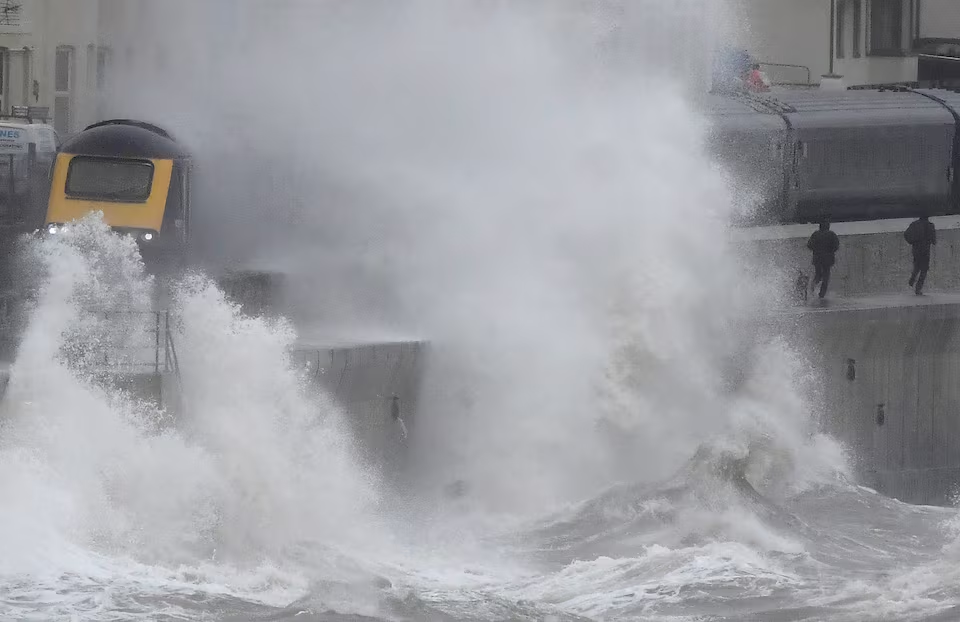
Large waves hit the sea wall during a storm as a train passes through Dawlish, southwest Britain. Following Storm Ingrid, in January 2026, part of the line had to be closed after a sinkhole opened up between Dawlish and Teignmouth stations. REUTERS/Toby Melville
February 3 – Last year, extreme weather didn’t just shatter records, it wiped more than $320 billion from the global economy, a sum larger than the annual GDP of countries like Finland and Chile.
Looking back further, from 2014-2024, climate-fuelled disasters cost the world more than $2 trillion. It is no surprise that the World Economic Forum’s 2026 Global Risks Report ranks extreme weather among the top risks for global business – not far behind geopolitical conflict – and identifies it as the most significant long-term threat.
These are not future climate scenarios. They are present-day business costs, already hitting balance sheets, insurance premiums and supply chains.
Yet many companies still treat climate risk as something to address later once regulation tightens, technology matures or insurance markets adjust.
From a risk perspective, that logic is backwards, because by the time a risk is fully understood, the opportunity to manage it has already passed.
I’ve spent my career in risk, from leading Lloyd’s of London to advising companies today, and I’ve seen what happens when exposure is suddenly repriced. Premiums rise, coverage retreats and businesses discover too late that yesterday’s assumptions no longer hold. Climate risk is following the same trajectory.
In practice, businesses face two main types of climate risk, both of which are inherently unpredictable.
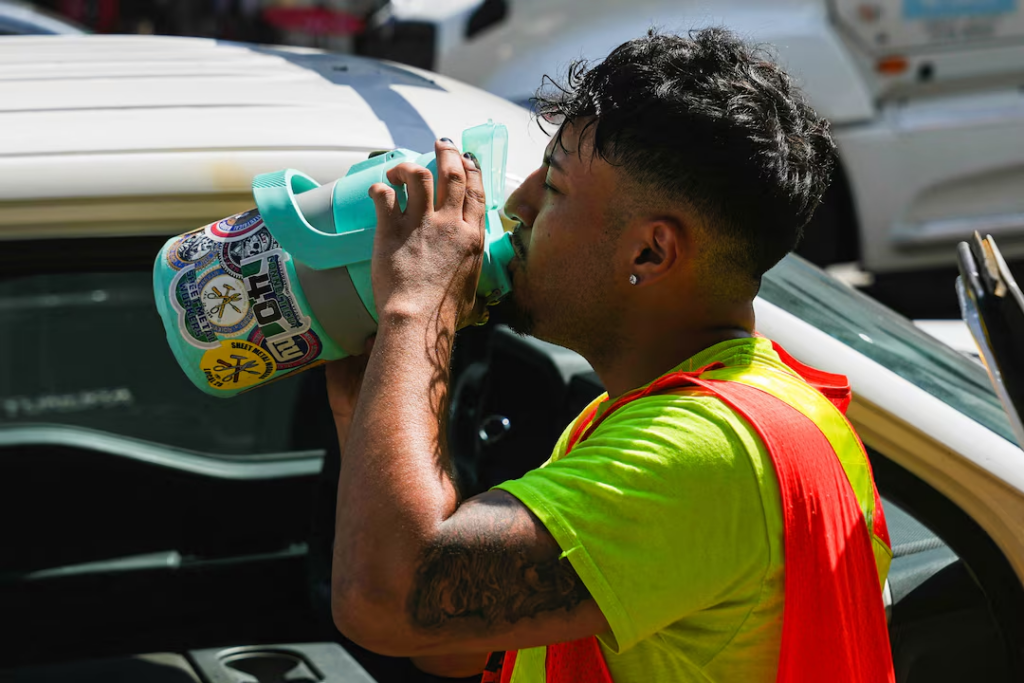
A workers hydrates as a heat advisory continues, in New York City, U.S., June 23, 2025. REUTERS/Eduardo Munoz
The first is physical risk. These range from storms and floods that damage energy and transport infrastructure, to rising temperatures, which sap worker productivity, and droughts, which pinch water for factories and farms. In the UK last month, storm Goretti brought hurricane-force winds that grounded flights, closed schools and disrupted normal day activity.
We can see first-hand the damage of physical climate risks. Up to 40% of land globally is now classed as degraded, according to U.N. data, and industries are impacted, with research showing that up to 50% of land currently suitable for coffee cultivation could be lost by 2050.
The second category is transition risk: the financial and strategic disruption associated with the transition to a low-carbon economy. This includes adapting to tightening climate policies, expanding carbon pricing frameworks and evolving standards and reporting requirements. For businesses, these pressures translate into higher compliance costs, disrupted operations and growing uncertainty over long-term investment decisions.
In one study, half of European commercial real estate managers admitted that 30% or more of their assets are already “stranded” due to stricter energy efficiency standards and demand shifting toward climate-resilient, low-carbon buildings.
When risk-mitigation isn’t prioritised, the consequences are tangible, undermining long-term business resilience and growth.
I understand the hesitation – volatility and uncertainty make planning uncomfortable – but delay is what turns manageable risks into crises.
Climate risk can no longer be treated as a separate sustainability exercise; it must be embedded across the business – from capital allocation and asset lifecycles to investment decisions. I call this transition planning. In practice, this means strengthening resilience by stress-testing strategies against physical and transition-risk scenarios, then translating those insights into mitigation and adaptation actions across an entire value chain, ensuring that investment horizons align with climate realities.
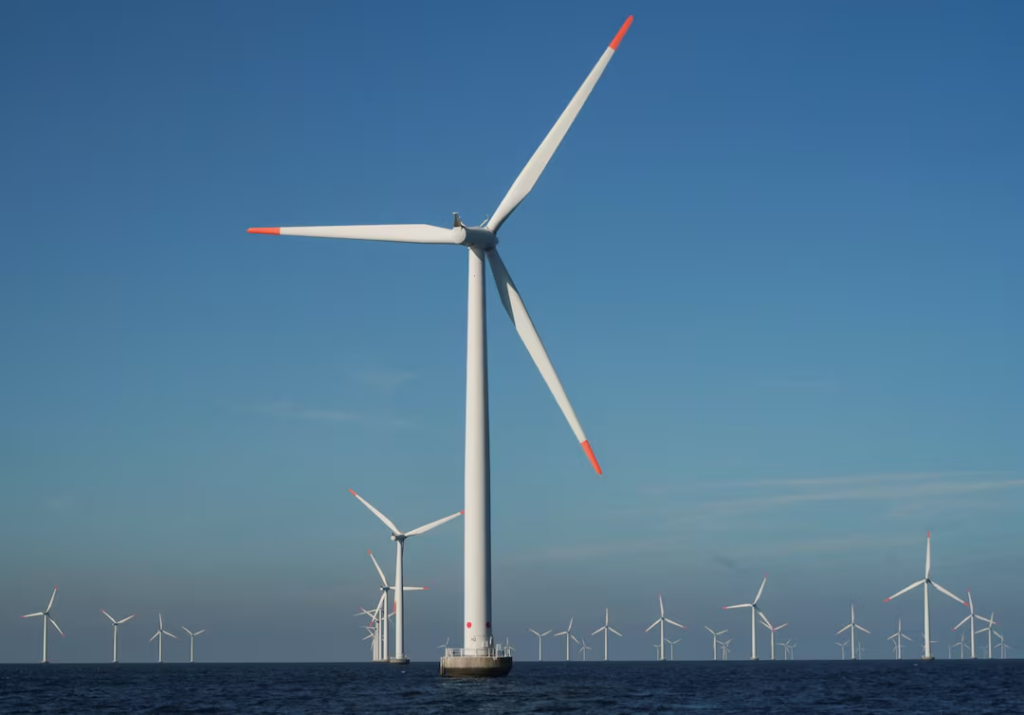
A view of the turbines at Orsted’s offshore wind farm near Nysted, Denmark. REUTERS/Tom Little
Take the case of Danish energy company Orsted. In the early 2000s, as the EU’s carbon pricing system tightened, Orsted faced a mounting financial risk: a business model heavily dependent on fossil fuels was becoming increasingly exposed. Rather than resisting the transition, the company pivoted decisively toward offshore wind and aligned its strategy with science-based climate targets.
The result was not just risk-mitigation but value-creation. Orsted went on to increase its market capitalisation by 400%, while sidestepping an estimated 2.3 billion euros in carbon costs.
History offers a clear lesson: when risks become clearer, markets can change their minds very quickly. What could have been managed consistently and affordably turns into a rushed, expensive scramble.
Many businesses made the same mistakes about cyber-risk a decade ago – assuming clarity would come before difficult decisions were required – and paid the price.
Acting now does not mean predicting the future perfectly. It means bringing decisions forward, and making them through a balanced, risk-managed lens, while options still exist.
It also means unlocking value by identifying growth opportunities in sustainable products, services and markets that are scaling fastest – and staying ahead of evolving regulatory, investor and customer expectations, rather than reacting to them.
The commercial case is clear. Boston Consulting Group found that four out of five companies already report financial gains from climate action, demonstrating that climate and sustainability expertise is increasingly a driver of commercial performance.
Businesses that embed climate risk into decision-making can unlock investment, innovate faster and build resilience into growth strategies.
In a rapidly changing, volatile economy, it is one of the clearest opportunities for long-term value.
So, the choice is between acting now, while risks can still be managed – or waiting, and confronting a future of higher costs and lost opportunities.
Here are some “ETs” recorded from around the planet the last couple of days, their consequences, and some extreme temperature outlooks, as well as any extreme precipitation reports:
Here is More Climate News from Wednesday:
(As usual, this will be a fluid post in which more information gets added during the day as it crosses my radar, crediting all who have put it on-line. Items will be archived on this site for posterity. In most instances click on the pictures of each tweet to see each article. The most noteworthy items will be listed first.)