The main purpose of this ongoing blog will be to track planetary extreme, or record temperatures related to climate change. Any reports I see of ETs will be listed below the main topic of the day. I’ll refer to extreme or record temperatures as ETs (not extraterrestrials).😜
Main Topic: Epic Winter Drought Creates a Bleak Situation for Farmers — And Your Food
Dear Diary. A mild winter and then a record warm and dry March will have consequences. We have delved into astounding March 2026 statistics the last few posts, and we will have more tomorrow once NCEI issues its latest monthly report.
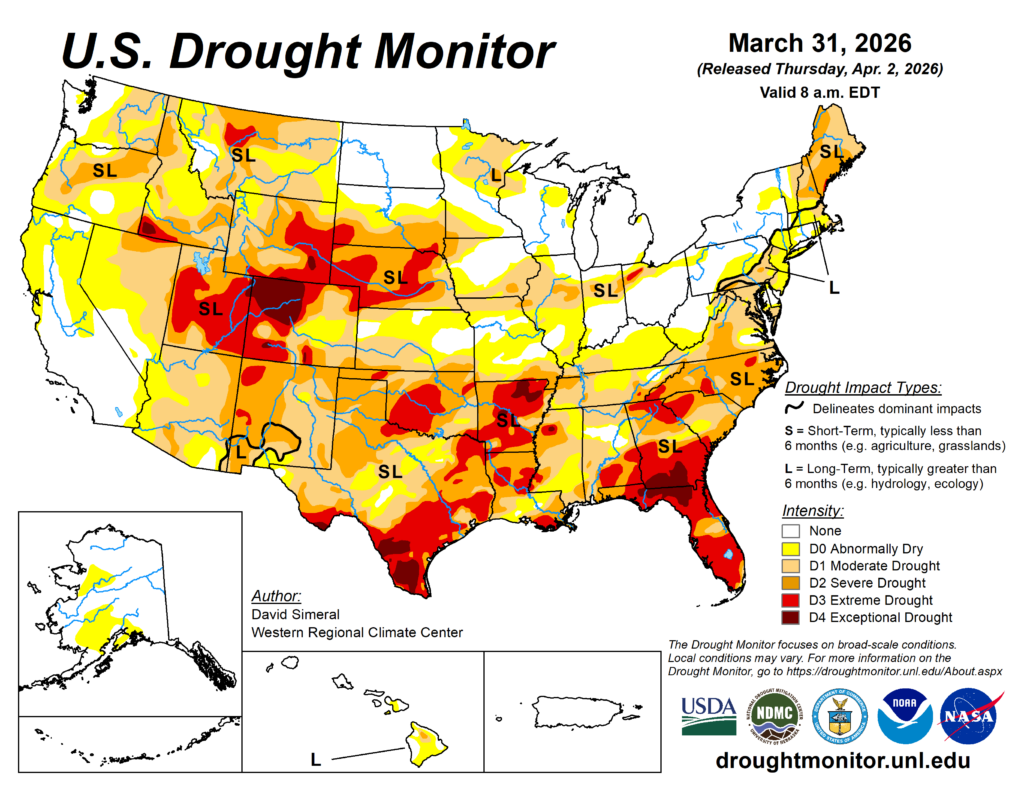
Today we will look at the calling card that March has left us, and that is drought. Here are current conditions that look pretty dire:
The Washington Post has picked up on this today, which I am reposting for our main topic of today:
Epic winter drought creates a bleak situation for farmers — and food – The Washington Post
Epic winter drought creates a bleak situation for farmers — and your food
If rainfall shortages and record heat continue, the effects may ripple throughout the U.S. food supply, with the cost of beef already surging.
April 7, 2026
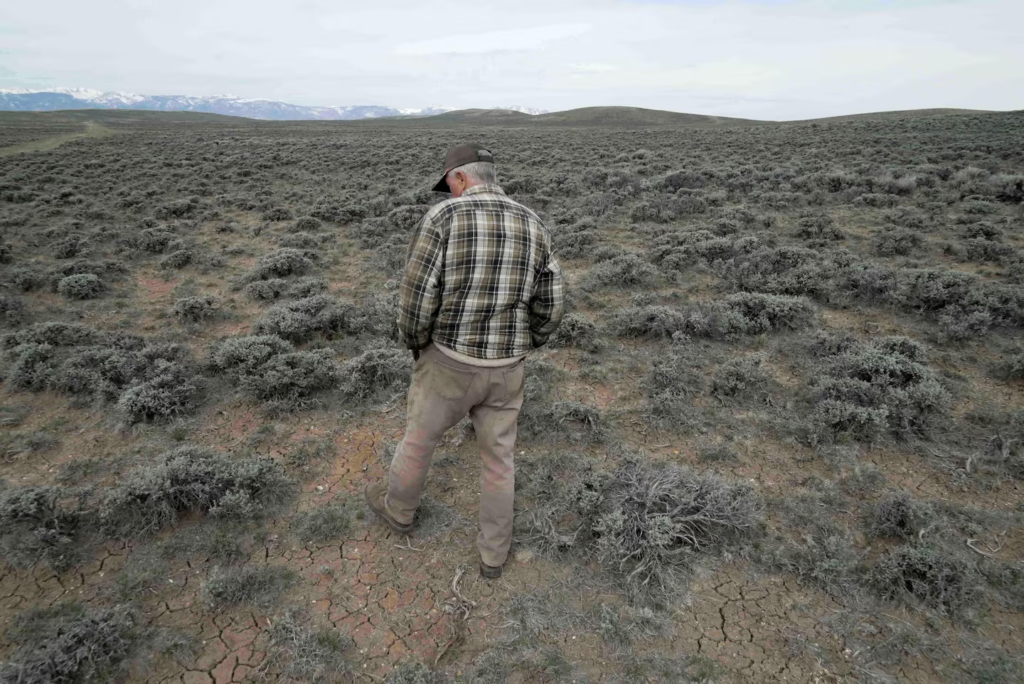
Philip Anderson walks through dry pasture in Walden, Colorado, on March 31 that’s normally covered in snow this time of year. (Brittany Peterson/AP)

By Sarah Kaplan
Justin Perry’s family has been farming the rolling hills of the Nebraska panhandle for four generations, but none of them can remember a winter as warm and parched as this one.
There was no steady rain to gently soak the soil. No blanket of snow to insulate the fields and pasture. Just warm, dry winds that swept across the landscape, sucking moisture from every inch of exposed earth.
Now spring has arrived, along with forecasts for continued drought that could imperil Perry’s winter wheat and summer planting. An extraordinary March heat wave sent temperatures soaring to almost 90 degrees, further baking the soil. And to the north, Perry can see smoke billowing from record-setting wildfires that have consumed hundreds of thousands of acres of ranches and farmland.
“This is feeling really bleak,” Perry said. “This might be one of those scenarios that breaks some guys.”
All across the Lower 48, farmers like Perry are reeling from the hottest and third-driest September to February stretch on record. As of March 31, the last date for which data is available, nearly 60 percent of the U.S. was in drought, according to the U.S. Drought Monitor. With the exception of the Midwest’s sprawling corn and soybean farms, the dire conditions encompass many of the regions that grow the country’s food, from peanuts in the South to wheat and cattle in the Great Plains to produce in the Southwest.
If the combination of rainfall shortages and unprecedented heat continues, experts say, it could have ripple effects through the nation’s food supply, with some products, like beef, already projected to see prices surge.
“We’re in a position here where we’re going into the growing season and into the spring with record low or near-record low soil moisture across the country,” said Agriculture Department meteorologist Brad Rippey. “Things are bad and getting worse in a hurry.”
Threats to crops and livestock
Some of the driest conditions are in the South, where the growing season is well underway. More than three-quarters of sugarcane-producing areas, 83 percent of rice-producing areas and a whopping 96 percent of the peanut-producing region is besieged by drought.
Unseasonable winter warmth, punctuated by an unusual February freeze, also caused damage to many fruit trees in the region. These occasional cold bursts, caused by waviness in the jet stream that allows Arctic air to plunge south, have become more frequent in recent decades, Rippey said.
“When we have early warm spells that push crop development along, the cold air is just lurking, and it doesn’t take much to unleash it,” he said.
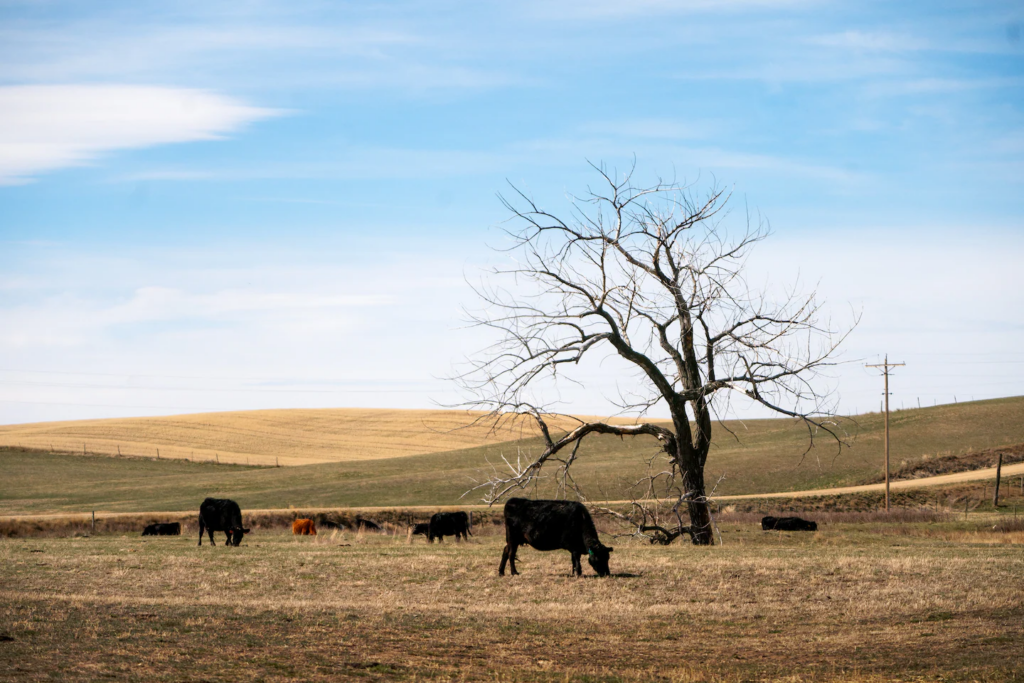
Cattle graze in a field in Montana’s Fergus County in 2022. (Demetrius Freeman/The Washington Post)
The extraordinarily hot and dry conditions spell trouble for the nation’s breadbasket in the Great Plains.
Early spring is typically when farmers apply fertilizer to winter wheat — a hardy grain that is planted in the fall and harvested during summer. But the severity of this year’s drought has growers questioning whether they should keep investing in a crop that may not survive or cut their losses and replant with something else. Meanwhile, extremely dry soil makes it more difficult for new seeds to germinate.
“It’s another gamble, frankly,” Perry said.
Because wheat is a globally traded commodity, the failed crop in the Plains is just one small contributor to the cost of bread, said Jennifer Ifft, a professor of agricultural economics at Kansas State University. And prices won’t necessarily fluctuate as a result of one bad U.S. season. Other global factors, such as Russia’s invasion of Ukraine and high fuel prices stemming from the conflict in the Middle East, can also have a powerful effect on costs.
But Americans will probably feel the effects of the drought when shopping for beef, which is mostly produced domestically.
The number of cattle raised in the United States is already the lowest since the 1950s — a consequence of a 2022-2023 dry spell that reduced forage and raised hay prices across the High Plains.
This year, according to the Agriculture Department, 64 percent of the U.S. cattle inventory is affected by drought, along with most of the hay and alfalfa used for feed.
This gives ranchers no reason to regrow their herds and may prompt them to sell off even more animals — leading to high prices for people at the grocery store, said Ariel Ortiz-Bobea, an economist at Cornell University.
The cost of beef has already increased 14.4 percent since February 2025 and is projected to rise an additional 10 percent by the end of the year.
Perry, whose pastures feed his 100-cow herd as well as cattle he takes in from other farmers, said his drought-depleted grass represents “a major math problem.”
“I’ve shifted my mindset on cattle side of things to be less focused on, ‘how many calves can I grow and sell,’ and more on, ‘how much grass can I grow?’” he said.
Parched conditions for Western farms
Farther West, where most farmland is irrigated, it is the dwindling mountain snowpack that has producers most alarmed.
The amount of moisture stored in snow — a metric known as “snow water equivalent” — was already close to record lows when a historic heat dome engulfed much of the region in March. That surge of summerlike warmth caused a “precipitous drop” in mountain snowpacks, said Jason Gerlich, the regional drought early-warning system coordinator for the National Oceanic and Atmospheric Administration.
In the Cascade Mountains of the Pacific Northwest, 30 inches of snow water equivalent disappeared in a matter of days. The Arkansas-White-Red river basin, which stretches from Colorado to the Mississippi River, contains just 8 percent of its average snowpack moisture.
“There are simply no analogous years to this one,” Gerlich said.
These conditions bear unmistakable fingerprints of caused climate change, scientists say. Higher temperatures allow the atmosphere to hold more water vapor, pulling moisture out of soils and plants. This phenomenon leads to longer and more intense dry spells, as well as more severe storms that drop huge amounts of rain faster than the landscape can absorb it.
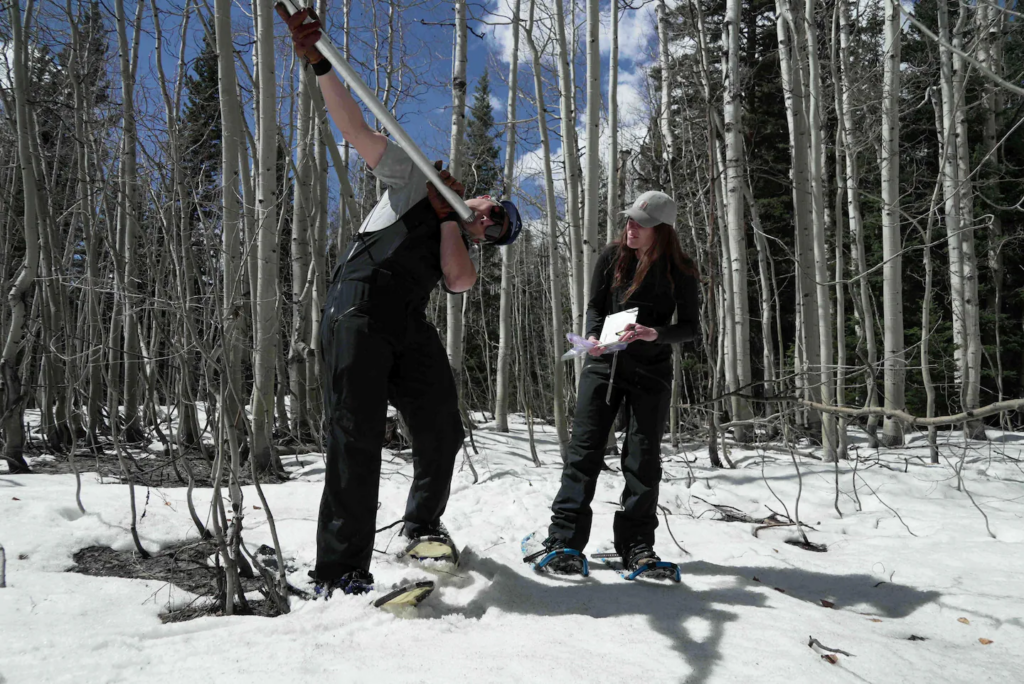
Clinton Whitten, left, and hydrologist Maureen Gutsch measure snow in Kremmling, Colorado, on March 30. (Brittany Peterson/AP)
The effects could be particularly severe for irrigated farms, which account for the majority of human water consumption in the American West. Water in the region is governed by seniority — those who most recently got the rights to use water are the first to lose access during times of drought.
In Washington’s Yakima River Basin, now facing a record fourth consecutive year of drought, anyone whose water rights were issued later than 1905 will receive just 44 percent of their usual entitlement, according to a March announcement from the U.S. Bureau of Reclamation. Junior rights holders along other rivers, including the hotly-contested Colorado, could face similar cutbacks in the coming months.
Anticipation of those cuts is affecting how Western farmers plan for their year, said Lauren Ris, executive director of Colorado’s Water Conservation Board.
“Folks that know they’re in the bull’s eye are likely going to start to consider operations that would fallow fields or leave acres unplanted, or shorter season crops that would make most of water while we have it,” she said.
Produce growers in Arizona, who hold some of the most junior water rights on the Colorado River, could face cutbacks of 30 to 50 percent of their usual supply. These farmers provide about 90 percent of America’s leafy greens between the months of November and April.
“The impacts of a drought here do not stop at the state line,” Ris said.
The consequences for farmers and prices
The National Weather Service forecasts that these hot, dry conditions will persist or deepen across most of the South and West this spring.
For farmers, the stresses of drought are likely to be compounded by the war with Iran, which has caused a spike in prices for fuel and fertilizer.
“You’re at the mercy of the weather, the markets, geopolitics,” said Ifft, the Kansas State professor. “It’s like getting kicked when you’re down.”
Most U.S. farmers are well covered by crop insurance, which can act as a safety net through one or two bad seasons, she added. Meanwhile, the complexity of the global food market can buffer consumers from drought-induced price increases. If Arizona farmers can’t grow as much lettuce, for example, producers in California and Mexico may be able to fill the gap.
But the persistently high prices for beef illustrate the consequences of prolonged, repeated dry spells, Ortiz-Bobea said. If farmers endure too many bad years back to back, they may change their practices — or stop producing all together. Eventually, grocery shoppers will also feel the squeeze.
Already, the effects of the U.S. drought are reflected in international wheat prices, which have increased 4.3 percent in the past month, according to the U.N. Food and Agriculture Organization.
Rising global temperatures will make devastating weather patterns far more common, researchers say. In a 2021 study in the journal Nature Climate Change, Ortiz-Bobea found that human-caused warming has already reduced global agricultural productivity by more than 20 percent, with even worse effects in warmer regions.
Farmers have been able to mitigate that headwind with improved technology and more sophisticated practices, he said — but that won’t always be the case.
In Nebraska, Perry said his family has sought to cope with high prices and harsh weather by adopting more sustainable practices. They are using less fertilizer on crops like wheat and corn and have stopped tilling their soil to help preserve its moisture.
“We’re doing the best we can to grow a safe and healthy food supply,” he said. “But I’m seeing less opportunities for profitability the longer this extends.”
By Sarah Kaplan Sarah Kaplan is a climate reporter covering humanity’s response to a warming world. follow on X@sarahkaplan48
Here are some “ETs” recorded from around the U.S. the last couple of days, their consequences, and some extreme temperature outlooks, as well as any extreme precipitation reports:
Here is More Climate News from Tuesday:
(As usual, this will be a fluid post in which more information gets added during the day as it crosses my radar, crediting all who have put it on-line. Items will be archived on this site for posterity. In most instances click on the pictures of each tweet to see each article. The most noteworthy items will be listed first.)