The main purpose of this ongoing blog will be to track planetary extreme, or record temperatures related to climate change. Any reports I see of ETs will be listed below the main topic of the day. I’ll refer to extreme or record temperatures as ETs (not extraterrestrials).😜
Here is a new feature for this blog, which I will add daily. This is the latest inciteful Green News Report from my friends Desi Doyen and Brad Friedman at Progressive Voices. Hit ‘continue reading,’ listen, then hit return to see my daily topics:

Green News Report with Brad Friedman & Desi Doyen
Episode: 10/27/2026 — More info…
Dear Diary. Guilty as charged. I do use artificial intelligence to do calculations in association with my statistical climate work that would normally take months to accomplish manually. Using AI it just took me a few minutes to come up with charts like this one after taking hours to update my NCEI record totals:
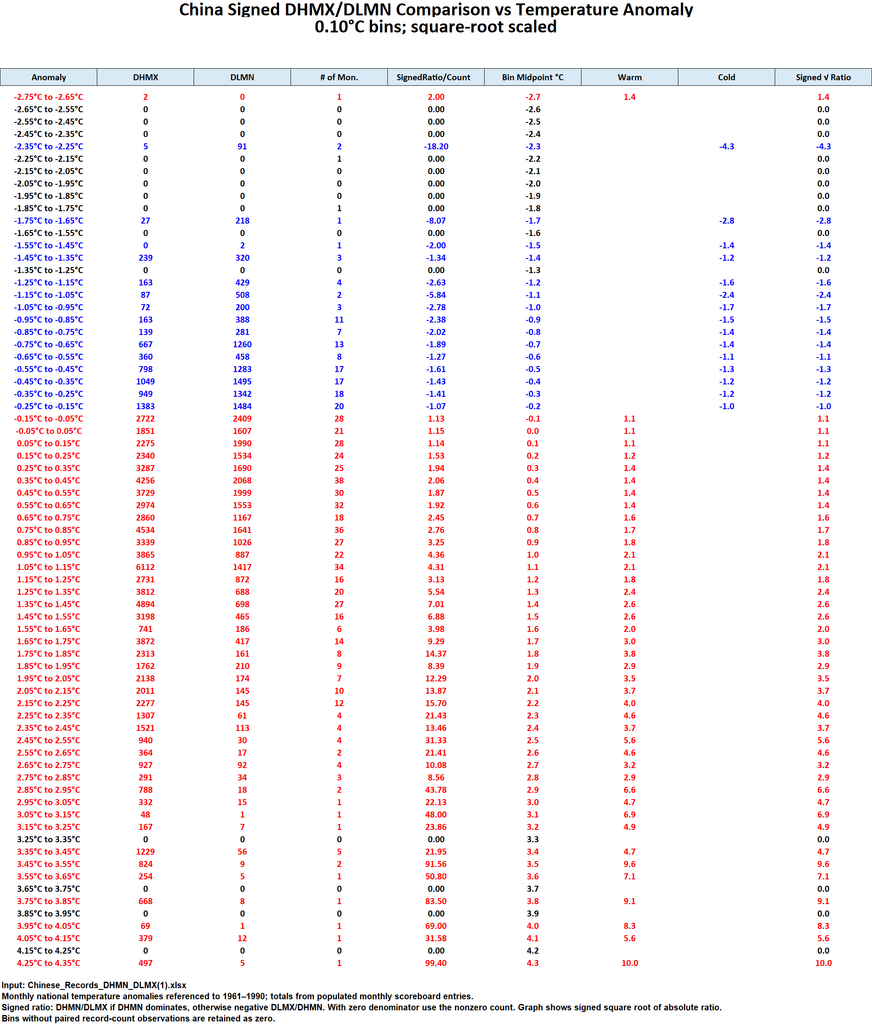
The above statistics help break down the relationship between anomalous average temperature warmth or chill and what to expect from record ratios. But is it worth the extra effort and electricity from a data center? That’s an open question. This kind of reminds me of the old carbon credit system in which polluters were allowed to pollute if they could prove that they were planting trees to offset carbon that they were spewing into the air. I’m planting the climate science tree of knowledge while admittedly helping to support a polluting industry. Aye ya ya!
Yes, we all have some sort of carbon footprint, but I’m learning that AI has a very big one. In the future solar panels should be built into the infrastructure of data centers. Also, there has to be some sort of technical solution such that there is no methane pollution. Then, there is the little matter of AI becoming sentient and trying to snuff out the human race. Those fears are overblown as of 2026, but the federal government and other governments across the world need to highly regulate the industry and set up plenty of guardrails.
Here are more details from Bloomburg (For charts that I did not repost, hit the following link.)
New US Data Centers Projected to Emit More Carbon Than All of Mexico – Bloomberg
EXCLUSIVE
ESG & Investing
New US Data Centers Projected to Emit More Carbon Than All of Mexico
The boom is set to produce enough greenhouse gases to cancel out 15 years of declines in power-sector emissions, according to a Sierra Club analysis.
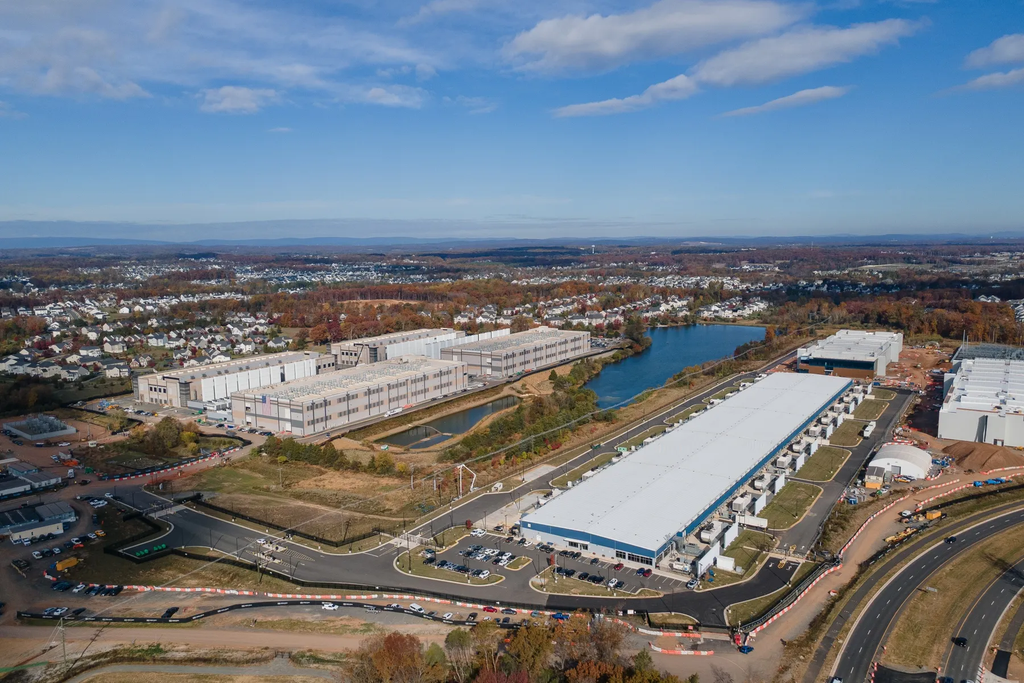
Data centers in Aldie, Virginia.Photographer: Lexi Critchett/Bloomberg
By Eric Roston and Olivia Raimonde
October 28, 2026 at 7:30 AM EDT
- The surge in construction of fossil-fueled power plants to run AI data centers is set to undo 15 years’ worth of greenhouse gas reductions from US electricity generation, according to an internal analysis by the Sierra Club.
- The US power sector would emit 2.1 billion metric tons of carbon dioxide by 2030, after factoring in planned AI projects, which is 618 million tons more than 2025 levels, or about a 42% increase.
- Many data center developers are turning to natural gas to meet the immense electricity demand, relying on power sources that are both on and off the grid, with the bulk of the expected emissions by 2030 coming from sources that are not directly linked to the grid.
The surge in construction of fossil-fueled power plants to run AI data centers is set to undo 15 years’ worth of greenhouse gas reductions from US electricity generation, according to an internal analysis by the Sierra Club.
The US power sector would emit 2.1 billion metric tons of carbon dioxide by 2030, after factoring in planned AI projects. That’s 618 million tons more than 2025 levels, by the Sierra Club’s calculations, or about a 42% increase.
A year and a half ago, researchers at the nonprofit environmental group would have estimated that the buildout and its impact would have been a quarter or half of current projections, said Jeremy Fisher, the Sierra Club’s principal advisor for climate and energy. “The numbers continue to sort of boggle our minds,” he said.
Data Center Buildout to Undo Climate Progress
These projects are expected to add 618 million tons of carbon emissions to the atmosphere
Many data center developers are turning to natural gas to meet the immense electricity demand, relying on power sources that are both on and off the grid. The bulk of the expected emissions by 2030 would come from sources that are not directly linked to the grid, often built by tech companies to avoid the long wait for a connection. These could exceed 460 million tons, Fisher said, roughly the same as the annual emissions of Mexico.Bloomberg Green
- California Faces a Soggy Halloween Weekend With Flooding Threat
- Bayer Bets on Editing Grains’ DNA to Curb Fertilizer Use
- Hong Kong Landlords Pocket 23% Premiums on Green Offices
- EU Climate Chief Rules Out Fresh Finance Pledges at COP31
Helen Kou, a BloombergNEF analyst, said if there’s significant growth in gas power for new facilities, “you would presume emissions would increase from year to date.”
But how much is a difficult question to answer. There’s so much uncertainty in the projections for power emissions that the lowest and highest estimates differ by more electricity than the combined demand of California and Florida.
The Sierra Club’s estimate of the climate impacts of the data center buildout is higher than others released so far. The wide range of projections is due to questions around how many facilities will actually be built, what technologies they will ultimately use and how much renewable energy capacity comes online over the next few years.
The environmental nonprofit Union of Concerned Scientists in January projected that fossil-fuel-powered electricity for data centers could increase US power-sector emissions by 19% to 29%, or as much as 342 million tons a year by 2035. US and Canadian researchers in June published a journal article projecting a 28% rise in the sector’s emissions.
Other forecasts see US electricity continuing to decarbonize as economically competitive renewables outperform fossil fuels, despite the data center boom. Rhodium Group, a research firm that projects energy use and CO2, finds that in its highest-emission scenario for 2040 that the sector’s greenhouse gas emissions fall 24% below their 2025 level.
If the rush to build AI data centers leads to the upper bounds of the emissions projected by these researchers, it represents a reversal of a two-decade economic and policy trend toward less US power-sector climate pollution.
Electricity emissions peaked in 2007. In 2009, thanks to advances in hydraulic fracturing, the US became the world’s largest natural gas producer. The fracking boom in turn drove down the price of natural gas, displacing dirtier coal plants across the US. Meanwhile, the Environmental Protection Agency wrote regulations to dial down carbon from power plants, and former President Joe Biden aimed to decarbonize the grid completely by 2035.
Today, natural gas prices are historically low and President Donald Trump has undertaken a dramatic rollback of climate rules. That helped nudge US power-sector emissions back up in 2025.
The Sierra Club analysis draws on public filings and other groups’ data center projections, including the Environmental Integrity Project’s count of expected plants and emissions by 2030.
Grid-connected generators alone would increase 2030 baseline emissions by 10%, or 154 million tons of CO2. Then there are the bring-your-own-power projects. Four-fifths of the energy for those could come from natural gas, according to a separate analysis by Earthjustice and Better Data Center Project. The increased local air and climate pollution from such plants has already helped stoke opposition to data centers across the country.
Read More: AI Data Centers Release Heat, Posing New Problem for Cities
If all the projected data centers do end up being built on time, and with new natural gas fueling inefficient turbines 24/7 at some facilities, that could drive power emissions up, said Brendan Pierpont, director of electricity at Energy Innovation, a non-partisan energy and climate policy think tank.
“There’s certainly a risk that that’s enough emissions to push us back many years of our progress on reducing power-sector emissions,” he said. “But it’s not a foregone conclusion that that’s going to happen.”
But Pierpont said it’s challenging to model data-center emissions when little is known about factors like backlogs of gas turbine orders, wait times for grid connections or myriad other things that can slow or halt projects.
“There’s just enormous uncertainty, both around the scale of data center demand that ultimately gets built and gets added as well as the power supply strategy,” Pierpont said.
Many projects could be delayed or canceled. Just last month Oracle Corp. submitted a force majeure notice to the developer of its Project Jupiter data center in New Mexico, saying there is a risk that it won’t come online by 2028 as planned due to regulatory setbacks and community opposition.
“The big question of the day is trying to create an accurate forecast of project demand,” BloombergNEF’s Kou said.
— With assistance from Naureen S Malik
Here are more “ET’s” recorded from around the planet the last couple of days, their consequences, and some extreme temperature outlooks, as well as any extreme precipitation reports:
Here is More Climate News from Thursday:
(As usual, this will be a fluid post in which more information gets added during the day as it crosses my radar, crediting all who have put it on-line. Items will be archived on this site for posterity. In most instances click on the pictures of each tweet to see each article. The most noteworthy items will be listed first.)