The main purpose of this ongoing blog will be to track planetary extreme, or record temperatures related to climate change. Any reports I see of ETs will be listed below the main topic of the day. I’ll refer to extreme or record temperatures as ETs (not extraterrestrials).😜
Here is a new feature for this blog, which I will add daily. This is the latest inciteful Green News Report from my friends Desi Doyen and Brad Friedman at Progressive Voices. Hit ‘More info,’ listen, then hit return to see my daily topics:

Green News Report with Brad Friedman & Desi Doyen
Episode: 11/19/2026 — More info…
Main Topic: Wars and Cost of Living Have Pushed Climate Change Off World’s Priority List
Dear Diary. When it comes to human beings, one of my favorite sayings is ‘it’s not important until it’s important.’ I made it the title for one of the chapters in my kids World of Thermo climate books. Climate change has been simmering on the backburner of items that the world needs to fix for many decades now. The problem is that something the planet deems ‘more important’ always crops up before half measure become full concerted efforts to stop global heating due to carbon pollution.
During 2026 it is wars with Iran that have surged the price of fossil fuels, and Ukraine that have been given priorities to stop. Associated inflation for developed countries is more than just a nuisance and is one of the biggest reasons Republicans lost badly in the so-called Blue Wave here in the United States. Survey after survey once again put climate on the lower rung of priorities to fix.
I ask, how bad does global warming need to become before climate gets into the top three items to fix? We may find out once climate change combined with a super strong El Niño boosts temperatures in 2027 to all-time record levels with some climatologists suggesting that we will see a preview of what the world will be like in 2037, ten years from now. If so, perhaps after much suffering, climate will be a top priority.
The Conversation has picked up on this topic in detail:
Wars and cost of living have pushed climate change off the priority list
Wars and cost of living have pushed climate change off the priority list
Published: November 19, 2026 7:31pm EST
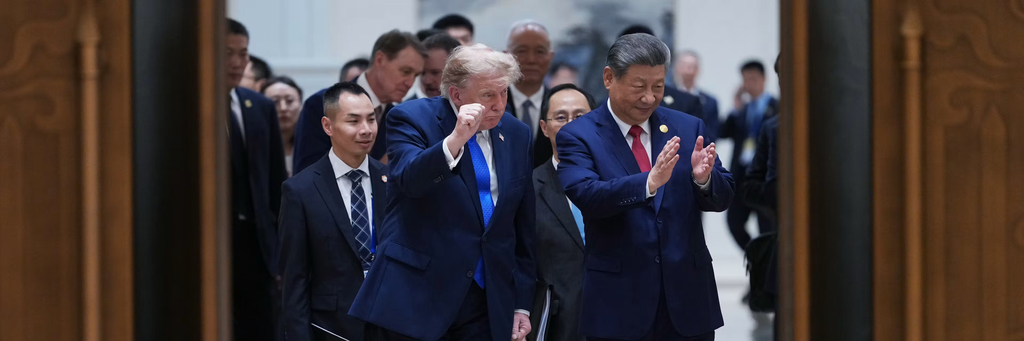
Getty Images
Matt McDonald Professor of International Relations, The University of Queensland
Disclosure statement
Matt McDonald has received funding from the Australian Research Council and the UK’s Economic and Social Research Council.
For the estimated 100,000 participants squashed onto crowded buses and trains or walking the streets of the Turkish Mediterranean city of Antalya, the COP31 climate summit is the only game in town.
Here, preventing dangerous climate change – for most attendees at least, aside from the fossil fuel lobbyists – is their motivation.
But there’s a risk this United Nations climate summit in Turkey, also called Türkiye, and the issue of global warming more generally, is being crowded out of public consciousness by other political issues and mercurial global tensions.
What does this mean for any chance of meaningful climate action coming from the COP31 meeting?
The rollercoaster of global politics
The most significant current distraction from the climate crisis is war, with large-scale conflicts playing out in Iran, Ukraine and Gaza.
Indirectly, these have prompted responses that may reduce climate emissions. The US-Iran conflict, for example, has sparked urgent discussions about national energy security. And it has driven the take-up of electric vehicles, as consumers confront surging oil prices.
But the demise of the liberal world order that has enabled these conflicts also means state security concerns have come to the fore. And this has happened at the expense of global concerns such as climate change.
The COP31 president of negotiations, Australia, is a case in point. Australia has recently doubled down on the security partnership between Australia, the United Kingdom, and the United States, or AUKUS, which has been estimated to cost A$368 billion. Meanwhile, Australia’s financial commitments to climate action pale in comparison.
Domestically, spending on climate action is cancelled out by spending that contributes directly to climate change. By some estimates, the Australian government’s subsidies for fossil fuels outstrip its investment in renewable energy or electrification.
Internationally, Australia has committed only A$50 million to the Green Climate Fund. This UN-hosted financial organisation distributes funds to developing countries for greenhouse gas reduction and adaptation to climate change.
Australia has pledged the same amount to the Loss and Damage fund, designed to compensate developing states for unavoidable climate harms, and A$100 million to the Pacific Resilience Facility, for climate grants in the Pacific.
These are not insignificant commitments, but the prioritisation of traditional security concerns (via nuclear-powered submarines) paints a clear picture of Canberra’s priorities. And the deprioritisation of climate change is a concern.
Cost of living
So where does climate change sit among the concerns of the citizens of the 196 countries and the EU represented here in Antalya?
For developing countries, it remains urgent. For Pacific residents, discussion of how the world will “overshoot” the 1.5°C target risks sounding like fatalism – such warming would be catastrophic for them. With that in mind, Pacific voices have pushed hard for deep and sustained emissions cuts here at COP31.
But in developed countries, the rise of cost-of-living concerns has pushed climate change down the domestic political agenda. They played a prominent role in recent elections in the US and New Zealand, for example, with analysts noting inflation was “rampant” in developed countries across the globe.
In Australia, annual reports on social cohesion have found increasing concerns about cost of living and a relative decrease in concerns about climate change. Other polls show declining support for strong action on climate change, even while climate effects worsen.
These trends suggest two things. Developed countries may be coming to climate negotiations with other concerns at the forefront of their minds. And making significant climate finance commitments to developing states becomes less of a priority.
Really, APEC?
Finally, there are other global events. The leaders summit at the start of COP31 was timed to avoid a clash with Asia-Pacific Economic Cooperation (APEC) meetings. But the abundance of key world leaders at APEC compared to COP31 suggests they did not prioritise climate change.
Among those at APEC but not at COP31 were China’s Xi Jinping, Russian leader Vladimir Putin, Japan’s prime minister Sanae Takaichi and, of course, US President Donald Trump. Their presence took headlines away from the climate summit at crucial points in the negotiations. Between them, these states account for well over 50% of global greenhouse gas emissions.
China’s announcement that it would not seek to host COP33 in 2028 was a blow to lingering hopes that Beijing might step into the leadership vacuum left by the US.
At COP31 this week, countries cannot even agree to call out the source of climate change. Every mention of fossil fuels has been expunged from the draft text for the main outcome of the Cop31 UN climate summit on Thursday, Antalya time, in a blow to the vulnerable countries which had fought hard for its inclusion.
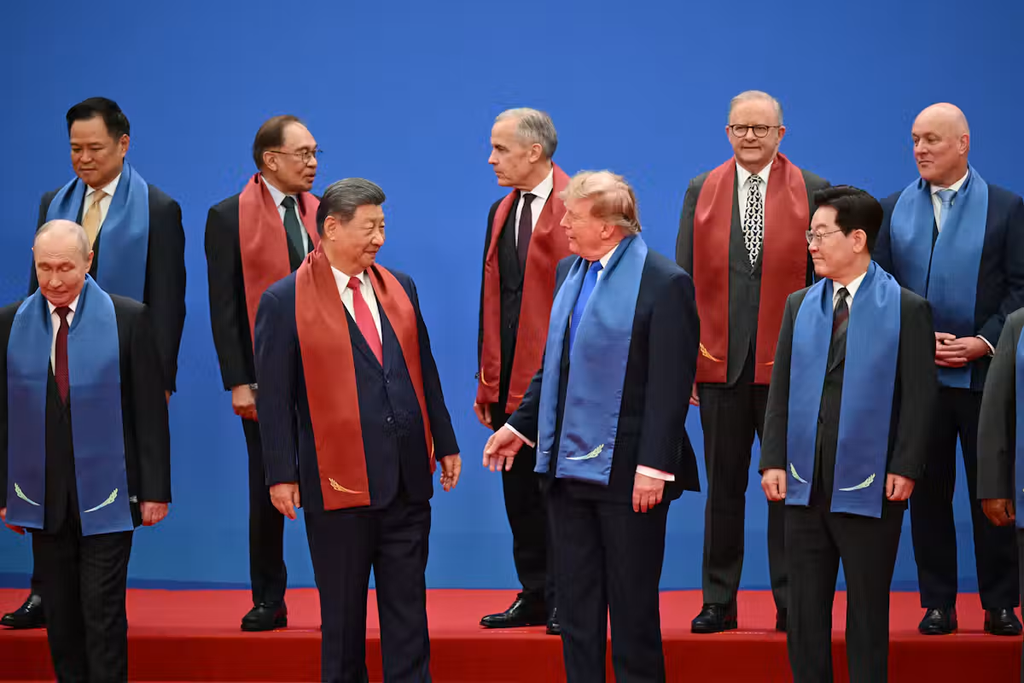
National leaders pose for a group photo during the Asia-Pacific Economic Cooperation (APEC) Summit on November 19, 2026 in Shenzhen, China. Greg Baker/Getty Images
What now for climate action?
A recent UN report confirmed we will likely pass 1.5°C in 2030. That’s bad news for everyone, and clearly points to the imperative for urgent action.
We’re running out of time, and overshoot means irrevocable sea-level rise and the devastating loss of nature. It will be a disaster for developing countries.
Other events are competing for the attention of world leaders, whether traditional security concerns or cost of living crises. Whether COP31 can produce robust agreements that put climate back on the world agenda is the question to be answered over the next two days.
Here are some “ETs” recorded from around the U.S. the last couple of days, their consequences, and some extreme temperature outlooks, as well as any extreme precipitation reports:
Here is More Climate News from Saturday:
(As usual, this will be a fluid post in which more information gets added during the day as it crosses my radar, crediting all who have put it on-line. Items will be archived on this site for posterity. In most instances click on the pictures of each tweet to see each article. The most noteworthy items will be listed first.)
COPOUT 31
100,000 participants.
All on expense account junkets, burning fossil fuels to get there, to be housed there and to be fed there. And these are the leaders that are supposed to solve the fossil fuel problem. They never heard of a zoom meeting. Why? Because there’s no free travel, no per diems, no private jetting. These are the leaders? Only two words. Good luck