The main purpose of this ongoing blog will be to track planetary extreme, or record temperatures related to climate change. Any reports I see of ETs will be listed below the main topic of the day. I’ll refer to extreme or record temperatures as ETs (not extraterrestrials).😜
Main Topic: Bigger, Hotter Fires Are Slowly Erasing America’s Great Western Forests
Dear Diary. Today’s topic comes as no surprise. Due to the increased frequency and ferocity of western wildfires, forests there are disappearing, turning into scrubland because of climate change. We can point to another negative feedback here because snow in forests melts slower than snow beneath small bushes, grass, or bear ground. Thus, the West dries out more and gets hotter so that the wildfire threat grows, debuting forests.
I actually had a chapter on western wildfires destroying the last of western forests in my World of Thermo kids book series written a few years ago. Check it out within the third book, Grim Reaping.
Speaking of all things grim, here is a brand-new article from the New York Tines on the slow disappearance of western forests due to climate change:
Wildfires Are Turning Forests in the American West Into Shrubland – The New York Times
Bigger, Hotter Fires Are Slowly Erasing America’s Great Forests
Towering woodlands in the West are being permanently replaced by tracts of spiky shrubs. Conditions “just aren’t normal anymore,” one researcher said.
By Eric Niiler
Photographs and Video by Nic Coury
Reporting from the Sierra National Forest in California
Aug. 23, 2026
On a gentle slope on the western side of the Sierra Nevada Mountains, where a towering green canopy of ponderosa pines had stood for centuries, wildfires have transformed roughly 1,700 acres into brown, bare shrubland.
That forest is gone for good, scientists say. Spiky shrubs and poison oak have replaced the majestic trees. All that is left of the pines are burned logs and dead branches.
It’s part of a wider transformation that’s taking place across the Western United States, from Oregon to New Mexico, as bigger and hotter wildfires sweep through forests that have not evolved to survive such high-intensity blazes and a warmer climate. Recent studies estimate that as much as 40 percent of Western conifer forests will turn into shrubland by 2100 as a result.
“This is a permanent shift from one ecosystem type to a fundamentally different one,” said Winslow Hansen, a forest ecologist at the Cary Institute of Ecosystem Studies, an independent research center in Millbrook, N.Y.
The consequences of the shift, for both people and wildlife, are expected to be profound.
Researchers say that as trees disappear, winter and spring snow will melt faster, affecting wildlife as well as communities that are already struggling with water shortages. Some Western states get as much as 75 percent of their water from snowmelt.
“When you remove the forest, that snow is more susceptible to melting earlier,” said Benjamin Hatchett, an interdisciplinary scientist at Colorado State University. And he noted that a warmer, more arid climate dries out soil and pulls moisture from plants, making them more susceptible to wildfire. “That thirstier atmosphere is a big concern,” he said.
Forests also absorb planet-warming carbon dioxide from the atmosphere. Bigger, older trees store more carbon than younger trees and shrubs. The loss of conifer forests today means a hotter tomorrow.
To better understand these cascading effects, Dr. Hansen and Johan Eckdahl, a postdoctoral researcher at the University of California, Berkeley, visited the Sierra Nevada this month. On a 100-foot hillside plot that burned in the 2022 Oak fire, they recorded each flowering plant and shrub, filled plastic bags with soil, and checked the ground moisture and temperature with a special probe.
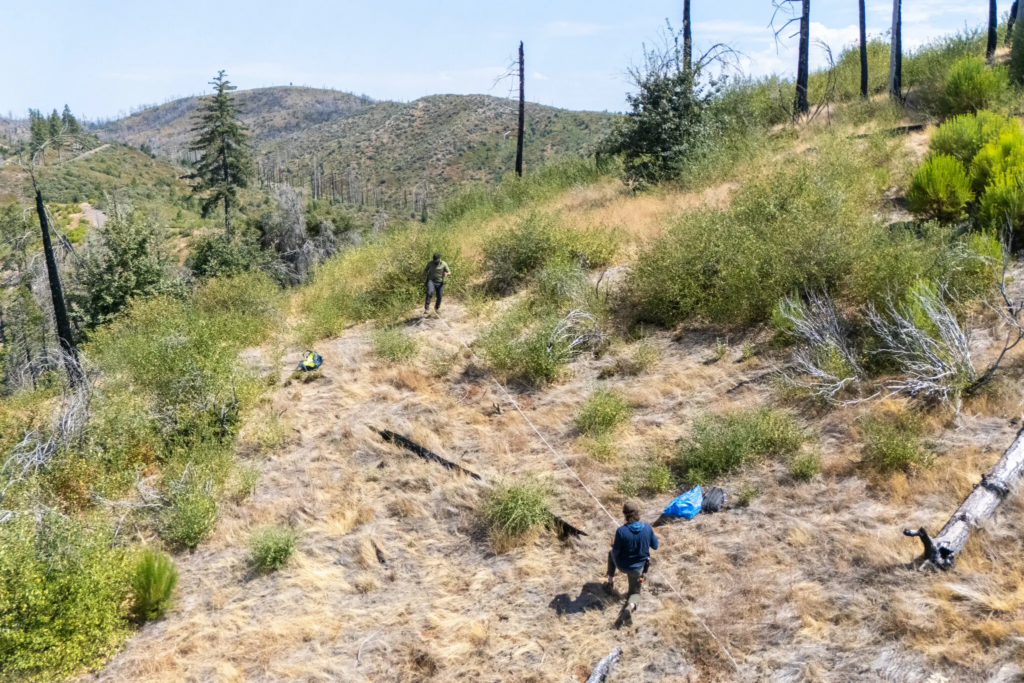
Johan Eckdahl, foreground, and Winslow Hansen measured a burn scar this month in the Sierra National Forest near Midpines, Calif.
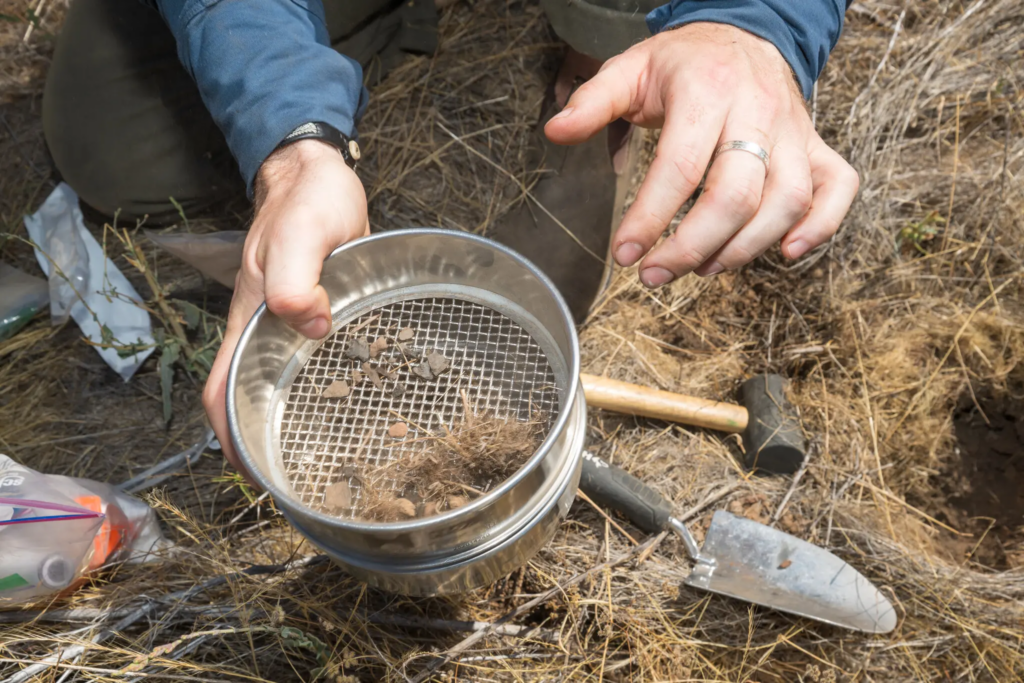
Dr. Eckdahl collected soil samples to be examined for indicators of forest health like organic matter and fungus.
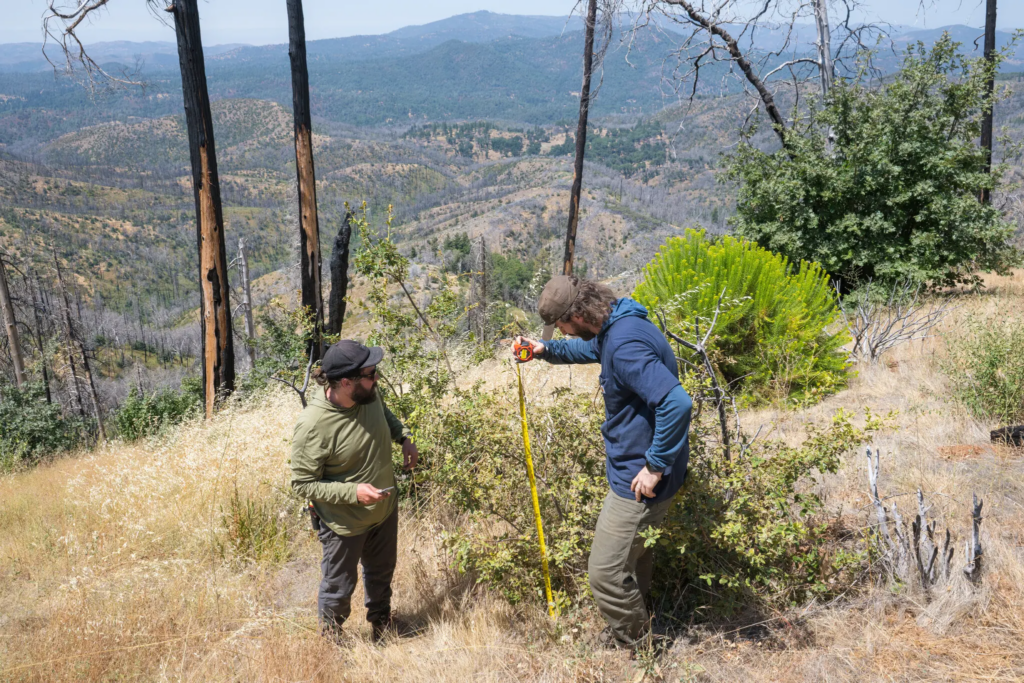
Dr. Hansen, left, and Dr. Eckdahl near Midpines this month. “Ponderosa seeds have adapted to fire, that’s how they live,” Dr. Hansen said. “But the fires are just too hot for them.”
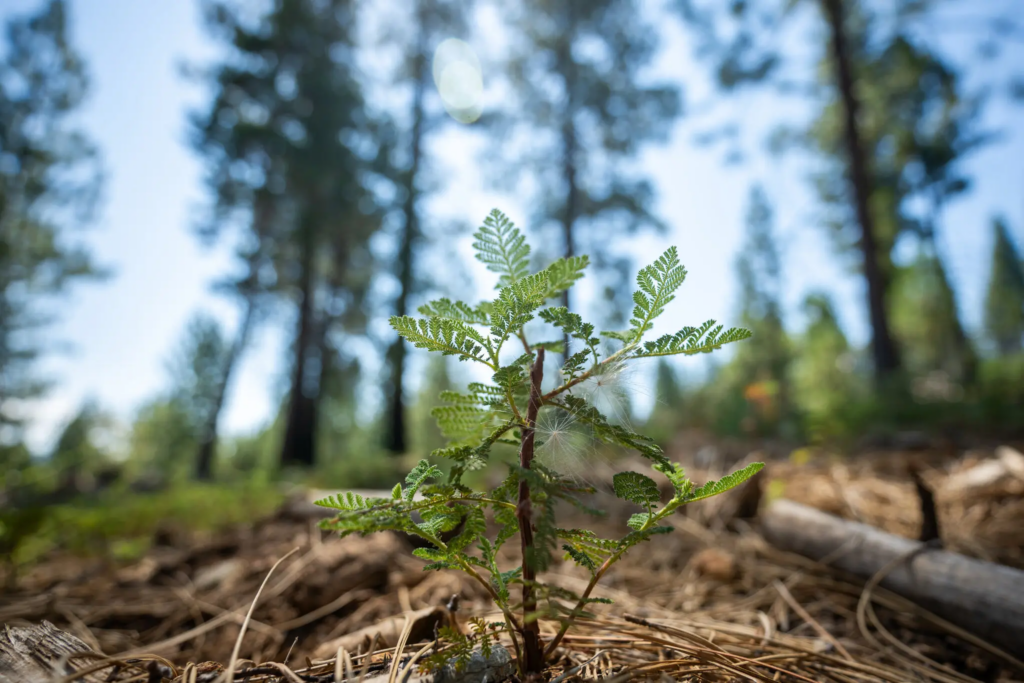
Under normal conditions, seedlings would sprout all over after a fire. Young trees would grow and compete for space, water and light, and the forest would return after a decade or two. But the combination of more intense fires and a warmer, drier climate has stopped this age-old process of regeneration.
As Dr. Hansen stood among the brush at the research site, the absence of new growth was stark. “We haven’t found one ponderosa seedling,” he said. “Ponderosa seeds have adapted to fire. That’s how they live. But the fires are just too hot for them.”
Even if seedlings do take hold, they face tough odds. Across the Sierra Nevadas, about one-fifth of the conifers, or cone-bearing trees, are not well suited to the current warming climate.
Dr. Hansen grew up in Bozeman, Mont., on the edge of the Custer Gallatin National Forest. A wildfire in 2000, when he was 13, forced his family to evacuate. “Firefighters saved our home,” Dr. Hansen said. It was frightening, he recalled. But soon after, he noticed something hopeful.
“I remember the next year going out in those woods and hiking around and exploring and seeing little tree seedlings popping up,” he said. “I had this realization that there’s this revitalization effect of forest fire.”
Today, in addition to his work at the Cary Institute, Dr. Hansen directs the Western Fire and Forest Resilience Collaborative, a group of 40 researchers who are using remote satellite sensing, 3-D mapping and computer models that simulate future climate conditions to track the health of western forests.
This summer, survey crews hired by the collaborative are mapping the severity of fires at more than 100 sites in California, Colorado and New Mexico. The goal is to guide researchers trying to better understand how moisture, nutrients and soil microbes influence to what extent forests will recover and how long it will take.
That survey led Dr. Hansen and Dr. Eckdahl to a second site this month, up a winding dirt road about an hour’s drive north from the hillside plot where they collected samples. This area burned in the 2013 Rim fire. At the time it was the largest ever recorded in California, but now it’s only No. 12 on the list.
Dr. Eckdahl said the trees and shrubs at this site were in a struggle of sorts. Some ponderosa pines have survived, new ones are sprouting up, and a tangle of manzanita, oak and shrubs found at lower elevations are trying to establish a foothold.
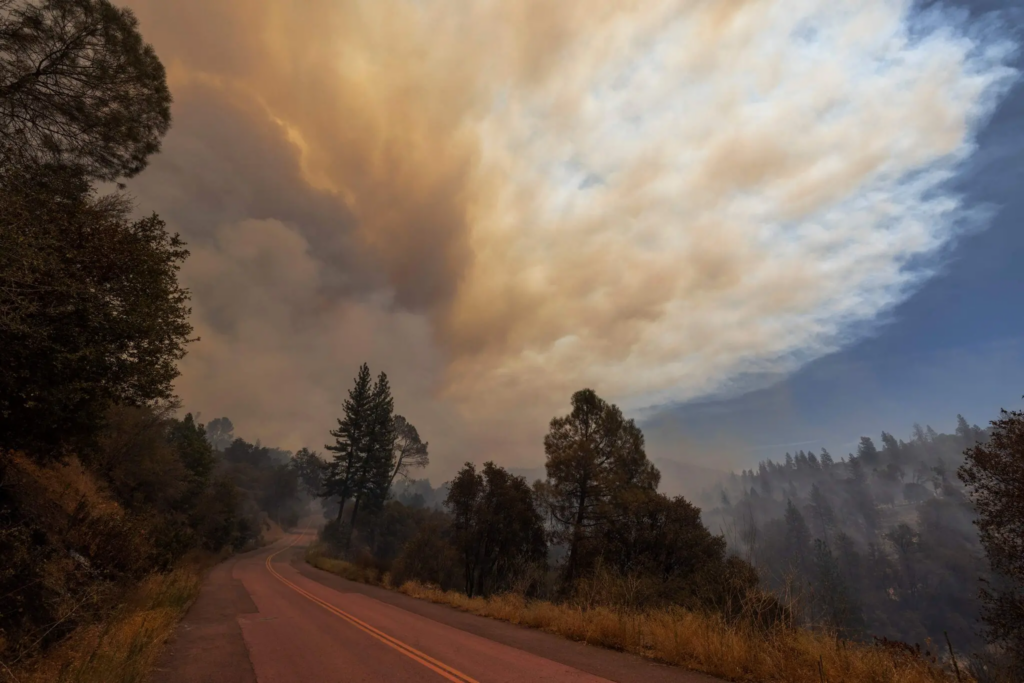
Smoke from the Oak fire near Midpines in July 2022.Credit…David McNew/Agence France-Presse — Getty Images
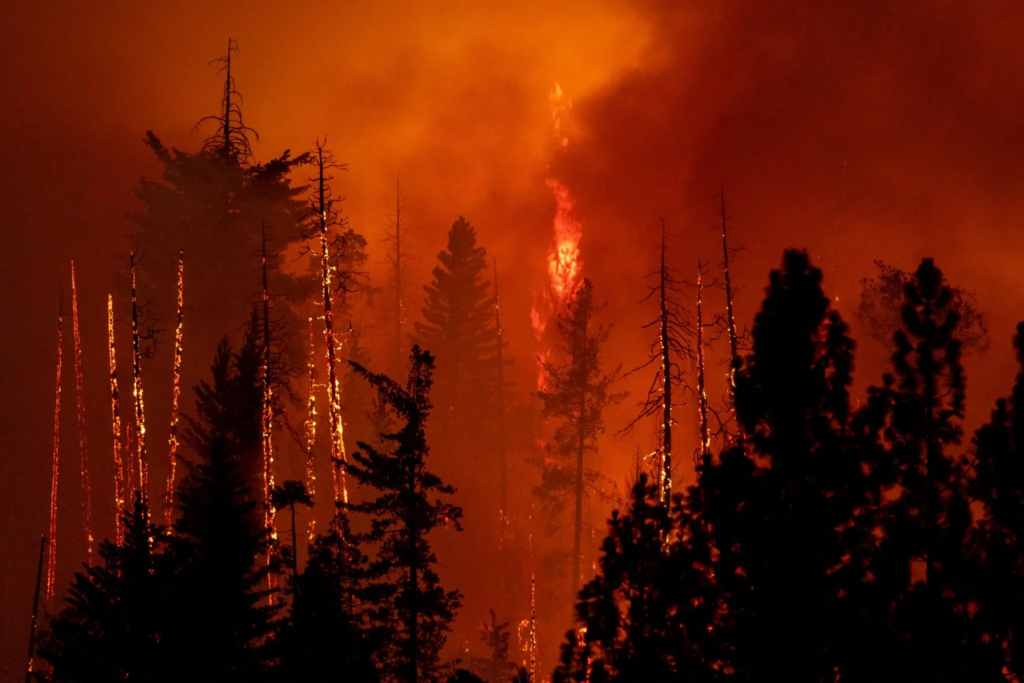
The Oak fire started during a severe drought in California.Credit…David Mcnew/Agence France-Presse — Getty Images
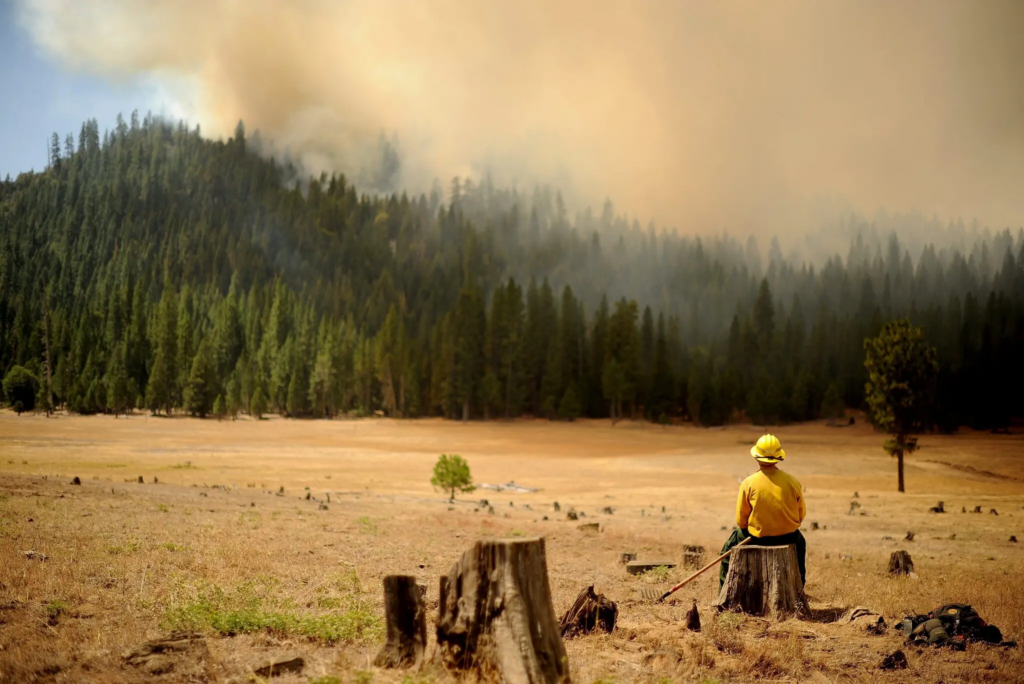
The Rim fire burning outside Yosemite National Park, near Groveland, Calif., in August 2013.Credit…Noah Berger/European Pressphoto Agency
Both research sites are at the same elevation, about 3,800 feet, and get the same amount of yearly rainfall. But by using a genetic test, Dr. Eckdahl found that the soil at the Rim fire site was richer, with 1.5 times as much organic matter, four times as much bacteria, and six and a half times as much fungus. The Rim fire soils were also high in important nutrients like nitrogen and phosphorus, vital for plant growth.
“Here, the balance between trees and shrubs is equilibrated,” Dr. Eckdahl said of the Rim fire site. “As the climate shifts, we expect that equilibrium to shift, so more of the area will become shrubs. In science we call that the tipping point.”
Once he returns to his campus lab, Dr. Eckdahl will be poring through 260 pounds of dirt from the summer field sites, swabbing DNA from nearly 500 soil samples. He’s already identified 60,000 different bacteria and fungi that are key to understanding which areas will regrow or fail. He said he hoped to create a microbiological atlas of forest health throughout the West.
Across the Southwest, which is drier and subject to more prolonged droughts than other areas like as the Pacific Northwest, ponderosa pine forests are particularly at risk of failing, according to Jonathan Coop, a fire ecologist at Western Colorado University who has been tracking this ecological shift for the past two decades. He, too, grew up in a forest playground, the Jemez Mountains in northern New Mexico, a region that has burned twice since the 1970s and is now nearly barren of trees.
“Watching those forests erode away and turn into something else has really been the catalyst of a lot of the work that I’ve been doing,” Dr. Coop said. “There’s no sign, almost, that there were ever forests there, let alone that they’re coming back. You know, absent a few charred sort of matchstick-like snags.”
This month, Dr. Coop and colleagues published a new study in the journal Science Advances that found wildfires are now getting so large and so fast that pine seeds can’t regenerate. The team looked at almost 3,500 wildfires from 2012 to 2023 in conifer forests in Canada and the Western United States.
“Forests do have innate resilience and under normal circumstances, they can take a hit or two and bounce back,” Dr. Coop said. “But circumstances just aren’t normal anymore.”
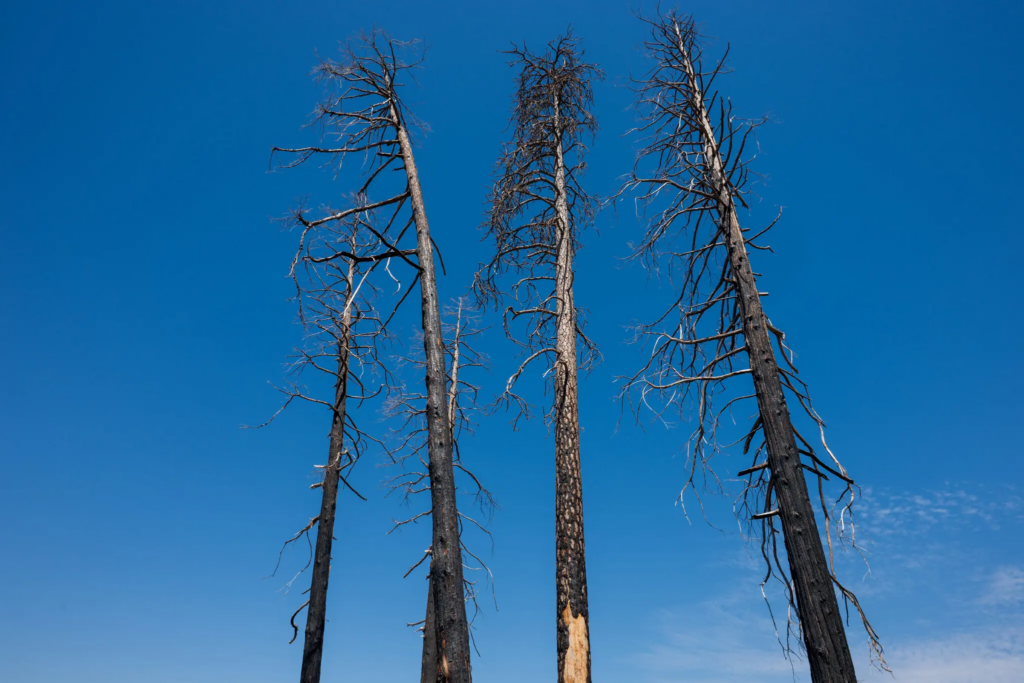
“Forests do have innate resilience and under normal circumstances, they can take a hit or two and bounce back,” Jonathan Coop, a fire ecologist, said. “But circumstances just aren’t normal anymore.”
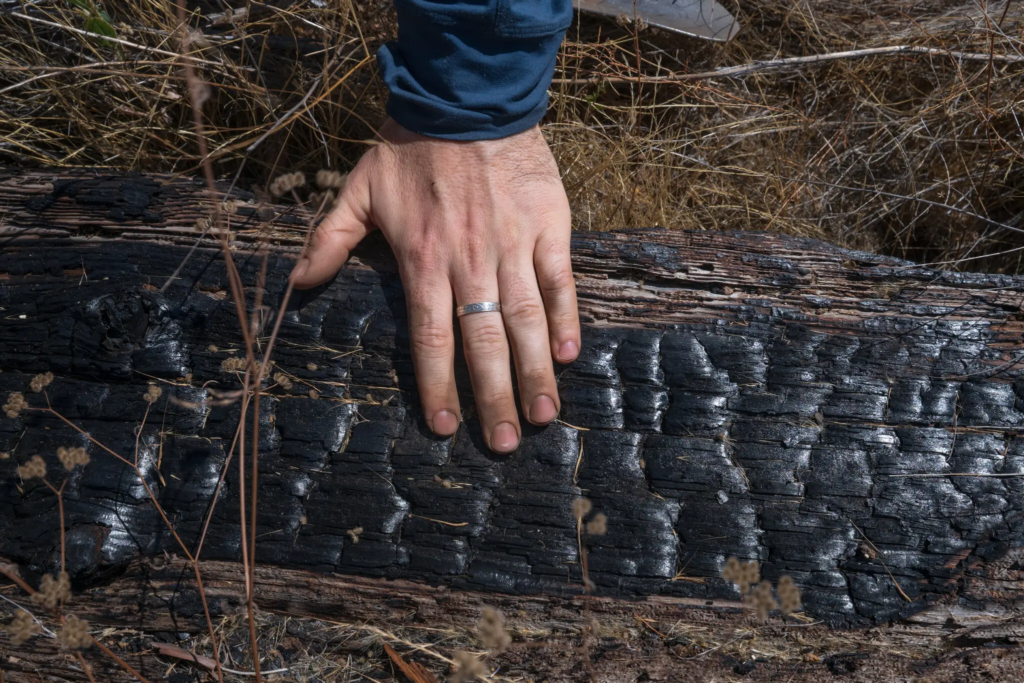
Research teams are mapping burned areas this summer to understand how moisture, nutrients and other factors influence recovery.
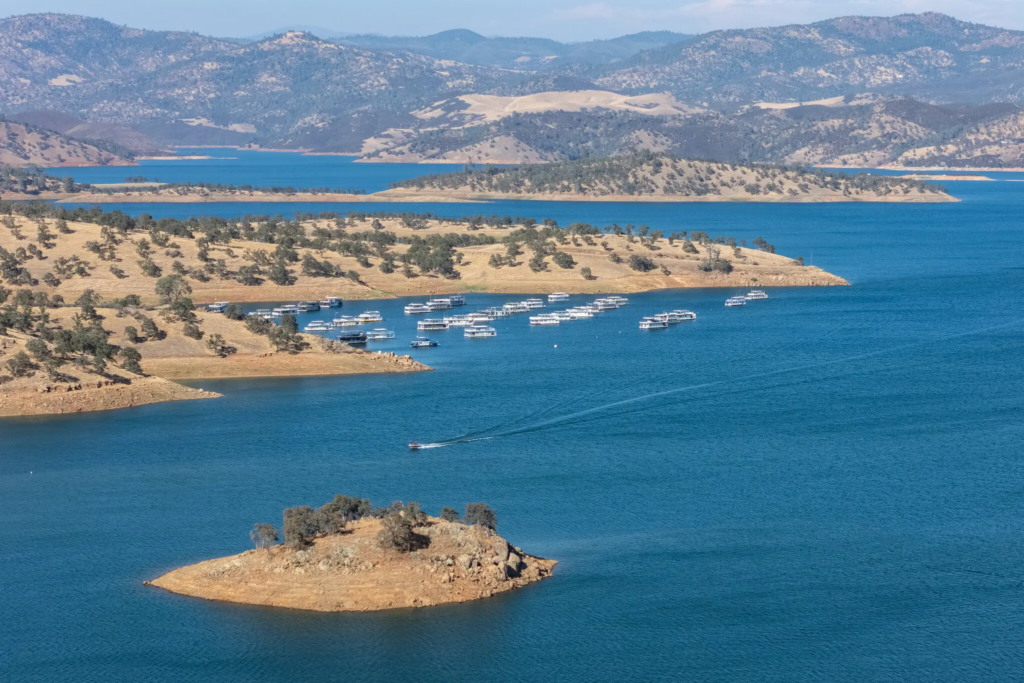
The Don Pedro Reservoir near La Grange, Calif., this month. Snowmelt accounts for up two-thirds of the water stored in the 21 largest reservoirs in the West.
As natural regeneration falters, scientists and conservationists are trying to give forests a helping hand.
In Montana, for example, they’re teaming up to plant more climate-resistant seedlings from lower and warmer elevations in new areas that have burned. Kimberley Davis, a research ecologist at the U.S. Forest Service in Missoula, Mont., worked with Conservation International, a nonprofit environmental group based in Arlington, Va., at an experiment in the western part of the state.
They took seedlings of the western larch, a native conifer that can reach 200 feet tall, from 3,400 feet and planted them in a burned area between 4,600 feet and 6,200 feet. The lower-elevation seedlings grew back better and coped with the warmer climate better than seedlings taken from higher elevations. Similar experiments of so-called assisted migration are underway in California and Washington State.
“Keeping as many live trees as we can on the landscape when it burns is really important,” Dr. Davis said. “Because the seed source is so important.”
All the researchers said that there’s still a fair amount of uncertainty in predicting which pine forests will survive and which ones will perish. Despite the new tools of machine learning, remote sensing and genetic analysis, it’s still hard to identify a recipe for a successful forest.
Scientists make calculations based on temperature, moisture and other factors, Dr. Hatchett said, “but the plants are doing their own thing.”
“Biology is always going to throw you a curveball,” he said.
A version of this article appears in print on Aug. 23, 2026, Section A, Page 21 of the New York edition with the headline: Bigger and Hotter Fires Are Erasing America’s Great Forests. Order Reprints | Today’s Paper | Subscribe
Our Coverage of Climate and the Environment
- Colorado River Cuts: Federal officials sharply cut how much water Arizona, California and Nevada can draw from the Colorado River over the next two years in an attempt to stabilize a system on the verge of collapse because of climate change and overuse.
- Flights and Global Warming: Over the next two winters, British air traffic controllers will instruct hundreds of aircraft traversing the North Atlantic to adjust their altitude in an effort to reduce heat-trapping contrails.
- Reservoir Threats: Lakes Powell and Mead, the nation’s largest reservoirs, are drying up, sending a Colorado River system that provides water and electricity for millions of people into a state of crisis with no end in sight.
- Europe’s Heat Waves: The whole planet is warming, but changes in weather patterns could help explain why the continent is suffering so many bouts of severe heat.
- Fighting Wildfires After Job Cuts: The Trump administration pushed out thousands of veteran U.S. Forest Service staff. An ‘extraordinary’ fire season is testing those who are left.
- Climate F.A.Q.: Do you have questions about climate change? We’ve got answers.
Related Content
More in Climate
- Why Europe Keeps Being Pummeled by Heat Waves

- Judge Rejects Suit That Sought Professor’s Emails on Climate Law

- Come On In, the Water’s Fine (at These 6 Wild Swimming Spots)

- England’s Ancient Trees Are Dying in the Heat

- Climate: Saving Old Trees Might Save Lives

- Nation’s Largest Reservoirs Are Drying Up, Threatening Life in the Southwest

Related:
Here are more “ET’s” recorded from around the planet the last couple of days, their consequences, and some extreme temperature outlooks, as well as any extreme precipitation reports:
Here is More Climate News from Sunday:
(As usual, this will be a fluid post in which more information gets added during the day as it crosses my radar, crediting all who have put it on-line. Items will be archived on this site for posterity. In most instances click on the pictures of each tweet to see each article. The most noteworthy items will be listed first.)