The main purpose of this ongoing blog will be to track planetary extreme, or record temperatures related to climate change. Any reports I see of ETs will be listed below the main topic of the day. I’ll refer to extreme or record temperatures as ETs (not extraterrestrials).😜
Main Topic: As Colorado Burns, a Novel Climate Change Lawsuit Heads to the Supreme Court
Dear Diary. Every so often I will report on climate litigation to let my readers know how that is progressing. One of the best methods for fighting the fossil fuel industry is to hit them in the wallet with lawsuits…that is if a judicial system actually isn’t corrupt and works. Our U.S. Supreme Court is in bed with the fossil fuel companies, although it can’t be proved that money has been changing hands between justices and any company representatives. If a scandal breaks out on that regard, I will let you know.
Rather, since the subject of climate change has become a cultural issue, the six conservative justices on the nine-member Supreme Court are partial to leaning toward “old fashioned” energy production and the needs of companies that produce it. Most don’t buy into any climate crisis and the science behind that.
Nevertheless, people still keep trying to sue fossil fuel companies as is their right. Here is Colorado’s story:
As Colorado burns, a novel climate change lawsuit seeking damages from oil companies heads to the Supreme Court
Boulder argues that Exxon Mobil and Suncor Energy “intentionally misled the public” about climate change, leading to more costly extreme weather events, like wildfires.
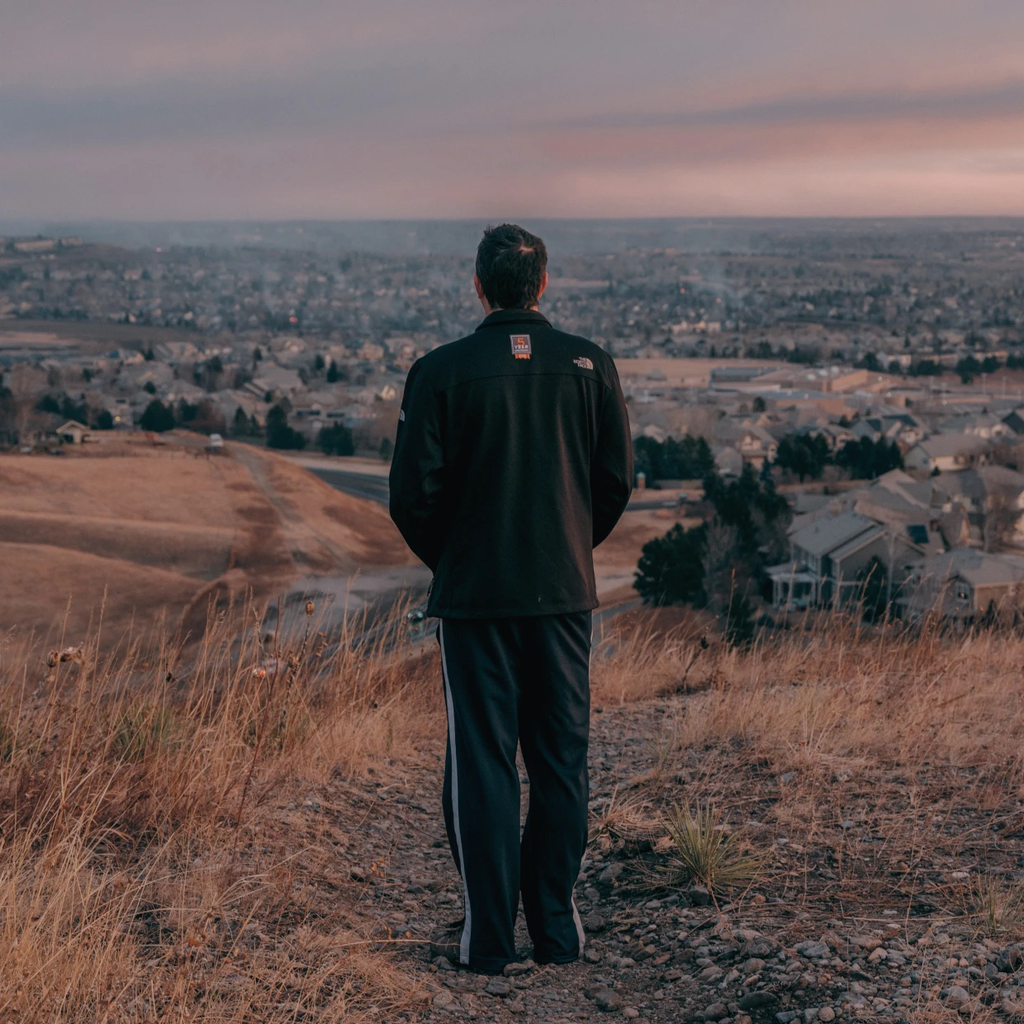
A man watches homes burn during the Marshall Fire, which caused historic property damage in Colorado.
Aug. 31, 2026, 12:00 PM EDT
SUPERIOR, Colo. — Daryl McCool heard at noon that a wildfire was surging toward her home. By 2 p.m., only a smoldering pile of rubble was left.
McCool and her family were able to quickly evacuate, but the devastating Marshall Fire on Dec. 30, 2021, destroyed more than 1,000 homes and killed two people in the 6,000 acres between Denver and Boulder. No other wildfire in Colorado’s history has caused so much property damage, an estimated $2 billion.
“Just devastating. There is no feeling to describe the anguish,” McCool told NBC News.
The city of Boulder and Boulder County — which includes Superior — now seek to hold energy companies accountable for the costs of adapting to a climate altered by fossil fuel emissions. In a novel lawsuit the Supreme Court is considering in October, Boulder is asking for damages from Exxon Mobil and Suncor Energy. The lawsuit, which has echoes of previous litigation against Big Tobacco, accuses the companies of misleading consumers about the affect fossil fuels would have in Colorado, which includes the risk of more damaging wildfires.
The lawsuit, filed in 2018, does not specifically seek recompense for the Marshall Fire, but the disaster highlights how local governments are struggling to adapt to, and pay for, the impacts of climate change.

Daryl McCool poses for a portrait in her backyard in front of a windmill and a tree that both survived the fire.Benjamin Rasmussen for NBC News
The oil companies deny the allegations, countering that the Boulder lawsuit and more than two dozen others like it are part of a broader war on fossil fuels led by environmentalists.
McCool, 61, spoke to NBC News at her new home in the same location on an early August day with the sky made hazy by wildfire smoke and the temperature in the city of Boulder hitting 104 degrees, substantially higher than the seasonal average.
Wildfires have continued to plague Colorado since the Marshall Fire, with the ongoing Aspen Fire having reached 100,000 acres, while the state faces drought conditions and high temperatures, all aggravated by climate change.
At the old house McCool shared with her husband and son, all that was left of note were a scorched apple tree and an ornamental windmill. She later found a picture of a heart her son had drawn in elementary school.
The loss, she said, “still hits in waves.”
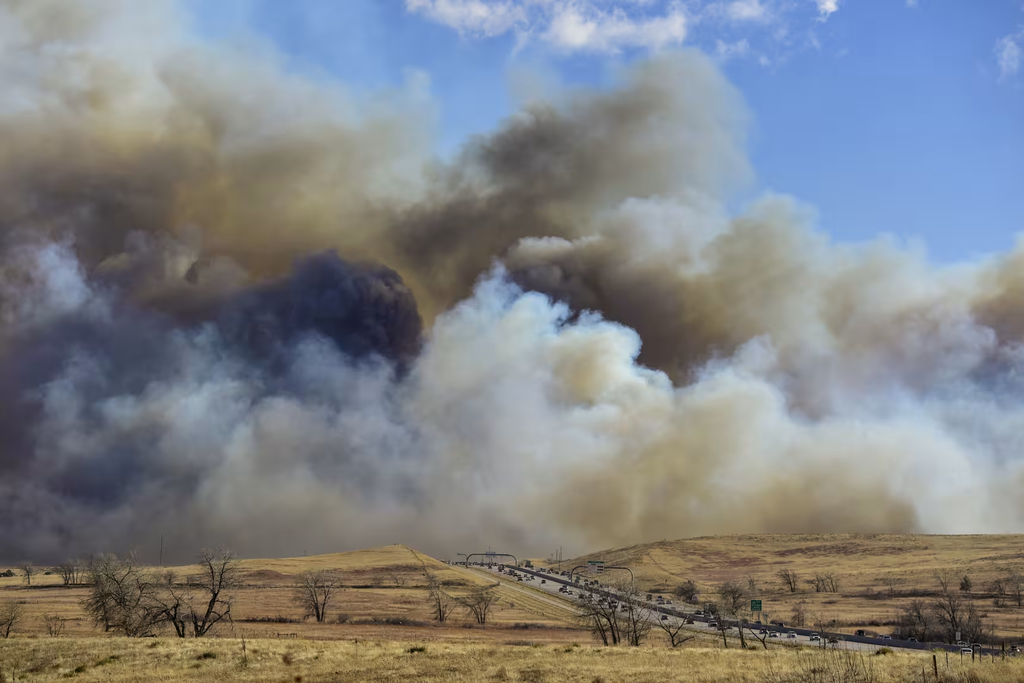
Wildfire smoke in Boulder in 2021. Matthew Jonas / MediaNews Group via Getty Images file
Like others who spoke to NBC News, she is alarmed about the immediate and damaging impact of climate change in her state and the lack of a concerted effort at the national level to do anything about it.
“Climate change affects every single individual on this planet. Nobody is immune from it, and you see that as more and more disasters hit more and more frequently,” she said. “It’s going to get worse and worse, it’s not going to get better, and it would be great if the fossil fuel companies would own up to this and help us figure out a solution.”
Louie Delaware, 69, who lost his home in nearby Louisville in the Marshall Fire, has a similar view. The devastation caught everyone by surprise in part because the fire was in December, when wildfires rarely occur.
“We didn’t really think it would happen here,” he said. “It was just a tinder keg.”

A note, a photograph and a windmill were among the things that survived the fire at Daryl McCool’s home.Benjamin Rasmussen for NBC News
At one point, Delaware returned to the house as the fire approached, thinking he could maybe protect his home using a water hose.
“I saw houses on fire. I thought … ‘I’ve got to get out of here,’” he said.
The next day, it snowed.
‘A recipe for chaos’
The courts have increasingly become the battleground for climate policy in recent years, because of a lack of action in Congress and hostility from the Trump administration toward the issue. President Donald Trump has referred to climate change as a “con job,” a “hoax” and a “scam” despite the scientific evidence to the contrary, and his administration has reversed course on Biden- and Obama-era policies that sought to speed the transition to renewable energy.
The Supreme Court case is an inflection point, as it could kill at least some of the litigation against oil companies over climate change.

Louie Delaware poses for a portait with his three dogs, which his wife saved from the fire, in front of his rebuilt home.Benjamin Rasmussen for NBC News
The justices will not be ruling on the merits of the lawsuit. They will focus on whether the lawsuit can even move forward in state court, with Exxon and Suncor arguing that climate change is an inherently federal issue because of the global nature of greenhouse gas emissions that state courts cannot adjudicate piecemeal. The Trump administration agrees, and it filed a brief in the Boulder case backing the oil companies.
The plaintiffs argue that the companies “intentionally misled the public about the impacts of climate change” through their advertising and marketing and “knowingly caused and contributed to the alteration of the climate” by producing and selling fossil fuels.
The lawsuit does not seek to cap emissions or shut down facilities.
The complaint specifically mentions the “substantial and additional costs” related to increased risk of wildfires, including both efforts to prevent or minimize fires and the cost of rebuilding after them.
The companies’ lawyers repeatedly stress in court papers that if cases like the one in Boulder are allowed to move forward, they could lead to the fossil fuel industry’s facing billions of dollars in damages.
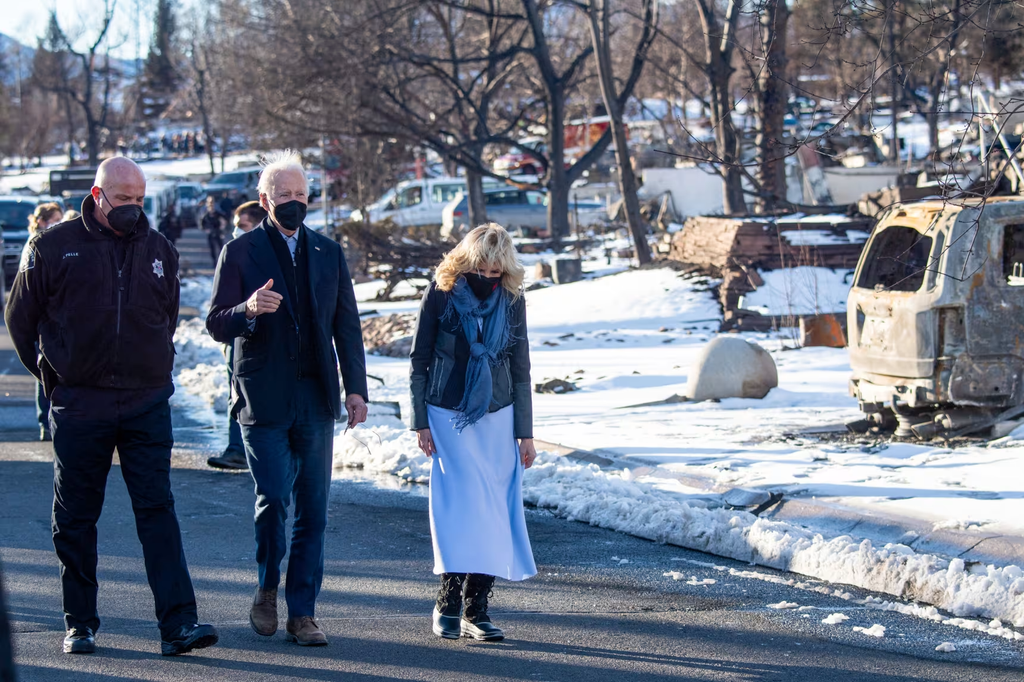
President Joe Biden and first lady Jill Biden tour a neighborhood in Louisville, Colo., destroyed by the Marshall Fire alongside Boulder County Sheriff Joe Pelle on Jan. 7, 2022. Saul Loeb / AFP via Getty Images file
“Giving even a single jury the power to impose ruinous liability on selected members of the energy industry is a recipe for chaos. Unleashing juries nationwide is a recipe for disaster,” the lawyers wrote.
Boulder city and county officials declined interview requests.
“Boulder is attempting to dictate national energy policy, putting affordable energy and thousands of jobs at risk,” an Exxon spokeswoman said.
A Suncor spokeswoman pointed to court filings in which the company said it has “never denied climate change, and never funded any research in that regard,” nor has it “participated in any efforts to mislead the people of Colorado about climate change or fossil fuels.”
The costs of climate change
Myriad factors led to the Marshall Fire’s being so ferocious, including months of drought, tall grasses caused by a wet spring and unusually high winds on the day in question.
At about 11 a.m., the fire was ignited in two separate areas, one caused by a damaged power line and one by a fire on a residential property that had not been fully extinguished. Winds of up to 100 mph sent the flames racing toward Superior and then Louisville, a few miles to the east; at one point, they crossed a six-lane highway.
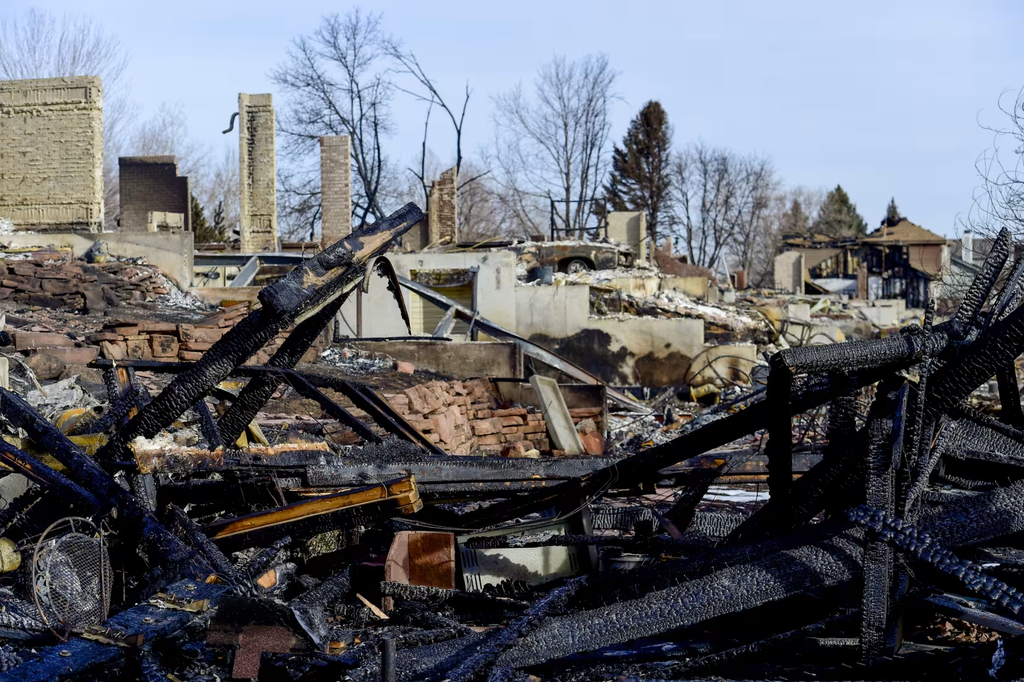
A long line of homes destroyed by the Marshall Fire in 2022. Matthew Jonas / MediaNews Group via Getty Images file
Jennifer Balch, a professor at the University of Colorado Boulder who specializes in fire ecology, told NBC News “the science is clear” that climate change is playing a role in fueling more extreme wildfires.
“The simplest way to put it is that it takes a little bit of warming to get a lot more burning,” she added.
The costs associated with such fires put a large burden on local officials like those in Boulder.
Though Superior is not involved in the lawsuit, its mayor, Mark Lacis, said he shares those concerns.
“Right now, the negative externalities from fossil fuel consumption has been absorbed entirely by the public, and there has been, you know, no price to pay by the producers,” he said in an interview at Town Hall, outside of which sits a historic coal wagon in recognition of the town’s industrial beginnings.
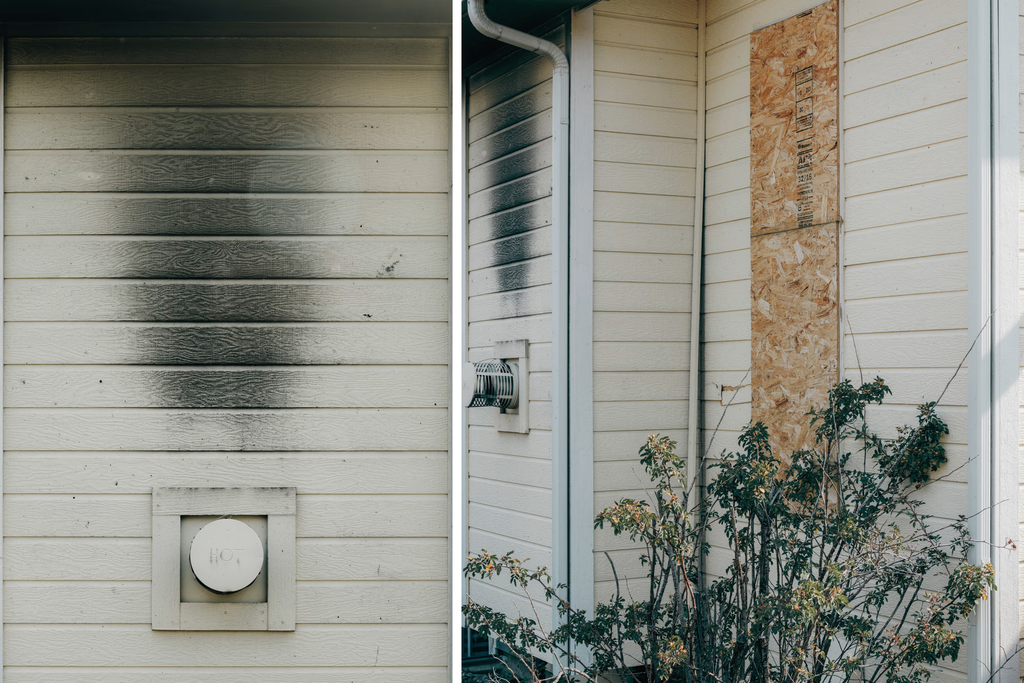
The home of a neighbor of Louie Delaware was saved, but it is uninhabitable because of smoke damage. Benjamin Rasmussen for NBC News
The Marshall Fire ripped through new neighborhoods and those that had been there since the town’s founding, like McCool’s.
In the aftermath, Superior’s leaders have imposed new policies, even using goats to keep the grass under control. The town is also trying to control and reduce its own greenhouse gas emissions.
Lacis is under no illusions that even big damage awards from the Boulder lawsuit would do anything more than help defray the costs of adapting to a changing climate, adding that a “multifaceted approach” is needed.
‘Will they come after our cows … next?’
About 250 miles west of Denver on the other side of the Rockies, the Boulder lawsuit faces a skeptical audience in solidly Republican Mesa County, which is adjacent to the Piceance Basin, a major source of natural gas.
The county filed a brief, along with seven other counties in the area, opposing the Boulder claims and accusing the more liberal county of seeking to impose its “policy preferences on sister counties through tort litigation.”
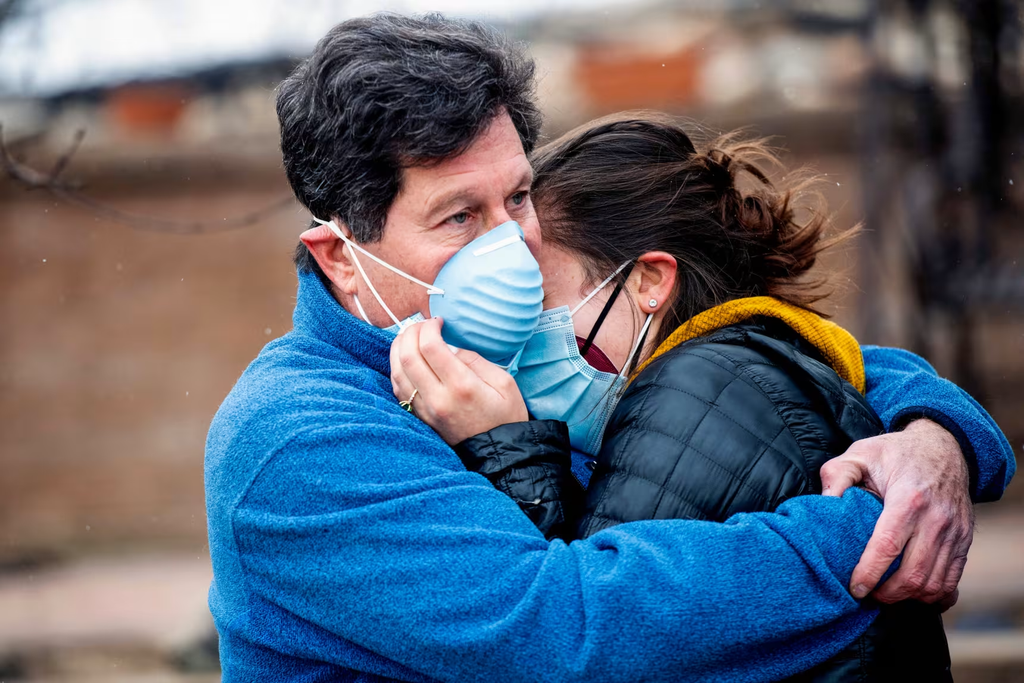
Louie Delaware embraces Elise, his daughter, in Louisville after seeing the remains of their home destroyed by the fire in 2021.JAason Connolly / AFP via Getty Images file
In an interview at the county courthouse in Grand Junction, Mesa County Commissioner Cody Davis, a Republican, insisted that he was not contesting that the climate is changing.
“I’ve lived here my entire life,” he said. “The summers seem a little hotter. I don’t remember quite the intense wildfire seasons. That’s not the debate I’m trying to have here.”
What he objects to is using state courts in a way that could affect not just state but also national policy. He expressed concern that a ruling for Boulder could pave the way for other cases involving greenhouse gases, including claims targeting the cattle industry.
“Will they come after our cows, who are releasing methane into the air, next?” he said.
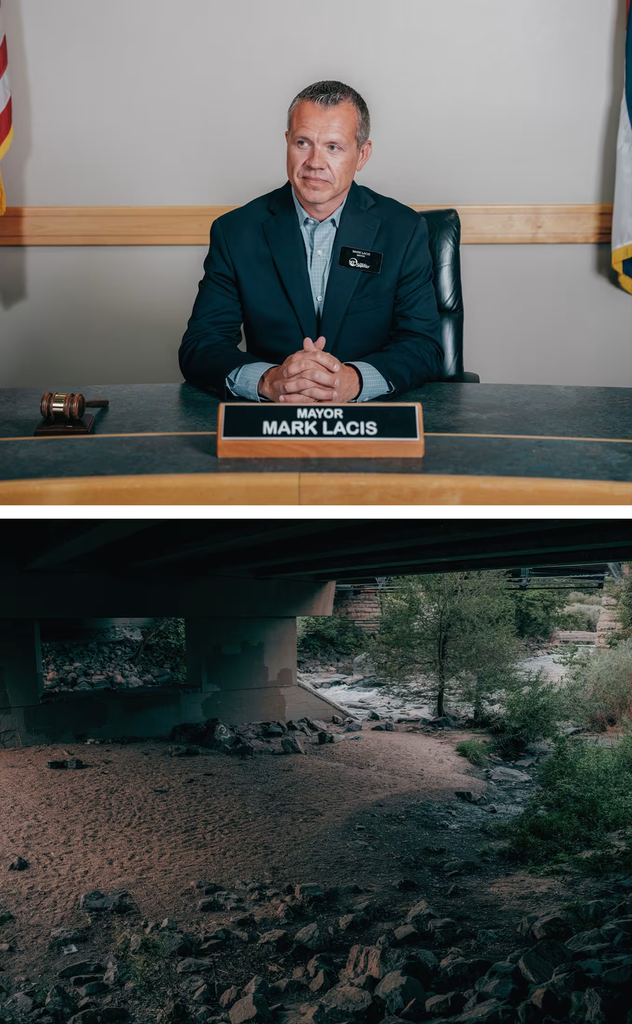
Mark Lacis, the mayor of Superior; the low flow of the Platte River in Denver caused by the ongoing drought. Benjamin Rasmussen for NBC News
Davis also rejected the suggestion that allegations that oil companies withheld information from consumers are akin to claims against tobacco companies about the risk of cancer, a comparison climate activists have made.
“I think there’s a big moral difference between going after tobacco companies who have done extreme damage to our communities with no benefit other than the profits of these companies, while the oil and gas companies keep the lights on in the hospitals,” he said.
Taking the middle ground between climate activists on one side and oil-friendly interests on the other is Colorado Attorney General Phil Weiser, a Democrat who is the party’s nominee for governor this year.
The state is not directly involved in the case, but Weiser filed a brief tentatively backing Boulder on the narrow issue of whether the lawsuit should at least be allowed to move forward in state court.
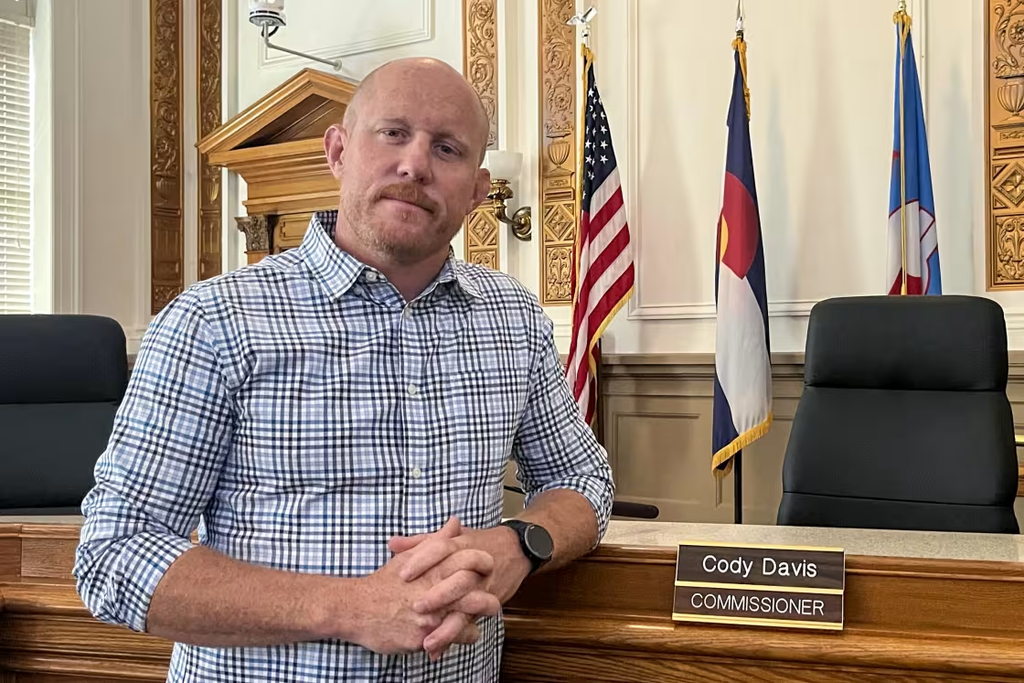
Mesa County Commission member Cody Davis.Lawrence Hurley / NBC News
Weiser refused to say in an interview at his office in Denver whether the lawsuit was the appropriate vehicle to address climate change.
“Let me acknowledge the painful position we’re in,” he said of the state’s failing to fully endorse either side, pleasing no one.
While he believes Congress is best placed to take action on a national issue like climate change, state court litigation can help spur lawmakers to act, Weiser said. The Trump administration’s policies are “terrible for America,” he said, noting that the state has sued over an attempt by the federal government to keep a coal plant in the state open.
But as to whether oil companies should ultimately pay a price, Weiser was noncommittal, suggesting that tough regulation of the oil industry is itself “a form of accountability.”
High stakes at the Supreme Court
How the Supreme Court, which has a 6-3 conservative majority, will tackle the preliminary issue before it is being closely watched.
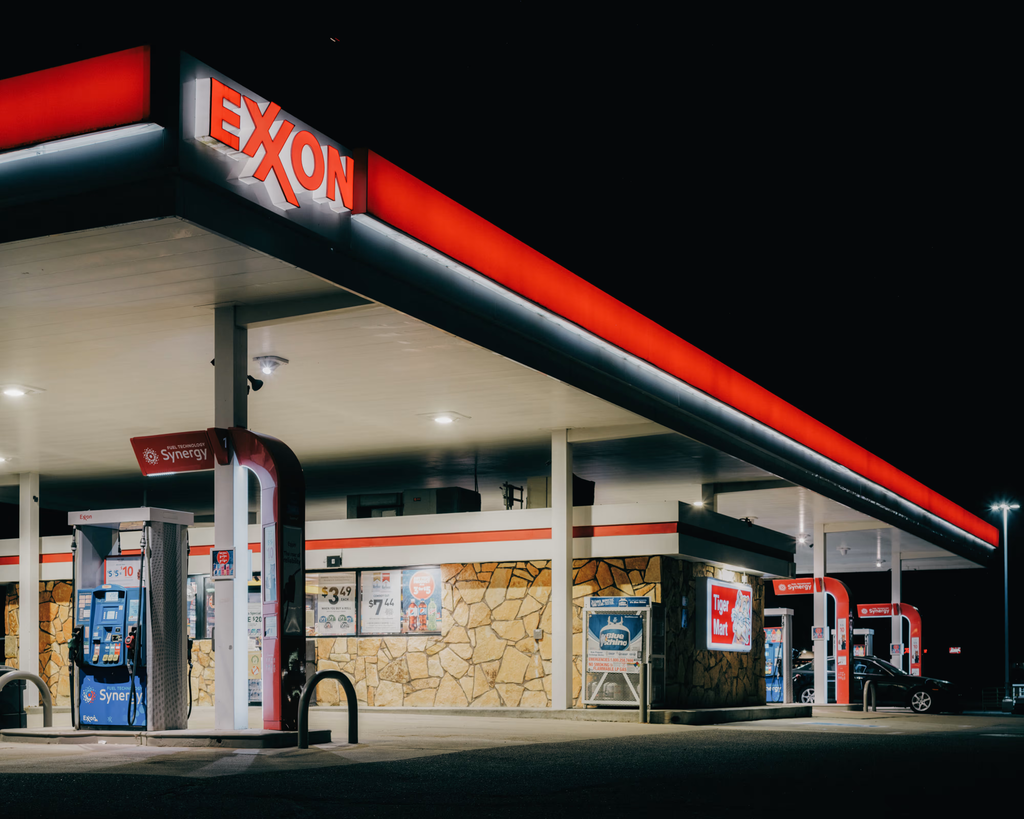
An Exxon station near Superior. Benjamin Rasmussen for NBC News
The court ruled 6-3 this year against a similar attempt to block state claims against a corporate defendant in a lawsuit brought by a U.S. service member against a military contractor. Conservative Justice Clarence Thomas wrote the majority opinion in that case, meaning his vote in the Boulder case could be key.
A ruling in favor of the oil companies could prevent not just Boulder’s case from moving forward but could affect some of the other lawsuits filed by states, cities, counties and tribes around the country.
Even a win for Boulder would leave many questions unanswered, including how a court could assess damages based on two companies’ contributions to worldwide emissions and how their share of emissions affected Boulder and the surrounding area. Oil industry-allied groups are also pushing legislation that would shield companies from climate change lawsuits.
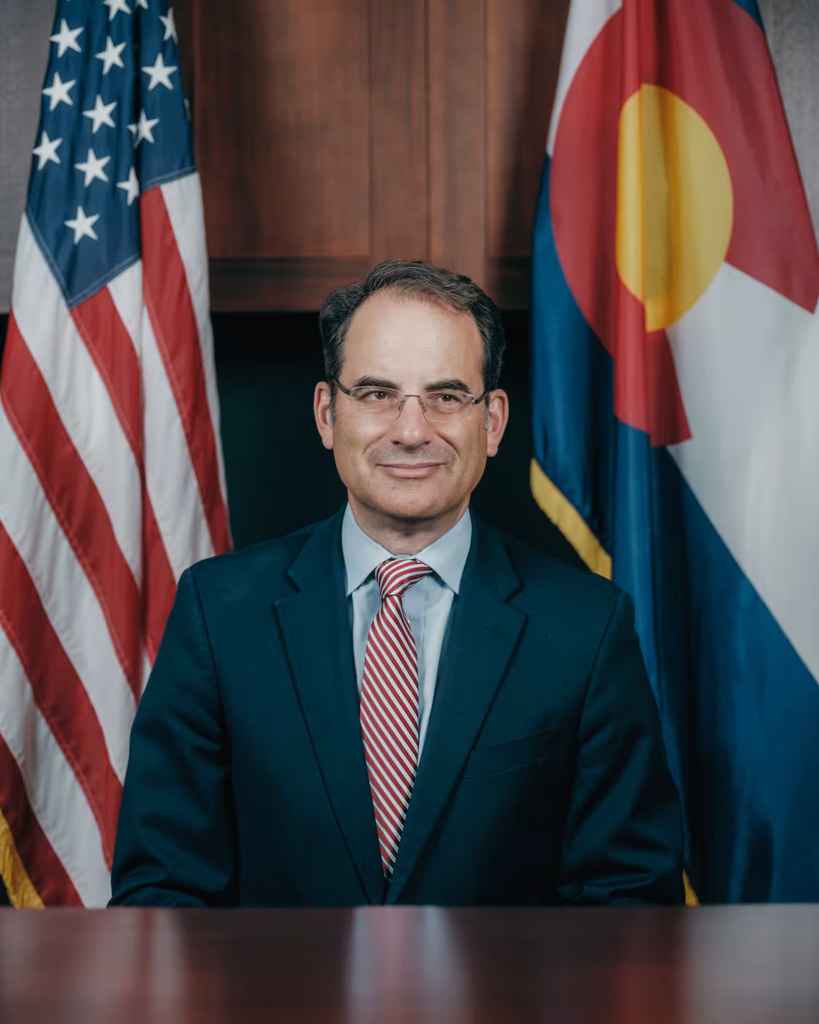
Colorado Attorney General Phil Weiser poses for a portrait in his office.Benjamin Rasmussen for NBC News
The litigation has sparked an all-out war inside and outside the courtroom, with the oil companies and business-friendly groups having fought tooth and nail for years to kill the various lawsuits.
The debate has even embroiled the federal judiciary itself, including a dispute over how climate science was characterized in a manual that is distributed to judges. That chapter was abruptly removed after Republicans complained about it this year.
There have also been calls from liberal and conservative groups for conservative Justice Samuel Alito and liberal Justice Elena Kagan to step aside from hearing the case, which they have not done. Alito has shares in energy companies not involved in the case, while Kagan wrote a foreword to the judicial reference manual. Neither is a reason to recuse under court ethics rules, experts say.
Even if the Boulder case does ultimately result in a payout, that would not undo the damage wrought by the Marshall and Aspen fires.
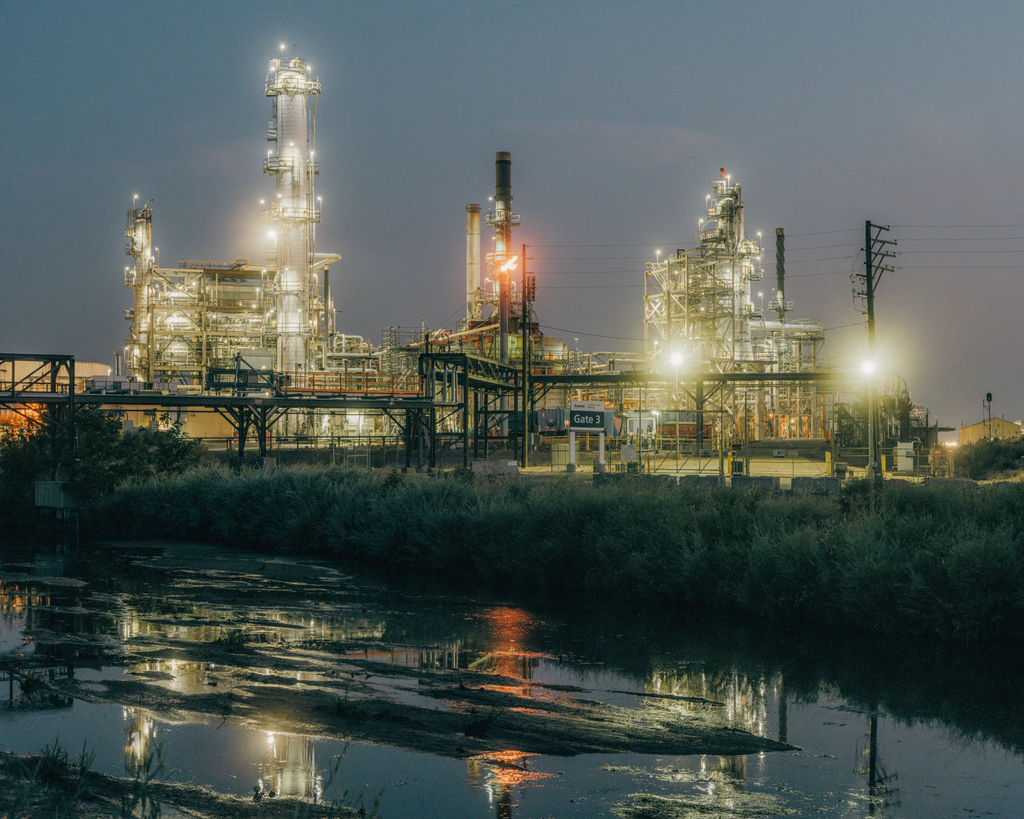
The Suncor refinery in Commerce City.Benjamin Rasmussen for NBC News
Both McCool and Delaware, members of a nonprofit network called Extreme Weather Survivors, have spent years rebuilding their homes — and their lives — while spending time in rental properties.
McCool has kept the scorched apple tree, which is adjacent to her bright red new home, as a reminder of what her family went through.
“It’s the only real memory we have of where our house was before the fire,” she said.
Delaware, who shared the details of his new home with pride, pondered whether people would have reduced their use of fossil fuels had they known earlier about the long-term effects.
Ultimately, he said, “knowledge is everything.”

Lawrence Hurley is a senior Supreme Court reporter for NBC News.
Here are more “ET’s” recorded from around the planet the last couple of days, their consequences, and some extreme temperature outlooks, as well as any extreme precipitation reports:
Here is More Climate News from Monday:
(As usual, this will be a fluid post in which more information gets added during the day as it crosses my radar, crediting all who have put it on-line. Items will be archived on this site for posterity. In most instances click on the pictures of each tweet to see each article. The most noteworthy items will be listed first.)