The main purpose of this ongoing blog will be to track planetary extreme, or record temperatures related to climate change. Any reports I see of ETs will be listed below the main topic of the day. I’ll refer to extreme or record temperatures as ETs (not extraterrestrials).😜
Here is a new feature for this blog, which I will add daily. This is the latest inciteful Green News Report from my friends Desi Doyen and Brad Friedman at Progressive Voices. Hit ‘More info,’ listen, then hit return to see my daily topics:

Green News Report with Brad Friedman & Desi Doyen
Episode: 11/12/2026 — More info…
Dear Diary. Here’s a question. Evert since the Industrial Revolution ramped up around the year 1850, which countries are most responsible for producing fossil fuels for export? The answer is pretty obvious. Russia and Saudi Arabia have produced and export the most oil while Australia does the same for coal. Which country uses the most fossil fuels for its energy? That other obvious answer would be the United States.
Here are more details from the Guardian (For charts that I did not repost, hit the following link):
Russia, Saudi Arabia and Australia named as biggest CO2 exporters in history
Analysis of fossil fuel exports since 1850 differs from most assessments – which look at countries where CO2 is released
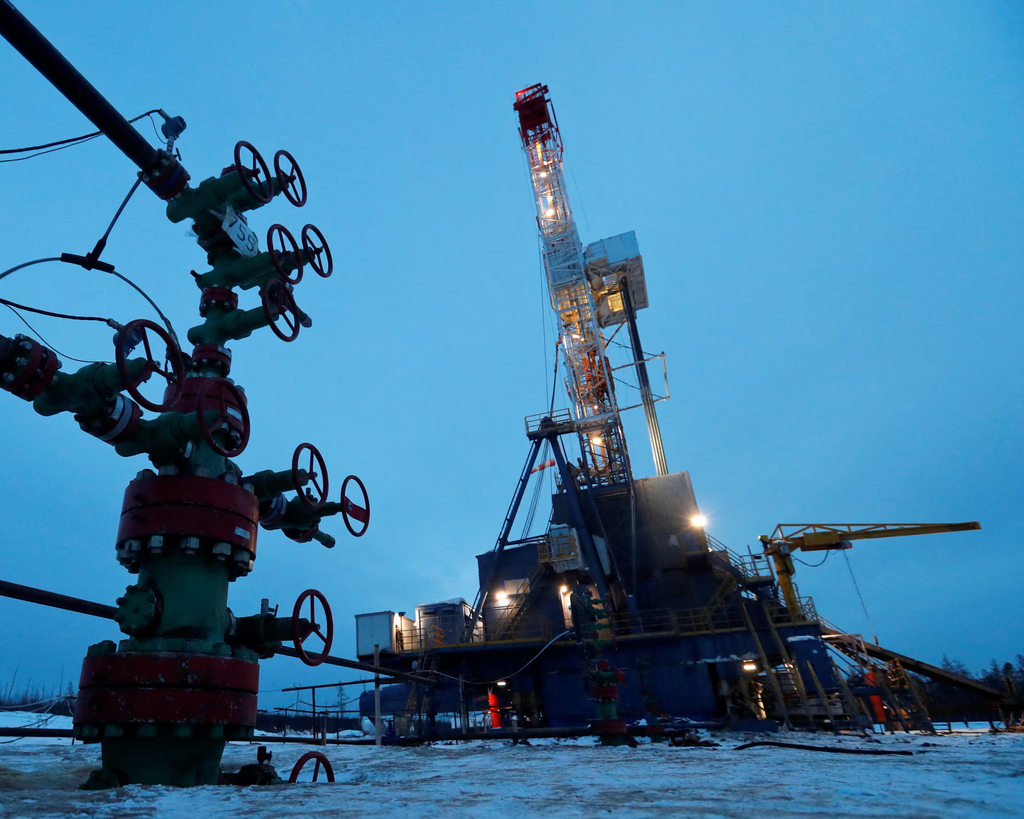
A well head and drilling rig in the Yarakta Oil Field in Russia’s Irkutsk region. Photograph: Vasily Fedosenko/Reuters
Fiona Harvey and Simon Evans in Antalya
Tue 17 Nov 2026
Russia, Saudi Arabia and Australia are the three biggest exporters of carbon dioxide in history, according to analysis of fossil fuels since 1850.
Russia tops the list of global exporters of fossil fuels, with its vast coal, oil and gas deposits. Accounting for the CO2 produced by burning these exports, Russia has been responsible for more than 70 gigatonnes, up to the end of 2025.
Saudi Arabia, one of the world’s biggest producers of oil and gas, comes next with about 60 gigatonnes of CO2 exported. The country has long been an obstructive force at the annual UN climate summits.
Australia is in third place, a long way behind the top two exporters, with responsibility for more than 25 gigatonnes of exported CO2, not far ahead of Venezuela. The revelation comes as Australia acts as president of this year’s UN climate summit, Cop31, which is now into its second week in Turkey. The country has yet to set an end point for the use or export of fossil fuels, which make up about two-fifths of its export economy.https://interactive.guim.co.uk/datawrapper/embed/jshdV/2/?dark=false
Louise Hutchins, the convener of the Make Polluters Pay International Coalition, said: “This analysis tells you a lot about what’s going wrong with climate negotiations. Here at Cop31, governments claim there’s not enough money to tackle the climate crisis, while Australia, Russia and Saudi Arabia, that have amassed fortunes from fossil fuels, continue to wield pivotal political power in this consensus-based process.
“Just look at Australia. Its contribution to global heating more than doubles when fossil fuel exports are counted. Yet it is co-presiding over the very negotiations where climate finance talks are once again in stalemate.
“Responsibility is on the wealthy, the powerful and the profiteers. Those who made fortunes from fossil fuels must pay for the damage.”
The analysis of historical exports of fossil fuels, conducted by Carbon Brief and seen by the Guardian, apportions responsibility for CO2 emissions based on the country extracting the fossil fuels, in contrast to most analyses, which look to the countries where the CO2 is released.
Calculating where the fossil fuels came from casts the global economy, and historical responsibilities for emissions, in a new light. Exporting countries can be relatively low on the list of global greenhouse gas emitters, because those calculations are based on fossil fuel use.
The analysis also shows that the US and China – the world’s two biggest current emitters of greenhouse gases – still bear greater responsibility for historical emissions than Russia, Saudi or Australia, because as well as importing vast quantities of fossil fuels, they have also burned their own supplies.https://interactive.guim.co.uk/datawrapper/embed/5uUNK/2/?dark=false
The Cop28 UN conference outcome in Dubai in 2023 called on all countries to contribute to a global fossil fuel transition, but set no timetable or workplan for doing so. At Cop31, on Monday afternoon, Australia issued a first draft of a potential outcome from the summit, which contained a call for “the immediate transition away from fossil fuels in energy systems”.
However, many countries – including Saudi Arabia – have hardened their negotiating positions since Dubai, and the absence of the US under Donald Trump takes pressure away from them to find compromises. Many observers think the reference to the “immediate transition away” is unlikely to survive unscathed through the several more drafts of the cover decision text that are likely.
Saudi, Russia and allies in the Arab group and others are even opposing the idea of having a cover text, which could stymie negotiations further.
Climate Analytics, a thinktank, published separate analysis on Tuesday showing that Australia, despite presiding over Cop31, appeared to have no plans to curtail its own fossil fuel extraction.
Coalmines are still being permitted that would remain in operation until 2088, long after all countries are supposed to have reached net zero greenhouse gas emissions, around mid-century.
“It’s abundantly clear Australia is not ‘doing its part’ as the prime minister claimed here in Turkey last week,” said the Climate Analytics CEO, Bill Hare. “There is a deep contradiction in a government position that champions climate ambition abroad but plans for continued fossil fuel exports, with approvals for coalmines and gasfields that lock in production for decades.”
Addressing these contradictions is politically difficult for the Australian government. Anthony Albanese, the prime minister, attended Cop31 last week, but at home he is under pressure from a resurgent One Nation party that is riding high in the polls, and which spurns net zero and denies climate science.
A representative for the Saudi ministry of energy told the Guardian that Saudi Arabia accounted for approximately 1% of historical global CO₂ emissions within its borders. “Saudi Arabia exports oil to countries around the world to meet their energy needs. These countries decide how the oil is used, which technologies are employed, and how the resulting emissions are managed. It would therefore be misleading to place responsibility for those emissions on the exporting country while overlooking the role of those who consume the fuel.”
They added: “This does not absolve energy producers of their role in reducing emissions. Saudi Arabia is actively pursuing that role. Peer-reviewed research published in Science has identified Saudi crude among the lowest in upstream carbon intensity, while International Energy Agency data indicate comparatively low methane intensity in Saudi oil and gas operations.’”
Australia and Russia were approached for comment.
Asad Rehman, the chief executive of Friends of the Earth, said: “It’s time for the deadly tango between the producers of fossil fuels, and those locked into dependency on oil and gas, to have its last dance. We must turn off the tap on fossil fuels and push richer nations to commit to a fair, fast and fully funded phaseout. That means real public finance, and access to the technology that can make it possible, for the countries bearing the brunt of climate breakdown.”
Here are some “ETs” recorded from around the U.S. the last couple of days, their consequences, and some extreme temperature outlooks, as well as any extreme precipitation reports:
Here is More Climate News from Tuesday:
(As usual, this will be a fluid post in which more information gets added during the day as it crosses my radar, crediting all who have put it on-line. Items will be archived on this site for posterity. In most instances click on the pictures of each tweet to see each article. The most noteworthy items will be listed first.)