The main purpose of this ongoing blog will be to track planetary extreme, or record temperatures related to climate change. Any reports I see of ETs will be listed below the main topic of the day. I’ll refer to extreme or record temperatures as ETs (not extraterrestrials).😜
Main Topic: Why War Is One of the World’s Biggest Climate Threats
Dear Diary. Everyone is waking up today with news that the United States has gone to war with Iran. We are entering into the great unknown here because we don’t know how long or how widespread this conflict will become. We are talking about traditional war and not nuclear war, which would be exponentially more horrendous. Besides widespread death and carnage, more greenhouse gases than are typical will be released with other environmental damage as we enter a spring of war.
For today’s main subject here is an older Forbes article about war in general and why it is so devastating to our environment:
Why War Is One Of The World’s Biggest Climate Threats
Why War Is One Of The World’s Biggest Climate Threats
By Nils Rokke, Contributor. I write about the global energy transition and net-zero emissions.
Mar 26, 2025
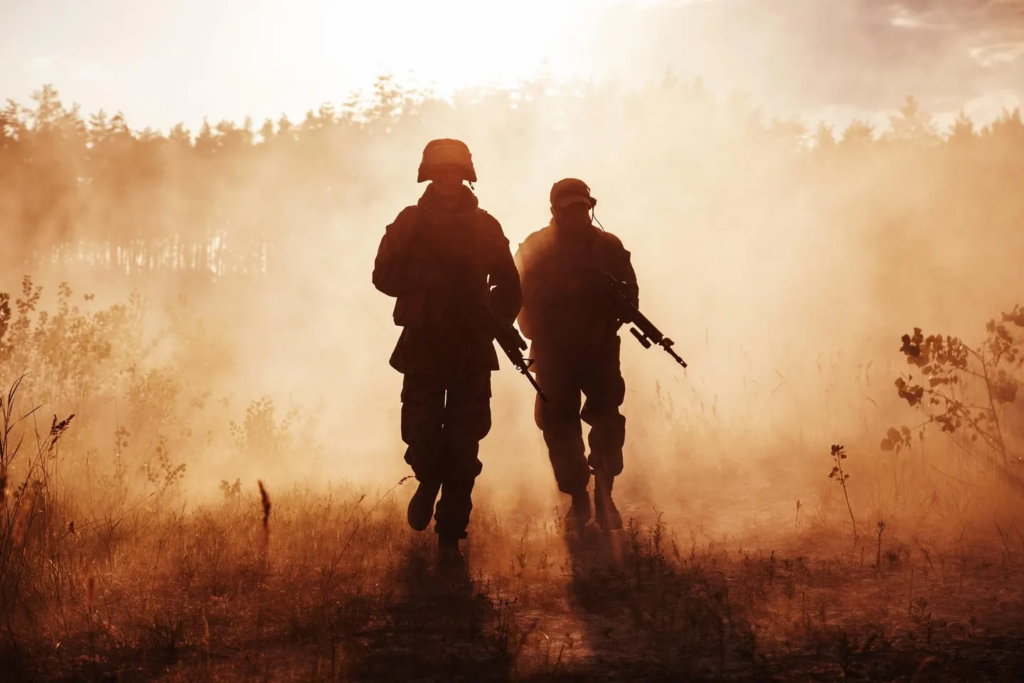
War is among the most destructive forces on Earth, and not just for the people caught in its path. getty
As war rages on in Ukraine, Gaza, Sudan, and Congo, the world’s attention is understandably focused on human suffering and destruction. But a quieter, longer-lasting war is also being waged—one against nature, biodiversity, and the global climate.
War is among the most destructive forces on Earth, and not just for the people caught in its path.
While humanitarian impacts dominate headlines, the environmental costs are immense and largely ignored.
Armed conflicts unleash unprecedented levels of greenhouse gas emissions and pollution from the fossil-fueled tanks, jets, and warships to the vast industrial complexes that churn out ammunition, drones, and military vehicles. This is not to be ridiculed as we are talking about a strong driver for conflicts, global warming and biodiversity attrition.
Every stage of war, from preparation and production to combat and eventual reconstruction, leaves an indelible carbon footprint on the planet.
The Climate Cost Of Military Action
Recent research has found that global militaries are responsible for nearly 5.5% of total global greenhouse gas emissions—a staggering figure that puts military emissions on par with the global cement industry. If it were a country, it would be the fourth biggest emitter in the world.
Military emissions are more than 2 times greater than those from global civil aviation. Although military spending accounts for about 2% of global GDP, its emissions intensity is roughly three times higher than the global economic average, making it one of the dirtiest and least regulated sectors in terms of climate impact.
Yet unlike most other major sectors, military emissions often remain invisible, exempt from many international reporting obligations and largely absent from climate negotiations.
The Cost Of The Ukraine Conflict
The ongoing war in Ukraine offers a stark example of how devastating the environmental impact of war can be.
According to a recent report from the Initiative on Greenhouse Gas Accounting of War, emissions attributable to the war in Ukraine have reached an estimated 230 million tons of CO₂ equivalent over the first three years—more than the combined annual emissions of all five Nordic countries.
These emissions stem from burning oil depots, exploded gas pipelines, and widespread damage to energy infrastructure. The destruction of electrical transformers and power stations releases specialized gases such as sulfur hexafluoride, or SF₆, a substance used for its insulating properties in high-voltage equipment.
SF₆ is one of the most potent greenhouse gases known, with a global warming potential 25,000 times greater than CO₂. When infrastructure containing SF₆ is hit during combat, the environmental cost is immense and long-lasting.
Methane emissions from sabotaged gas pipelines are another overlooked contributor. The 2022 explosions of the Nord Stream pipelines released tens of millions of tons of CO₂ equivalent in methane alone.
On top of this, the fighting itself often sparks wildfires, especially in frontline regions where firefighting efforts are impossible. These fires release even more carbon dioxide, soot, and other pollutants while devastating biodiversity and ecosystems. These types of indirect emissions, caused by the impacts of warfare, come in addition to the estimated 5.5% of global CO₂ emissions.
Climate Change: A Driver Of Conflict?
But the connection between war and climate change is not a one-way street. Climate change itself is now recognized as a driver of conflict. Regions most affected by droughts, floods, and extreme weather events—many of which are intensified by climate change—are also the most vulnerable to violence and instability.
Competition for scarce water, food, and land has already led to violent clashes in parts of Africa, the Middle East, and Asia. Overexploitation of biodiversity, such as the depletion of fish stocks, can also trigger armed conflict as communities and nations fight over what little remains.
This creates a vicious cycle: war accelerates climate change, and climate change fuels the conditions for future wars. Yet despite this clear and growing danger, military emissions and the environmental impacts of war remain largely absent from global climate talks such as the recent COP29.
With defense spending rising rapidly in response to new geopolitical tensions, including in Europe, the United States, and East Asia, the trajectory for military emissions is heading in the wrong direction.
‘The Year Without Winter’
Here in the Nordics, we are already feeling the impacts of an accelerating climate crisis. Temperatures this winter have been about 2 degrees Celsius above the normal moving average which is already about 1.5 degree warmer than pre-industrial times. This is roughly twice the global average rise—making it what I call ‘the year without winter.’
The ski season is shrinking before our eyes. Since the 1960s, the number of skiable days in my region has more than halved. Where we once enjoyed nearly five months of snow cover, we are now lucky to see six-to-eight weeks.
The shift is not merely inconvenient for winter sports enthusiasts; it signals a profound disruption to natural ecosystems and local economies.
This brings to mind ‘Silent Spring,’ Rachel Carson’s famous warning about the unseen environmental consequences of human action. But instead of a spring without birdsong, we now face the threat of a world in the Nordics without winter and snow below 1000 meter elevation.
A War On The Planet Itself
Meanwhile, despite the growing urgency, international climate action continues to falter. As we move toward COP30 in Belém, Brazil, set for November 2025, expectations for meaningful commitments are low.
By early 2025, only 18 out of 197 countries had submitted updated national climate targets for 2035, covering just 20% of current global emissions.
With rising defense budgets competing for political attention and financial resources, the ambition required to tackle the climate crisis is slipping away.
The United States, which submitted its goal already in 2024 accounts for more than 11% of global emissions. It is not going to lead under its current administration, which is dismissive of climate science. In Europe and elsewhere, security threats and economic pressures are crowding out urgent climate action.
Yet focusing on war while treating the climate and biodiversity crises as secondary concerns is a dangerous mistake. The reality is that we are fighting a war on the planet itself—a war that will determine the future of life on Earth.
The greenhouse gases released by wars today will remain in the atmosphere for more than a century, locking in damage for generations. As the world scrambles to respond to wars between nations, we are losing the far bigger, far more destructive battle against runaway climate change and ecological collapse.
If we are serious about preserving a livable planet, we must stop thinking about war in the traditional sense, as something separate from the environment. Every war is also a war on nature, on biodiversity, and on the climate.
Here are some “ETs” recorded from around the U.S. the last couple of days, their consequences, and some extreme temperature outlooks, as well as any extreme precipitation reports:
Here is More Climate News from Saturday:
(As usual, this will be a fluid post in which more information gets added during the day as it crosses my radar, crediting all who have put it on-line. Items will be archived on this site for posterity. In most instances click on the pictures of each tweet to see each article. The most noteworthy items will be listed first.)