Extreme Temperature Diary- Wednesday February 4, 2026/ Main Topic: Companies Either Weather Climate Risk Now or Pay for It Later

Companies either weather climate risk now or pay for it later | Reuters

Climate & Energy

Companies either weather climate risk now or pay for it later

Dame Inga Beale

Dame Inga Beale

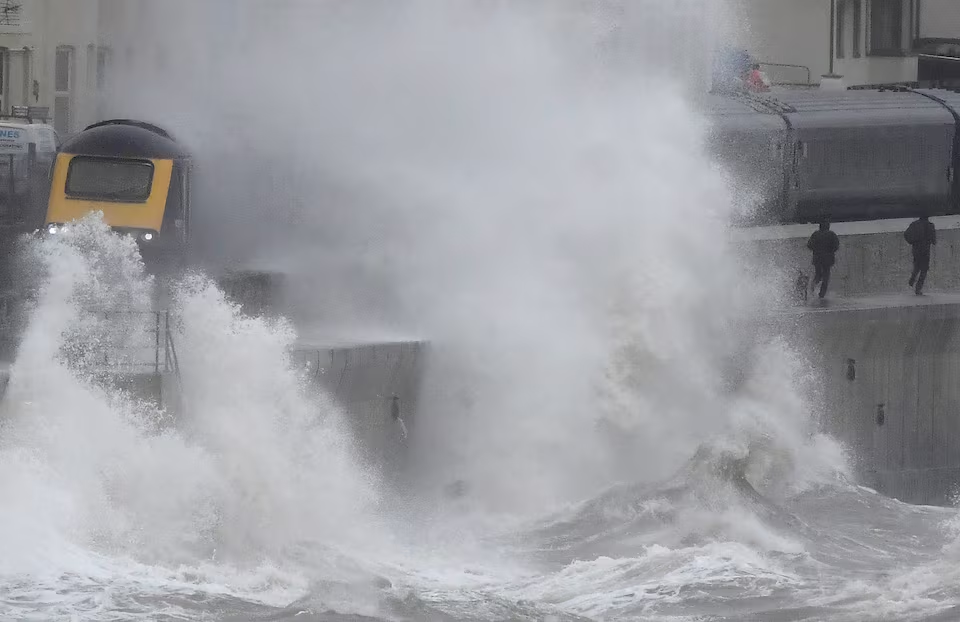
Large waves hit the sea wall during a storm as a train passes through Dawlish, southwest Britain. Following Storm Ingrid, in January 2026, part of the line had to be closed after a sinkhole opened up between Dawlish and Teignmouth stations. REUTERS/Toby Melville 

February 3 – Last year, extreme weather didn’t just shatter records, it wiped more than $320 billion from the global economy, a sum larger than the annual GDP of countries like Finland and Chile.

Looking back further, from 2014-2024, climate-fuelled disasters cost the world more than $2 trillion. It is no surprise that the World Economic Forum’s 2026 Global Risks Report ranks extreme weather among the top risks for global business – not far behind geopolitical conflict – and identifies it as the most significant long-term threat.

These are not future climate scenarios. They are present-day business costs, already hitting balance sheets, insurance premiums and supply chains.

Yet many companies still treat climate risk as something to address later once regulation tightens, technology matures or insurance markets adjust.

From a risk perspective, that logic is backwards, because by the time a risk is fully understood, the opportunity to manage it has already passed. 

I’ve spent my career in risk, from leading Lloyd’s of London to advising companies today, and I’ve seen what happens when exposure is suddenly repriced. Premiums rise, coverage retreats and businesses discover too late that yesterday’s assumptions no longer hold. Climate risk is following the same trajectory. 

In practice, businesses face two main types of climate risk, both of which are inherently unpredictable.
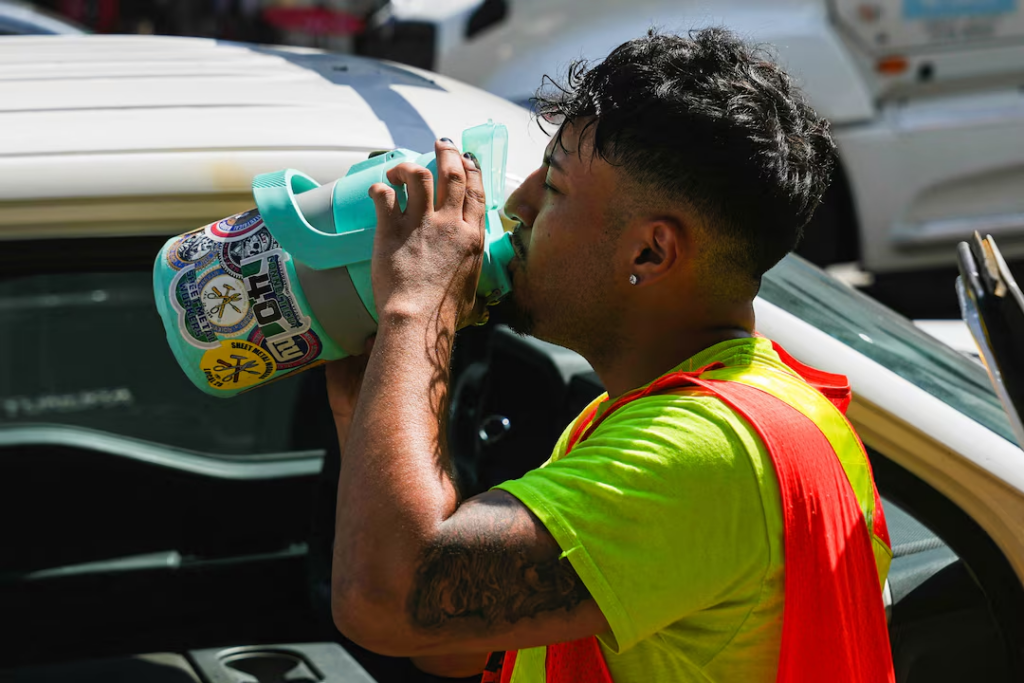
The first is physical risk. These range from storms and floods that damage energy and transport infrastructure, to rising temperatures, which sap worker productivity, and droughts, which pinch water for factories and farms. In the UK last month, storm Goretti brought hurricane-force winds that grounded flights, closed schools and disrupted normal day activity.

We can see first-hand the damage of physical climate risks. Up to 40% of land globally is now classed as degraded, according to U.N. data, and industries are impacted, with research showing that up to 50% of land currently suitable for coffee cultivation could be lost by 2050.

The second category is transition risk: the financial and strategic disruption associated with the transition to a low-carbon economy. This includes adapting to tightening climate policies, expanding carbon pricing frameworks and evolving standards and reporting requirements. For businesses, these pressures translate into higher compliance costs, disrupted operations and growing uncertainty over long-term investment decisions.

In one study, half of European commercial real estate managers admitted that 30% or more of their assets are already “stranded” due to stricter energy efficiency standards and demand shifting toward climate-resilient, low-carbon buildings.

When risk-mitigation isn’t prioritised, the consequences are tangible, undermining long-term business resilience and growth.

I understand the hesitation – volatility and uncertainty make planning uncomfortable – but delay is what turns manageable risks into crises.

Climate risk can no longer be treated as a separate sustainability exercise; it must be embedded across the business – from capital allocation and asset lifecycles to investment decisions. I call this transition planning. In practice, this means strengthening resilience by stress-testing strategies against physical and transition-risk scenarios, then translating those insights into mitigation and adaptation actions across an entire value chain, ensuring that investment horizons align with climate realities.
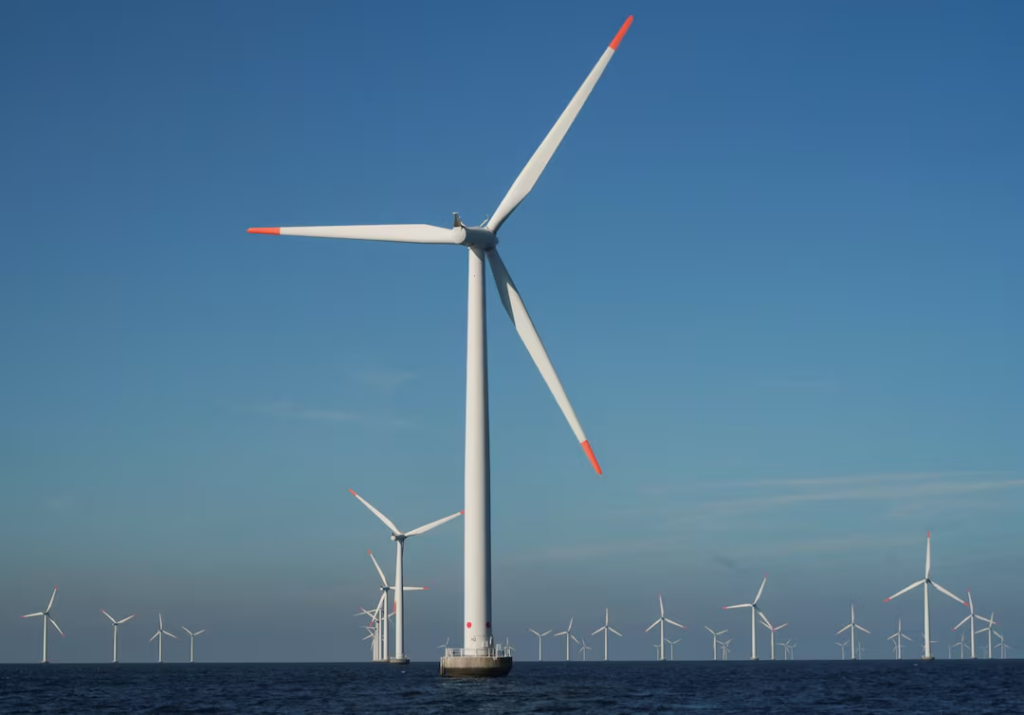
Take the case of Danish energy company Orsted. In the early 2000s, as the EU’s carbon pricing system tightened, Orsted faced a mounting financial risk: a business model heavily dependent on fossil fuels was becoming increasingly exposed. Rather than resisting the transition, the company pivoted decisively toward offshore wind and aligned its strategy with science-based climate targets.

The result was not just risk-mitigation but value-creation. Orsted went on to increase its market capitalisation by 400%, while sidestepping an estimated 2.3 billion euros in carbon costs.

History offers a clear lesson: when risks become clearer, markets can change their minds very quickly. What could have been managed consistently and affordably turns into a rushed, expensive scramble.

Many businesses made the same mistakes about cyber-risk a decade ago – assuming clarity would come before difficult decisions were required – and paid the price.

Acting now does not mean predicting the future perfectly. It means bringing decisions forward, and making them through a balanced, risk-managed lens, while options still exist.

It also means unlocking value by identifying growth opportunities in sustainable products, services and markets that are scaling fastest – and staying ahead of evolving regulatory, investor and customer expectations, rather than reacting to them.

The commercial case is clear. Boston Consulting Group found that four out of five companies already report financial gains from climate action, demonstrating that climate and sustainability expertise is increasingly a driver of commercial performance.

Businesses that embed climate risk into decision-making can unlock investment, innovate faster and build resilience into growth strategies.

In a rapidly changing, volatile economy, it is one of the clearest opportunities for long-term value.

So, the choice is between acting now, while risks can still be managed – or waiting, and confronting a future of higher costs and lost opportunities.

This week’s cold blast was a total freak-show. Dozens of record lows were broken. That just doesn’t happen in #Florida anymore – until now. See Map… 1/

Jeff Berardelli (@weatherprof.bsky.social) 2026-02-04T13:07:41.390Z

Not surprisingly, record warm winters-to-date in many West cities, including Salt Lake City, Phoenix, Albuquerque, Portland. Pretty stunning to see how much SLC is pummeling their previous record warmest season-to-date. (Data: SERCC)

Jonathan Erdman (@wxjerdman.bsky.social) 2026-02-03T12:58:11.188Z

Statewide snowpack remains the worst on record, and it's not even close. It's barely half of where it should be.Again…zero pleasure delivering this news. There are outs, but we're gonna need a railroad track of storms in late February-April to get us out of this.#COwx

Chris Bianchi (@bianchiweather.bsky.social) 2026-02-03T22:16:39.157Z
https://twitter.com/iembot_rer/status/2018969537119498615?s=20
https://twitter.com/iembot_rer/status/2019021479472410805?s=20
https://twitter.com/iembot_rer/status/2018968417915523427?s=20
https://twitter.com/iembot_rer/status/2019045557025530359?s=20
https://twitter.com/iembot_rer/status/2018811093980782869?s=20
https://twitter.com/iembot_rer/status/2018923116982870244?s=20
https://twitter.com/iembot_rer/status/2018799638967472344?s=20

My newspaper column, just out, on the ongoing suppression of the intelligence services’ security assessment…PLEASE SHARE WIDELYwww.edp24.co.uk/news/2581162…#climate #biodiversity #news

Rupert Read (@rupertread.bsky.social) 2026-02-03T21:31:35.208Z

New study uses #satellite records and shows that #SouthernOcean #phytoplankton responds in contrasting ways to marine #heatwaves and #cold spells. The impacts vary sharply by region, exposing distinct #ecological sensitivity to #climate -driven extremes. www.nature.com/articles/s41…

Nature Communications (@natcomms.nature.com) 2026-02-04T09:01:18.034Z

🚨 17,000 strokes. That’s the annual toll of wildfire 🔥 smoke in the US according to new data. Smoke isn’t just a "breathing" issue; it’s a heart and brain issue. We need climate action to protect our families from the source. 🛑🔥 #ClimateHealth #WildfireSmoke #ActOnClimateeos.org/articles/wil…

Moms Clean Air Force (@momscleanairforce.org) 2026-02-01T16:04:30.904Z

Freezing rain is the next big winter hazard—and if the recent January storm is any indication, it's coming for the U.S. South ❄️⚠️🧊. Read more today (and in this week's print edition) @science.org www.science.org/content/arti… #freezingrain #climatechange #weather #climate #nws #noaa

Hannah Richter (@hannah-richter.bsky.social) 2026-02-03T21:54:45.248Z

@albomp.bsky.social has doggedly refused to release the Office of National Intelligence #climate risk assessment his govt commissioned. Wonder why? Probably because its conclusions are similar to this UK report👇 and he wouldn’t want to upset big coal & gas. #auspol

Rex Patrick (@mrrexpatrick.bsky.social) 2026-02-04T01:03:02.042Z

Such an important point: “staying on stories long enough to shift understanding.” Something @katharinehayhoe.com emphasizes for climate communication. Click bait drama can’t make this kind of contribution to understanding our world. 🌿

(@thesouloftheearth.bsky.social) 2026-02-04T16:51:03.368Z

And like clockwork, just days after climate denier Bjorn Lomborg was exposed in the Epstein Files, Jeff Bezos's Washington Post publishes Lomborg op-ed downplaying the climate threat:

Michael E. Mann (@michaelemann.bsky.social) 2026-02-04T17:26:13.905Z

Maybe we shouldn't be accepting climate policy advice from two Epstein Files alumni (courtesy of @desmog.com): www.desmog.com/2025/11/05/b…

Michael E. Mann (@michaelemann.bsky.social) 2026-02-04T05:28:42.711Z

15/ As newly reported by @ben-cooke.bsky.social in The Times, a UK #climate risk report warning of cascading crises, including migration & conflict, was kept from public view.This is not caution.It is political evasion.

Dr. Aaron Thierry (@thierryaaron.bsky.social) 2026-02-04T07:20:41.672Z

"In the oceans, kelp forests tended by sea otters can sequester up to 12 times more carbon than forests not tended by them. That’s because sea otters love to eat sea urchins, who can chow down on entire strands of kelp if left unchecked."

BSCG Scotland (@bscgscotland.bsky.social) 2026-02-04T12:58:33.971Z

I forgot I actually have four MORE ways you can follow Talking Climate.Talking Climate is also an audio podcast, read by the amazing Anne Cloud. Subscribe on:YouTube: www.youtube.com/channel/UCHf…Spotify: open.spotify.com/show/583MdhA…BuzzSprout: talkingclimate.buzzsprout.comAnd Apple:

Katharine Hayhoe (@katharinehayhoe.com) 2026-02-04T16:21:16.299Z

IMPORTANT FINAL NOTE:Talking Climate's structure is deliberately based on the behavioural science of how to catalyze action–not worry–by sharing concrete solutions & actions. Why? Because the whole world could be worried but if they don't know what to do, they'll do nothing! Read more…

Katharine Hayhoe (@katharinehayhoe.com) 2026-02-04T15:17:33.173Z

11/ Even more striking: @climateoutreach.bsky.social themselves (cited in McCarthy’s letter) explicitly argue for government-led public information campaigns on #climate, drawing lessons from Brexit and COVID."Public engagement is not window dressing; it is the essential foundation for all policy"

Dr. Aaron Thierry (@thierryaaron.bsky.social) 2026-02-04T07:20:41.668Z

6/ She also claims #climate is already “well reported” in the news.The evidence simply does not support this.UK news attention to climate has declined sharply, even as risks escalate, including around major moments like COP.climatenewstracker.org/cop30-declin…

Dr. Aaron Thierry (@thierryaaron.bsky.social) 2026-02-04T07:20:41.663Z

On Nov 27th, top experts gave an official-style National Emergency Briefing to MPs and other influential people in Westminster.They set out what the #climate and #nature crisis means for people in the UK.@chrisgpackham.bsky.social opened with this powerful speech.#NEB2025 #TimeToStepUp

National Emergency Briefing (@nebriefing.bsky.social) 2026-02-04T07:13:22.683Z

This may be hard to believe given how cold it’s been, but the coldest air of the season is still to come in the Northeast this weekend. Wind chills to -30°F or lower Sunday morning. -22 in NYC!! Holy moly. #cold #winter #ArcticBlast #snow

Jeff Berardelli (@weatherprof.bsky.social) 2026-02-04T02:14:37.630Z

Enjoy this one day break. Old man winter roars back in Thursday! Wind chills (and low temps) in the 20s and 30s in #Florida Friday morning!The good news: it doesn’t last long, and a lasting warm up arrives next week. #cold #freeze

Jeff Berardelli (@weatherprof.bsky.social) 2026-02-04T14:42:25.767Z

The December and early January cold snap across Alaska and NW Canada may well turn out to be one of the coldest multi-week events of the 21st century. Lots of details in the latest from the Alaska and Arctic Climate newsletter. #akwx #ytwx #Arctic #Climatealaskaclimate.substack.com/p/alaska-and…

Rick Thoman (@alaskawx.bsky.social) 2026-02-02T07:49:49.140Z

#Europe bombarded by storms the next two weeks. Great news for the #olympics in the #alps as big time #snow will fall. 1-2 Meters in the next 15 days! But flooding will be a concern many other areas.#weather #milan #cortina

Jeff Berardelli (@weatherprof.bsky.social) 2026-02-03T17:57:01.709Z

Fossil fuel trying to say it's “part of the solution” to climate crisis via investments in biofuel, carbon capture, carbon offset “false solutions” that entrench environmental injustice and fossil fuel power.www.sciencedirect.com/science/arti…

Dr Paul Dorfman (@drpauldorfman.bsky.social) 2026-02-04T09:47:41.194Z

Britain generated more wind power in January than in any month on recordwww.independent.co.uk/climate-chan…

Dr Paul Dorfman (@drpauldorfman.bsky.social) 2026-02-04T09:42:56.883Z

#Australia’s long, complicated energy transition is finally working – and not a moment too soon#renewables #climate www.theguardian.com/commentisfre…

Dr Paul Dorfman (@drpauldorfman.bsky.social) 2026-02-04T09:22:34.867Z

#Australia “global proof point” of major structural change in electricity grids worldwide – grid scale batteries overtaking peaking gas plants output."Battery storage is no longer just enabling renewables – it is actively replacing gas generation".reneweconomy.com.au/global-proof…

Dr Paul Dorfman (@drpauldorfman.bsky.social) 2026-02-04T09:40:51.954Z

#China’s solar capacity set to overtake coal in ‘historic’ shift. #Wind and #solar projected to account for half of China’s total installed power capacity. www.independent.co.uk/climate-chan…

Dr Paul Dorfman (@drpauldorfman.bsky.social) 2026-02-04T09:36:09.906Z

As the Duke of Wellington memorably opined: “ If you believe that, sir, you will believe anything.“#nuclear www.gov.uk/government/n…

Dr Paul Dorfman (@drpauldorfman.bsky.social) 2026-02-04T11:36:02.922Z

Political battle unfolding in #Scotland over new "#nuclear tax" levy that Scottish households will pay for Sizewell C – projected cost £38 billion ($51.9 billion), double its original estimate.www.thecooldown.com/green-busine…

Dr Paul Dorfman (@drpauldorfman.bsky.social) 2026-02-04T09:33:13.084Z

Concerns about Last Energy Nuclear Power (LENP) – why Llynfi Valley chosen as potential site for 4 #nuclear reactors. LENP a US company funded by venture capitalists, with no previous experience of building, operating or managing nuclear power stations.bridgend-local.co.uk/2026/02/03/o…

Dr Paul Dorfman (@drpauldorfman.bsky.social) 2026-02-04T09:28:42.583Z

More than 80% of flying fox colony wiped out as January heatwaves kill thousands of bats #Climate

Climate Tracker (@climate.skyfleet.blue) 2026-02-04T14:29:27.888Z

‘Making America Unsafe Again’: Alarm Over Environmental Review Exemption for Nuclear Reactors#nuclearwww.commondreams.org/news/nuclear…

Dr Paul Dorfman (@drpauldorfman.bsky.social) 2026-02-04T10:23:56.722Z

New reality of a world with no U.S.-Russian #nuclear arms control limits after the New START treaty expires this week.www.reuters.com/world/china/…

Dr Paul Dorfman (@drpauldorfman.bsky.social) 2026-02-04T09:34:37.994Z

Leave a Reply

Your email address will not be published. Required fields are marked *