The main purpose of this ongoing blog will be to track global extreme or record temperatures related to climate change. Any reports I see of ETs will be listed below the main topic of the day. I’ll refer to extreme or record temperatures as ETs (not extraterrestrials).😜
Main Topic: The Latest Environmental Threat- Climate Hushing
Dear Diary. I am one of those people who wants to discuss climate with others in conversation every chance I get. There are whole organizations, such as Climate Reality, built to do exactly that. But the latest trend is for the powers that be to avoid the climate issue, which goes towards the detriment of their own people. I chalk this up to political and real fear plus pressure from fossil fuel interests.
Perhaps the planet hasn’t gotten hot enough yet for enough blowback from the general public for politicians to react. This certainly appears to be the case across the U.S. South, which appears to be having a “typical” winter and in the frigid Northeast and Midwest to start out 2026. Elsewhere in Europe there have been monster heatwaves the last few years, though, far surpassing those in the United States, so public attitudes are different. It is a sad state that humanity is so reactive and not proactive, and that might be our eventual undoing leading to our demise.
Here are more details from Katherine Hathoe:
“Climate hushing”—the quiet trend undermining global climate action
“Climate hushing”—the quiet trend undermining global climate action
The year of renewables, bad news in disguise, “climate hushers”, and how to keep the conversation going
Feb 04, 2026

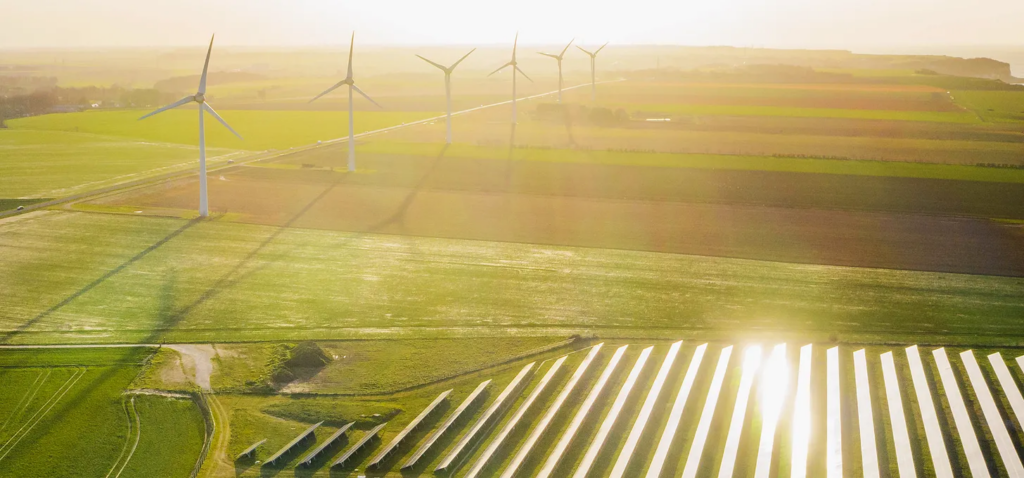
Renewables, including solar, onshore wind, and battery storage “have reached a price point where they are virtually unstoppable,“ Al-Karim Govindji writes at Climate Home News. Wind and solar alone “are projected to account for 32% of global power by 2030, surging to over half of the world’s electricity by 2040.”
What about the United States, you may be thinking? Well, despite the current US administration’s active opposition to clean energy which is stalling hundreds of new wind and energy projects, EIA data is still forecasting that renewable energy will supply 99 percent of new US generating capacity this year. Last year, together wind and solar produced 28% of US electricity, more than coal.
Meanwhile in the UK, where coal was phased out entirely in 2024, renewables supplied 47% of all electricity last year. And Australia hit a new milestone in the last quarter of 2025, with renewables making up a full half of the national grid’s power mix.
By 2060, global projections currently estimate that fossil fuels will account for only 4% of the power sector, down from 59% today. Renewables just make economic sense, and despite efforts to slow it down, it’s clear the transition is already underway.

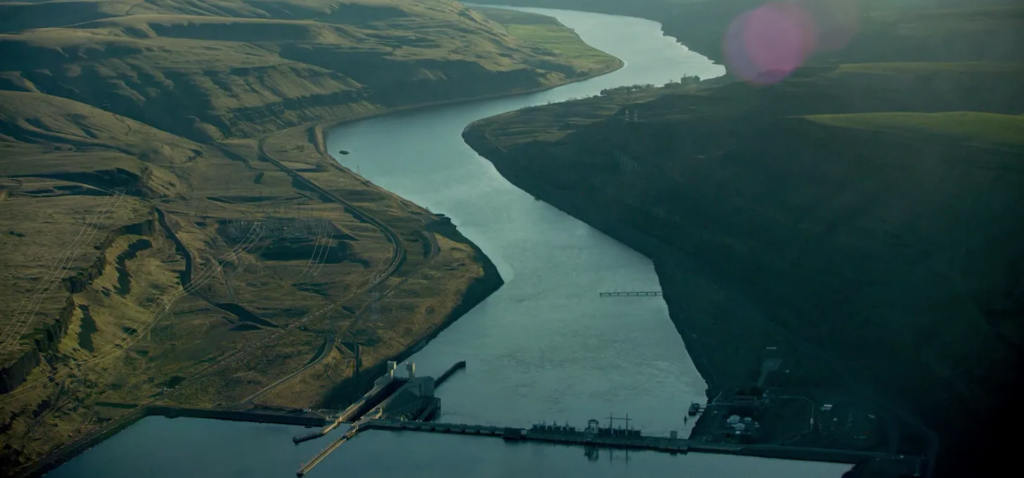
Where we build clean energy matters: and when wind, solar, or storage options are poorly sited, they can cause more harm than good.
You’re probably familiar with stories about the negative impacts of wind turbines sited in bat migration pathways or how solar farms are being built on valuable ecological land. That’s why The Nature Conservancy developed the Site Renewables Right tool, which is currently informing renewable energy development and conserving important wildlife habitats and natural areas in the US, the Balkans, and India.
But this can happen with energy storage, as well. Take the example of a new pumped hydro storage facility currently being proposed in Washington state. Pumped hydro is a highly effective way of storing energy that’s been around for over a hundred years. When electricity is plentiful, water is pumped uphill from a lower reservoir to a higher one. When electricity is needed, that water is released downhill, where it turns turbines to generate power – essentially like a giant water battery. That sounds like good news, right? Not so fast.
Construction of the Rye project would permanently alter Pushpum, a sacred site of deep cultural and spiritual significance to the Yakama Nation. As this article explains, the project would require drilling large tunnels and constructing reservoirs through the hillside—damage that my colleague Max Lambert, PhD described as “tantamount to levelling Notre Dame or the Vatican.” That harm arises in large part because the project moved forward without typical Tribal consultation.
This is a reminder that even well-intentioned climate solutions can repeat past harms when Indigenous sovereignty and community voices are sidelined, and when development is imposed rather than co-created. It’s true that we can’t wait for perfection. But good climate action requires us to listen to all concerned and minimize harm wherever possible. If we’re serious about building a better world, we have to do it better.
In the case of pumped storage projects, re-using already-disturbed or abandoned industrial sites makes much more sense. In Wales, for example, the Dinorwig Power Station repurposed an abandoned slate quarry into pumped storage by connecting existing pits and lakes. Because it can respond quickly during demand spikes, Dinorwig has already reduced the need for fossil fuel-powered peaking plants and additional hydropower, such as large dams that fragment rivers and disrupt aquatic life.
Examples like Dinorwig show how energy storage don’t just store variable renewable energy: they can also deliver many of the grid benefits traditionally associated with dams, without fragmenting rivers or flooding ecosystems. That’s a double win!


As political winds have shifted in the United States and elsewhere over the past year, “climate hushing” has become a real thing: and that’s bad news. “When leaders don’t talk about something, enthusiasm falls among voters,” Senator Sheldon Whitehouse of Rhode Island writes here. “In politics, you can often make your own wind, or you can make your own doldrums.”
Unfortunately, climate hushing is going global. This year, when world leaders spoke at the World Economic Forum’s meeting in January, nearly every single one of them avoided the topic—even Prime Minister Mark Carney, a former UN Special Envoy for Climate Action and Finance. Why is this? “In today’s deeply polarizing U.S. political stance, climate discussion has come to feel so radioactive that many leaders would rather avoid it,” sustainable business professor Anjali Chaudhry writes.
The only major leader to break the silence was Chinese Vice Premier He Lifeng, who used his speech to press for collaborative climate action. ”We invite enterprises from all over the world to embrace the opportunities from the green and low-carbon transition, and work closely with China in such areas as green infrastructure, green energy, green minerals and green finance,” he said.
The organization We Don’t Have Time hosted an alternative WEF speech, held on a pile of snow and featuring several of my colleagues and leading systems thinkers, including Dr. Johan Rockström, Sandrine Dixson-Declève, and former Unilever CEO Paul Polman, who said,
“We know what needs to be done [about climate change]. It is not a failure of resources. Global capital has never been more abundant. It is a failure of collaboration and collective action. A failure of governments to align around shared interests rather than narrow advantage; of businesses to act as system-shapers rather than short-term competitors; and of leaders across sectors to share risk, and act in service of a common good.”
Watch the whole event here.


In this time of “climate hushing,” having conversations about climate change is more important than ever. That’s why I feel my TED talk on how the most important thing you can do about climate change is talk about it is more relevant than ever — and why I’ve doubled down on my own efforts by adding new Talking Climate video series: because our voice is the most powerful climate solution we have.
So this week, here’s a short guide to having effective climate conversations with people in your life.
I always recommend starting off with common ground – rather than where we typically begin our conversations, with something we disagree with them about, or something we’re worried about and we don’t think they are (but they should be). Those types of conversations rarely go well. Instead, a great place to begin is by focusing on how climate change is affecting a place you both live in, care about, or visit often. Shared experiences make the issue feel real and relevant.
You can mention one of the crazy weather events that happened this year, such as last week’s extreme cold, snow, and ice storm that paralyzed central and eastern North America for days, or the record-breaking heatwave that scorched Australia the very same week. Then bring in some of the other changes that have been happening in your area, and how they are affecting people’s homes, livelihoods, or health.
Where can you find this information? If you live in the U.S., you can turn to this archived copy of the Fifth U.S. National Climate Assessment and find the chapter that describes your region. In Canada, we have the Climate Atlas of Canada that illustrates local impacts. For Australia, you can look to the National Climate Risk Assessment; in the U.K., see this page from the Met Office; and for the E.U., there’s this risk assessment by the European Environment Agency.
Don’t forget to also bring up positive solutions that will get people excited about climate action. Even though they might not say it out loud, most people are worried about climate change but don’t know what to do about it. Talking Climate’s archives are full of solutions, such as the edition last month on climate-friendly travel. Spread the word!
For more tips about how to navigate climate conversations—yes, even at the dinner table—check out my TED talk, watch this webinar I hosted on this very topic, or my interview with Jimmy Kimmel where he asked me the same question.
Give talking a try, and let me know how it goes!

Tues Feb 10 at 3.30pm CT – From Climate Science to Societal Impact with the Department of Climate, Meteorology & Atmospheric Sciences at the University of Illinois, 1301 W. Green Street Urbana, IL; in person, free
Thurs Feb 19 at 6pm MT – Climate Change, Colorado, and the Power of Collective Action with Colorado Mountain College; in person, free. Also recorded (I’ll share a link here when it’s available)
Mon March 9 from 4-6pm ET – Your Career in Climate with Catherine McKenna the Lawson Climate Institute at University of Toronto – in person, registration required, free. Also recorded (I’ll share a link here when it’s available)
Tues March 17 at 4:30pm CT – HMEI Taplin Environmental Lecture with High Meadows Environmental Institute – in person, free. Also recorded (I’ll share a link here when it’s available)
Subscribe to Talking Climate
By Katharine Hayhoe · Hundreds of paid subscribers
Subscribe to Katharine’s newsletter for a clear-eyed and hopeful look at climate science and solutions. Receive weekly climate updates, good climate news, event information, ideas on things to do and ways to join the conversation.
Here are some “ETs” recorded from around the U.S. the last couple of days, their consequences, and some extreme temperature outlooks, as well as any extreme precipitation reports:
Here is More Climate News from Sunday:
(As usual, this will be a fluid post in which more information gets added during the day as it crosses my radar, crediting all who have put it on-line. Items will be archived on this site for posterity. In most instances click on the pictures of each tweet to see each article. The most noteworthy items will be listed first.)