The main purpose of this ongoing blog will be to track global extreme or record temperatures related to climate change. Any reports I see of ETs will be listed below the main topic of the day. I’ll refer to extreme or record temperatures as ETs (not extraterrestrials).😜
Main Topic: Chance of El Niño Forming May Make 2027 the Hottest Year in Recorded History
Dear Diary. The debate between Dr. Michael Mann and Dr. James Hansen continues concerning the rate in which our planet is warming due to our burning of fossil fuels. If Dr. Hansen is correct, the rate of warming will increase such that we will permanently cross the +1.5°C above preindustrial conditions for global temperature averages before 2030. If Dr. Mann is correct, Earth will warm more steadily crossing the +1.5°C barrier a bit later during the 2030s, but the rate of warming won’t increase thereafter. Regardless, humanity is in for a world of hurt from our carbon pollution.
Enso water temperatures are always averaged into global temperatures to see how feverish the planet has become. When we have an El Niño average temperatures register a bit hotter than during a neutral cycle taking into account very warm Pacific Ocean El Niño waters. Also, during a La Niña averages are a bit lower. During 2026 we will see a transition from neutral conditions to an El Niño perhaps lasting unto 2027. Moderate to strong El Niño’s warm the atmosphere of the entire planet, which is another reason why they spike global temperatures.
Here are more details about what might transpire with global temperature averages the next couple of years from the Guardian:
Chance of El Niño forming in Pacific Ocean may push global temperatures to record highs in 2027
One expert says 2027 could be even hotter than the last three years, which have been the top three warmest on record
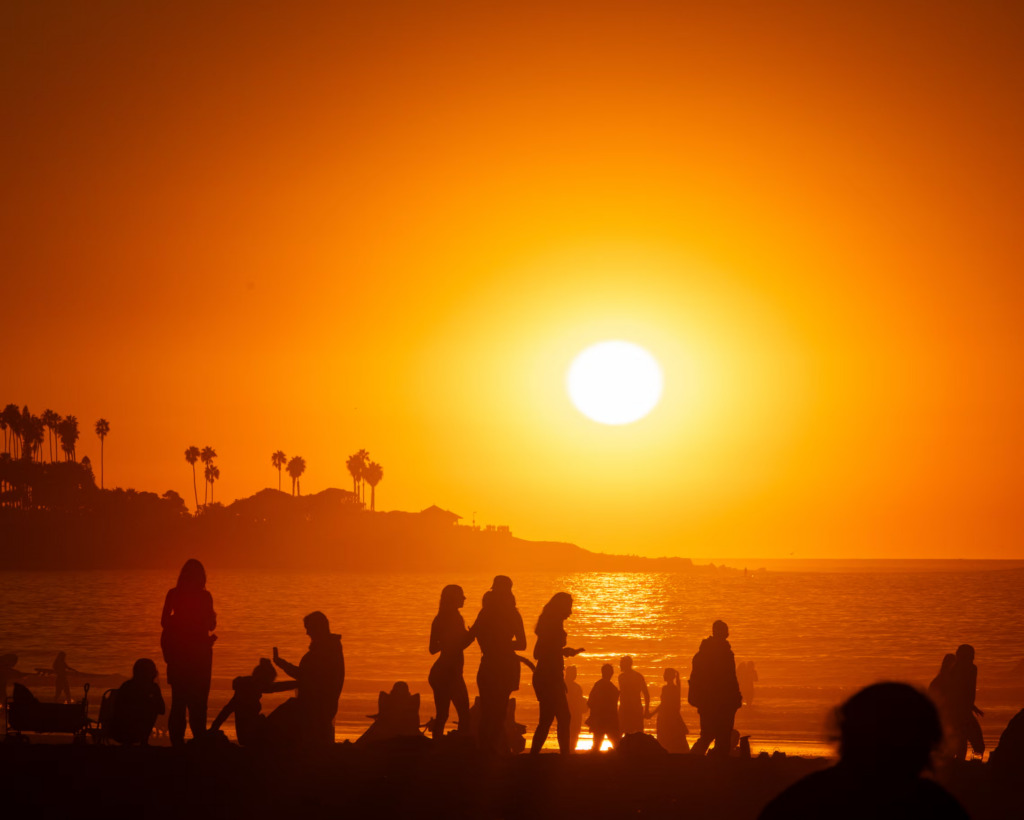
When warmer-than-average waters gather in the east of the equatorial Pacific and extend to the coast of the American continent, this is known as an El Niño. The phenomenon is typically accompanied by unusually hot weather. Photograph: Kevin Carter/Getty Images
Graham Readfearn Environment and climate correspondent
Sat 7 Feb 2026
Weather agencies and climate scientists have pointed to the possibility of an El Niño forming in the Pacific Ocean later this year – a phenomenon that could push global temperatures to all-time record highs in 2027.
Both the US government’s National Oceanic and Atmospheric Administration (NOAA) and Australia’s Bureau of Meteorology have said some climate models are forecasting an El Niño but both cautioned those results came with uncertainties.
Experts told the Guardian it was too early to be confident, but there were signals in the spread of sea surface temperatures in the Pacific that suggested an El Niño could form in 2026.
The cycle of ocean temperatures in the Pacific – known as the El Niño southern oscillation (ENSO) – is linked with extreme climate events around the world.
When warmer-than-average waters gather in the east of the equatorial Pacific and extend to the coast of the American continent, this is known as an El Niño and tends to give global temperatures a boost and, in Australia, can be linked to drier and hotter conditions.
The latest southern hemisphere outlook from Australia’s bureau said this week: “Some models suggest the possibility of El Niño development from June.” The bureau cautioned this was a “very long lead time” for predicting an El Niño.
NOAA has also said “there are growing chances of El Niño” but also pointed to uncertainty in the models.
Dr Andrew Watkins, a climate scientist at Monash University and the former head of long-range forecasts at the bureau, said: “We have a lot of warm water stored up in the western tropical Pacific. Typically when the trade winds ease that will slosh back to the east and warm up the areas off South America.
“The models are going for that to happen over [the Australian] autumn, which is fairly much what you’d expect.”
He said the “precursors are there” for an El Niño but it was too early to tell if the phenomenon would develop.
Associate Professor Andrea Taschetto, an ENSO expert at the University of New South Wales, said a current La Niña – where warmer waters are closer to Australia – was coming to an end, and forecasting beyond that was difficult.
She said the chances of an El Niño developing, or ENSO being neutral, in June to August was currently about 50/50 or “like tossing a coin”.
The past three years have each been in the top three warmest years on record for the planet.
Dr Zeke Hausfather, a research scientist at the US-based independent Berkeley Earth research group, said an El Niño that formed in mid-2023 and lasted until around April 2024 had likely added about 0.12C to global temperatures in 2024.
“If El Niño develops later this year it will likely peak around November-January and primarily impact 2027 global surface temperatures, rather than 2026.
“This is why I have predicted that 2027 will likely set a new record [for global temperature] if a moderate to strong El Niño event ends up developing.”
Watkins agreed if an El Niño did develop it would more strongly impact global temperatures in 2027.
“I would be hesitant to bet against a hottest year on record,” he said.
But he said global heating caused mostly by the burning of fossil fuels was now “so strong” that it was “simply overtaking year-to-year variability in terms of air temperature”.
“I don’t think we are surprised by anything any more,” he said. “You might not need a strong El Niño to get these warmer temperatures.”
Here are some “ETs” recorded from around the U.S. the last couple of days, their consequences, and some extreme temperature outlooks, as well as any extreme precipitation reports:
Here is More Climate News from Tuesday:
(As usual, this will be a fluid post in which more information gets added during the day as it crosses my radar, crediting all who have put it on-line. Items will be archived on this site for posterity. In most instances click on the pictures of each tweet to see each article. The most noteworthy items will be listed first.)