The main purpose of this ongoing blog will be to track planetary extreme, or record temperatures related to climate change. Any reports I see of ETs will be listed below the main topic of the day. I’ll refer to extreme or record temperatures as ETs (not extraterrestrials).😜
Main Topic: First Life Threatening U.S. Heat Wave For 2026- During Winter No Less
Dear Diary. Normally in the last several years I would roll out my adjusted rules for categorizing and naming heatwaves in late April. However, nature and climate change is forcing my hand this year because a historic heatwave is building in the southwestern United States, and this before winter officially ends, no less. Currently we have what I termed last year as a CAT1 heatwave across highly populated areas of Southern California:
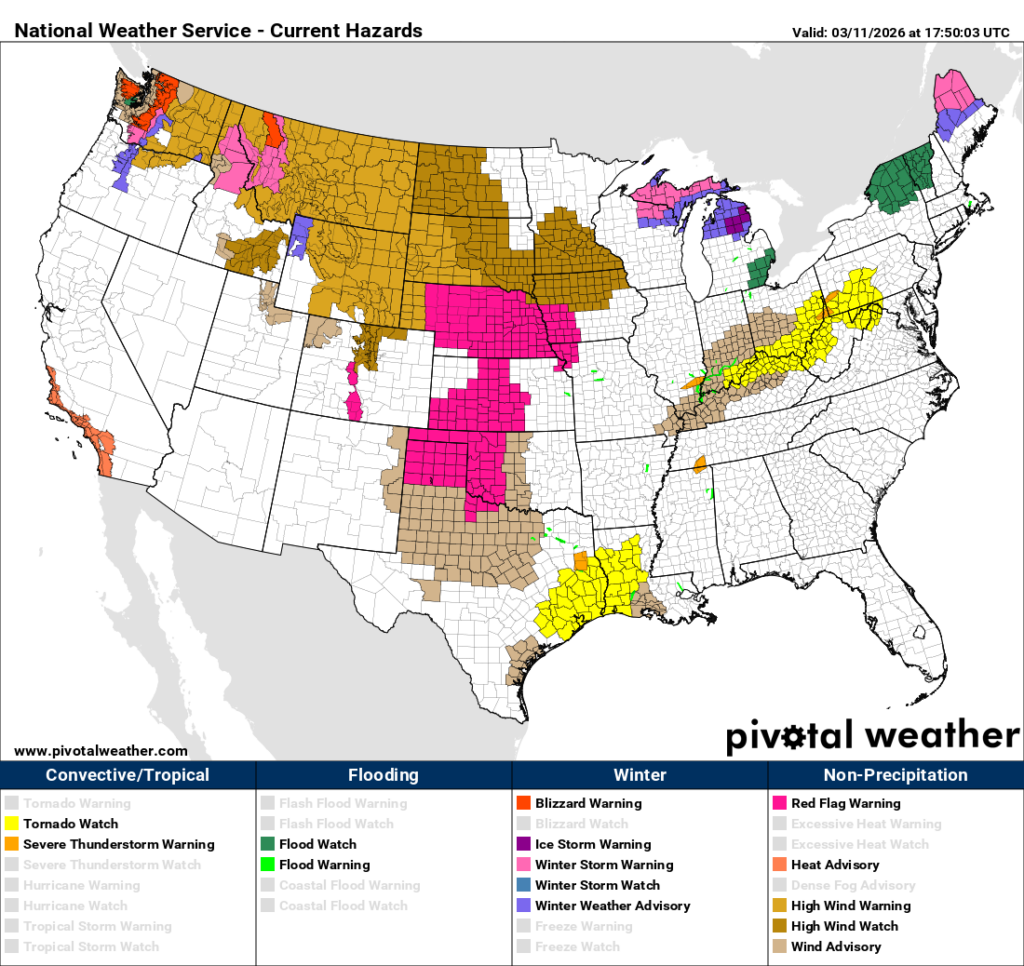
CAT1 heatwaves are defined as those in which the National Weather Service has issued heat advisories for conditions that are marginally hazardous for people’s health while doing outdoor activities. Usually people who are already in poor health who do not take precautions expire during CAT1s. CAT2s at least have some upgraded areas of NWS heat warnings.
Major CAT3s become dangerous for all and warrant a name from yours truly. These usually flirt with daily and sometimes monthly records. Looking at met models we might see a CAT3 by Tuesday of next week with the thing peaking on Thursday on Friday:
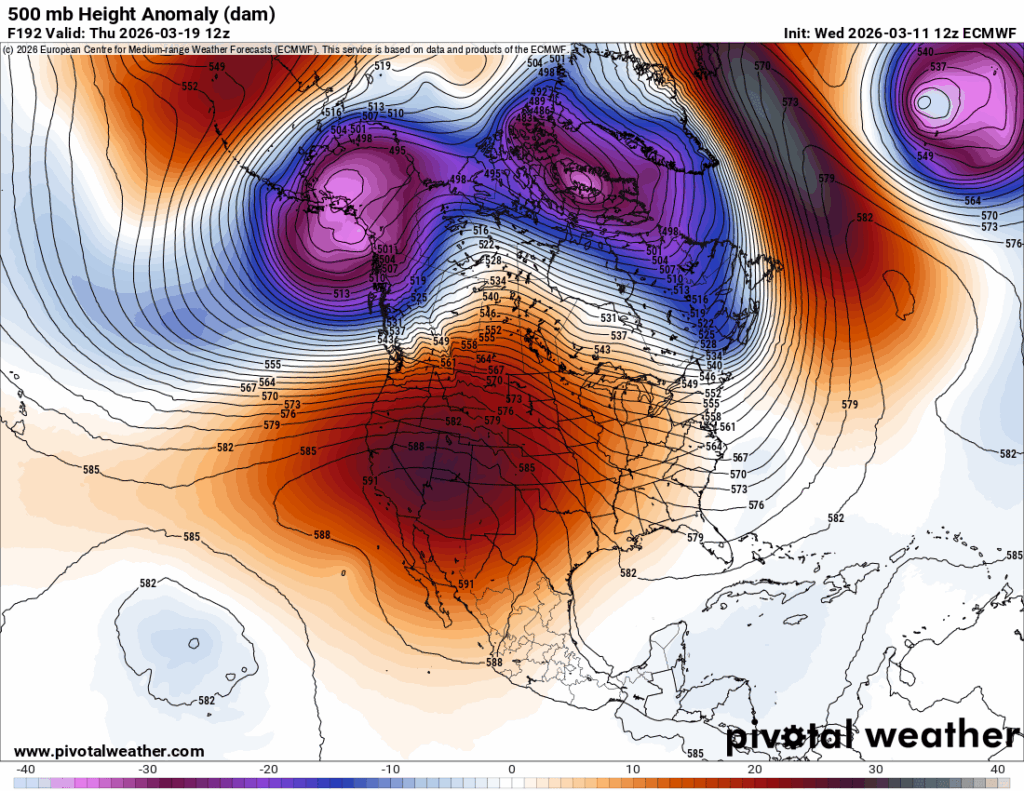
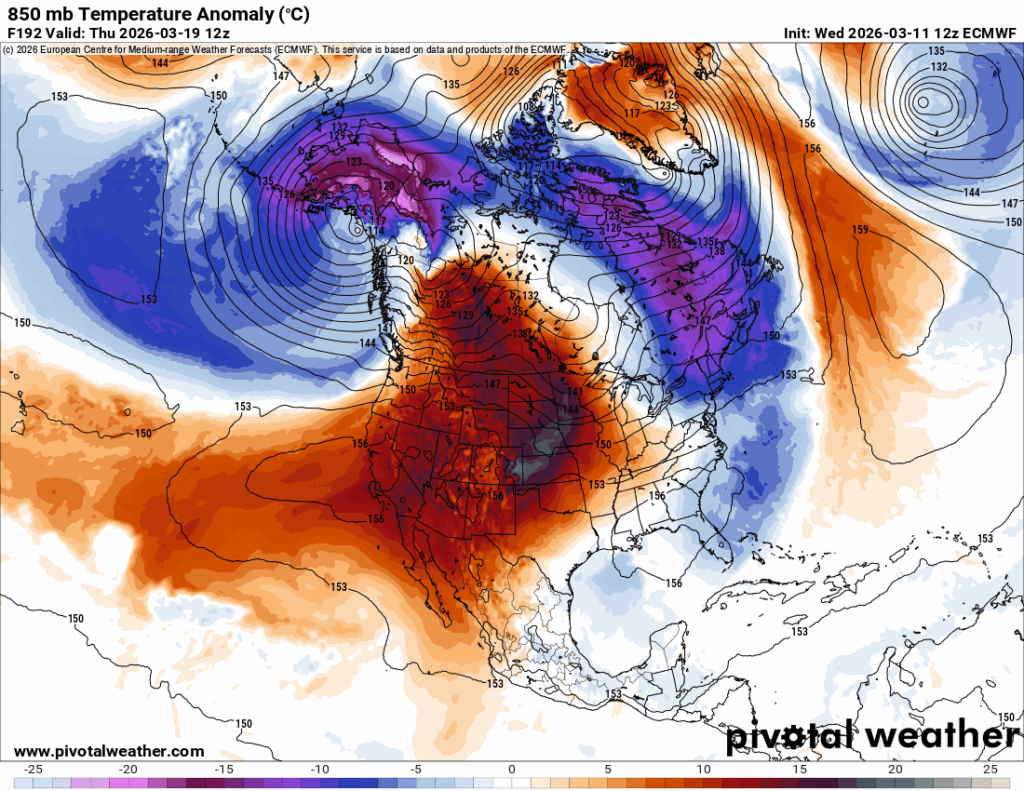
So, let’s go ahead and roll out the first eight oil company names for 2026 taken from:
Comprehensive Oil & Gas Company List | PDF | Petroleum | Oil Sands
Artex for Artex Oil Company of Ohio
Bluestone for Bluestone Natural Resources of Oklahoma
Cabot for Cabot Oil and Gas Co. of Pennsylvania
Canaco for Canaco Phillips Oil. Company
Delphi for Delphi Energy
Frontera for Frontera Energy
Gaastra for Gaastra Exploration Inc.
Goodrich for Goodrich Patroeum Co. based out of Louisiana
These are not set in stone, so if you, dear reader, have better suggestions that I have not used in the last several years, feel free to float me a note.
Here are more details on our first heatwave from Bloomberg:
Los Angeles Set to See Record Heat With Temperatures near 100F – Bloomberg
Record Heat Set to Roast Los Angeles and the Southwest
The high temperatures will cut into California’s snowpack, raising the risk that drought will return.
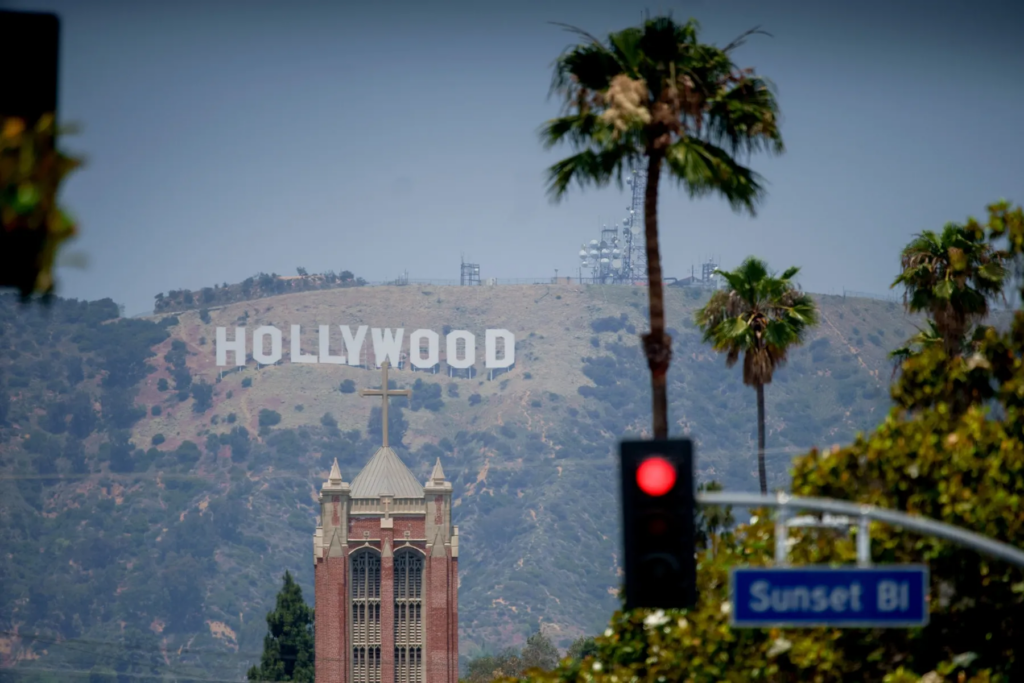
The Hollywood sign in Los Angeles.Photographer: Eric Thayer/Bloomberg
By Brian K Sullivan, Olivia Raimonde, Grant Smith, Nayla Razzouk, and Alberto Nardelli
March 11, 2026
It’s March, but someone didn’t tell that to the weather in the western US. The region is about to be hit by an intense heat wave with summer-like temperatures that will break records and cut into California’s already-dwindling snowpack.
Today’s newsletter has the latest forecast, including how many records could fall. Plus, the International Energy Agency is releasing 400 million barrels of oil in what its executive director called an “emergency collective action of unprecedented size” in response to the war in Iran.
Subscribe to Bloomberg News for the latest on climate and energy.
‘Records will be shattered’
An unusually early heat wave is set to grip Los Angeles and much of the Southwest, putting California’s already fragile snowpack, and therefore its water supplies, at risk.
Temperatures in downtown Los Angeles on Friday are forecast to reach 98F (37C), coming within a degree of the highest reading for the month set on March 29, 1879, according to the National Weather Service. Across the region, temperatures are expected to rise 20F to 30F above normal, with several daily records likely to fall and some areas potentially breaking all-time March highs, the agency said.
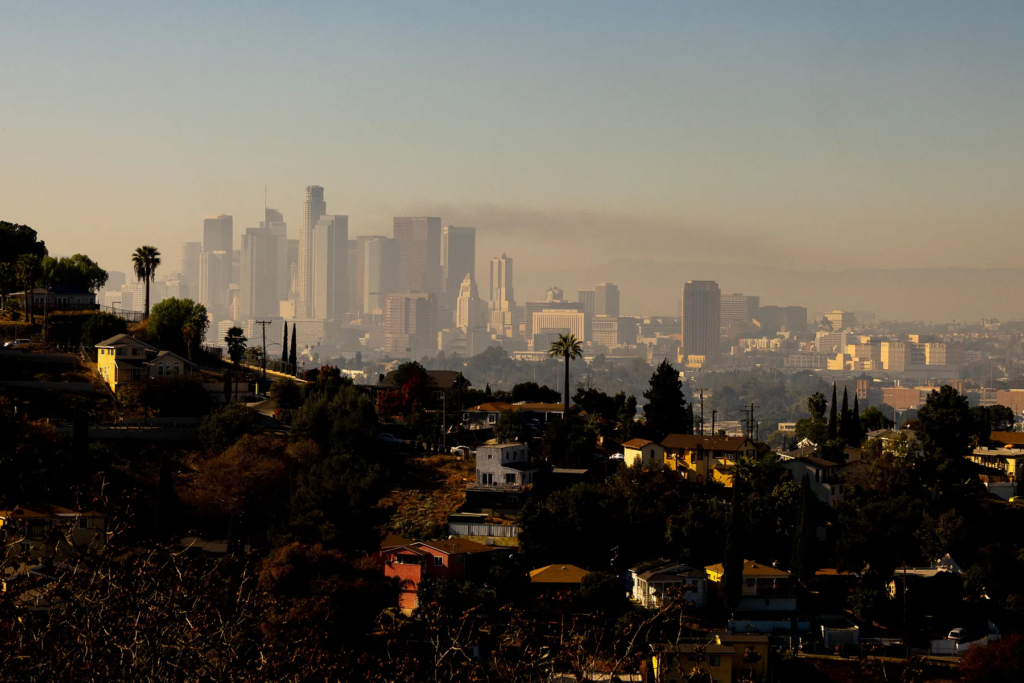
Downtown Los Angeles Photographer: Etienne Laurent/AFP/Getty Images
“Brutal heatwaves are not just a summertime concern anymore,” said Jennifer Francis, a climate scientist with the Woodwell Climate Research Center. “Record-breaking March temperatures will stretch across the Southwest, South Central, and Southeast states this week.”
Nine states across the Great Plains and West had their warmest winter going back 131 years, and five more, including California, had their second mildest, according to the US National Centers for Environmental Information. Overall, the US had its second-warmest winter season measured from Dec. 1 to Feb. 28.
This meant many of the storms striking the West arrived as rain and not snow. Much of that water ran through rivers into the Pacific Ocean or seeped underground. As a result, California and the Colorado River basin are perilously low on the frozen water needed to replenish supplies late in the spring and summer. With the coming heat wave, what little snow is left in California’s Sierra Nevada range and elsewhere in the West may melt before it can be captured in reservoirs, presenting a water supply challenge for residents, farmers and livestock.
California depends on mountain snowpack as a natural reservoir that stores water through winter and releases it gradually in the spring and summer, said Daniel Swain, a climate scientist with the University of California Agriculture and Natural Resources. Even when major storms delivered heavy snow, including a system linked to one of California’s deadliest avalanches that killed nine people, the accumulation quickly melted.
“This heat wave looks pretty extreme by March standards across large portions of the Southwest, and that is saying something given the winter we have just experienced,” Swain said. “It is a very big deal both in the shorter term and in the longer term.”
Right now, North America is on a heat seesaw. New York City’s Central Park reached a record 80F for the date, according to the National Weather Service. As the warmth in the East fades, the West will pick up the slack as temperatures rise. Through next Monday, 214 daily high-temperature records could be broken or tied across the US, and another 76 threatened, according to the US Weather Prediction Center.
“It is definitely not common to get this hot, this early,” said Marc Chenard, a senior branch forecaster at the US Weather Prediction Center.
Read the full story and more about how to adapt to a hotter climate.
More:
Here are some “ETs” recorded from around the U.S. the last couple of days, their consequences, and some extreme temperature outlooks, as well as any extreme precipitation reports:
Here is More Climate News from Wednesday:
(As usual, this will be a fluid post in which more information gets added during the day as it crosses my radar, crediting all who have put it on-line. Items will be archived on this site for posterity. In most instances click on the pictures of each tweet to see each article. The most noteworthy items will be listed first.)