The main purpose of this ongoing blog will be to track planetary extreme, or record temperatures related to climate change. Any reports I see of ETs will be listed below the main topic of the day. I’ll refer to extreme or record temperatures as ETs (not extraterrestrials).😜
Here is a new feature for this blog, which I will add daily. This is the latest inciteful Green News Report from my friends Desi Doyen and Brad Friedman at Progressive Voices. Hit ‘continue reading,’ listen, then hit return to see my daily topics:

Green News Report with Brad Friedman & Desi Doyen
Episode: 9/15/2026 — More info…
Dear Diary. I often report on negative climate feedback loops, the latest such update being from Sunday when new Canadian permafrost thaw research was delved into. But are there any positive feedback loops? According to a new article from Euro News, thankfully so, provided that we as a species can collectively aid them and not continue to pollute carbon. For example, we have great news that coral reef protection efforts are self-sustaining and are having great effects.
Here is Euro New’s positive climate feedback report.
‘Recovery becomes self-propelling’: Five positive tipping points that can save the world | Euronews
‘Recovery becomes self-propelling’: Five positive tipping points that can save the world
Published on 12/09/2026
“For too long a sense has prevailed that solutions to the climate and nature are out of reach. This new research explodes that myth once and for all.”
The world risks irreversible damage as our reliance on planet-heating fossil fuels pushes ecosystems towards catastrophic climate tipping points.
A recent report from the United Nations Environment Programme (UNEP) warned that global temperature rise will exceed 1.5°C, likely within the next few years, overshooting the limit set out in the legally binding Paris climate agreement.
This would accelerate much of the environmental degradation the natural world is already experiencing, from shrinking ice sheets to rising sea levels and “unprecedented dieback” of coral reefs and rainforests.
The UNEP says that there are “no good outcomes if we remain above 1.5°C” and that governments must focus on making the overshoot as small and short as possible.
However, landmark new research from The Earthshot Prize and the University of Exeter has revealed 51 solutions that can trigger “rapid and transformative change” to repair the planet over the next five years. Out of these 51 solutions, five priority clusters – or ‘Earthshots’ – were identified.
Following the hottest August on record – tied with July 2023 – and a strong El Niño developing across the Pacific, researchers say that the study provides a “new, unifying agenda for positive action”.
“To reverse damage to our ecosystems before it’s too late, we need to unlock positive tipping points where progress builds on itself, costs fall with scale and recovery becomes self-propelling,” says Professor Tim Lenton, chair in climate change and earth system science at the University of Exeter.
Clean energy as a ‘master cascade’
Renewable energy such as solar and wind has already crossed positive tipping points in many markets – and is essential to end reliance on fossil fuels.
Last year, solar and wind accounted for a record 30 per cent of EU electricity, overtaking fossil power for the first time on record. During this time, EU solar generation hit a record 369TWh, up 20 per cent from 2025.
By 2030, solar power alone is projected to reduce EU emissions by 154 million tonnes of CO2-equivalent per year. This is the equivalent of the total greenhouse gas emissions of the Netherlands in 2023.
“Because clean power unlocks electric mobility, heat pumps, clean industry and clean air simultaneously, this is the highest-leverage transition across all five Earthshots,” the report says.
“The binding constraints are now grid expansion, permitting reform and the clean energy investment gap in the Global South.”
Related
Despite hosting 60 per cent of the world’s best solar resources, Africa receives less than two per cent of global clean energy investment.
Some of the continent’s largest economies, such as South Africa, Morocco and Nigeria, are already accelerating plans to build more domestic solar manufacturing capacity to reduce dependence on Chinese imports that currently dominate the global market.
Morocco has doubled production to around one gigawatt a year. South Africa maintains a similar capacity, while Egypt has gigawatt-scale projects coming online.
“A few years ago, local solar manufacturing was barely on the agenda anywhere in Africa,” Benjamin Clarke, policy director at the Africa Solar Industry Association, tells news agency AP.
“It is now becoming a recognised pillar of industrial policy and green economic development.”
Clean cooking and clean household energy
Despite the clean energy boom, around 2.1 billion people still rely on solid fuels for cooking.
This is the largest source of indoor air pollution and a major source of ‘black carbon’, commonly known as soot.
“Clean cooking is close to a tipping point in several markets as pay-as-you-go solar and clean cooking businesses scale across East and Southern Africa,” the report states.
“In Latin America and parts of Asia, the liquefied petroleum gas (LPG) transition is substantially complete, bringing health benefits to millions.”
How marine protected areas are becoming ‘self-reinforcing’
Researchers highlight that well-designed and well-enforced ocean conservation has produced “visible recovery” of fish stocks and biodiversity within recent years.
“As communities have reaped the benefits of marine conservation, protection areas have expanded and progress accelerated,” the report states.
“In turn, food security for coastal populations and climate resilience has strengthened with examples including the Great Barrier Reef Marine Park in Australia.”
Earlier this year, the highly anticipated High Seas Treaty came into force, marking a “historic milestone” for global ocean conservation.
The High Seas is often used to describe all areas beyond national jurisdiction, including the seafloor and water column (the vertical section of water from the surface to the bottom). This equates to international waters that cover more than two-thirds of our ocean – almost 50 per cent of the planet’s surface area.
Once considered barren and desolate, the High Seas are now regarded by scientists as one of the largest reservoirs of biodiversity on Earth. They play an important role in regulating the climate, supporting “crucial” carbon and water cycles.
However, human activity poses a growing problem for the High Seas. The High Seas Alliance (HSA) warns that destructive fishing practices such as bottom trawling and illegal fishing are harming High Seas marine life, along with issues such as plastic and chemical pollution, seabed mining and ocean acidification from global warming.
The Treaty now means that nations will be empowered to establish a connected network of High Seas marine protected areas (MPAs) – which can be adopted by a vote when consensus cannot be reached. This helps prevent a single nation from blocking MPAs being established.
It also supports developing countries through capacity building and the transfer of marine technology so that they are better empowered to develop, implement, monitor and manage future High Seas MPAs.
The ‘gatekeepers’ for tropical deforestation
Multiple studies have identified that rising global demand for meat, particularly beef, as a key force behind the destruction of the Amazon rainforest.
Research from the University of Manchester earlier this year, for example, found that up to 80 per cent of cleared forest land is converted into cattle pasture, while gaps in supply chain oversight allow deforestation to continue.
Related
The ‘Positive Tipping Points’ report warns that concentrated global supply chains for beef, soy (which is often used to feed cattle), palm oil, timber, cocoa and coffee make a small number of buyers and financiers the “gatekeepers for tropical deforestation”.
However, legislation like the EU Deforestation Regulation, which “guarantees that the products EU citizens consume do not contribute to deforestation or forest degradation worldwide”, could make a significant difference – especially if it triggers a market-wide shift across other major importers such as China, the UK and the US.
How can positive tipping points be achieved?
Researchers stress that creating the right conditions for a solution area to tip is critical, outlining three prerequisites that are needed across all potential Earthshots. These are affordability, accessibility and attractiveness.
The report also states that the five Earthshots are “deeply interconnected” and often share the same conditions, infrastructure and risks within a single system.
For example, the boom in clean electricity could accelerate positive tipping points across all five Earthshots, while barriers such as a lack of investment in the Global South could stall progress in the regions that need it most.
“For too long a sense has prevailed that solutions to the climate and nature [crises] are out of reach. This new research explodes that myth once and for all,” says Jason Knauf, CEO of The Earthshot Prize.
“This pivotal research gives us reasons for optimism. This is a blueprint for turning ambition into action to place our planet on a path of rapid repair.”
Read more

‘We weep for our mountain’: Mont Blanc meltdown shakes communities
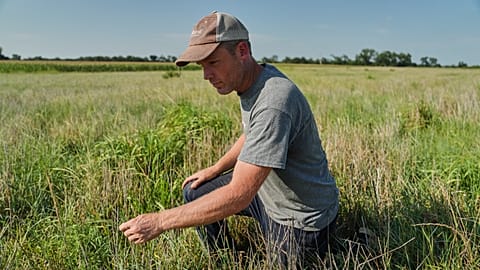
Perennial grains offer farmers a lifeline in the face of drought
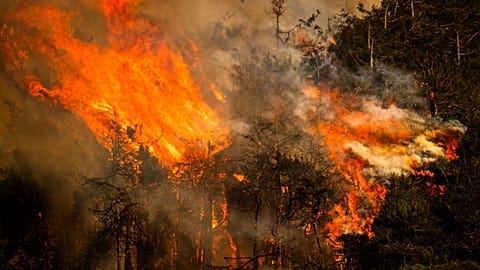
El Niño to be ‘very strong’ and last until February, UN warns
Here are some “ETs” recorded from around the U.S. the last couple of days, their consequences, and some extreme temperature outlooks, as well as any extreme precipitation reports:
Here is More Climate News from Tuesday:
(As usual, this will be a fluid post in which more information gets added during the day as it crosses my radar, crediting all who have put it on-line. Items will be archived on this site for posterity. In most instances click on the pictures of each tweet to see each article. The most noteworthy items will be listed first.)