The main purpose of this ongoing blog will be to track planetary extreme, or record temperatures related to climate change. Any reports I see of ETs will be listed below the main topic of the day. I’ll refer to extreme or record temperatures as ETs (not extraterrestrials).😜
Here is a new feature for this blog, which I will add daily. This is the latest inciteful Green News Report from my friends Desi Doyen and Brad Friedman at Progressive Voices. Hit ‘continue reading,’ listen, then hit return to see my daily topics:
Dear Diary. I will be in heatwave mode the next few weeks as CAT5 Heatwave Ember broils Europe and a U.S. heatwave grows. In other words, we will concentrate on extreme temperatures, which is the main purpose of this climate blog.
The Guardian has done a great job reporting on Heatwave Ember. Here are highlights from there reporting from Thursday 6/25:
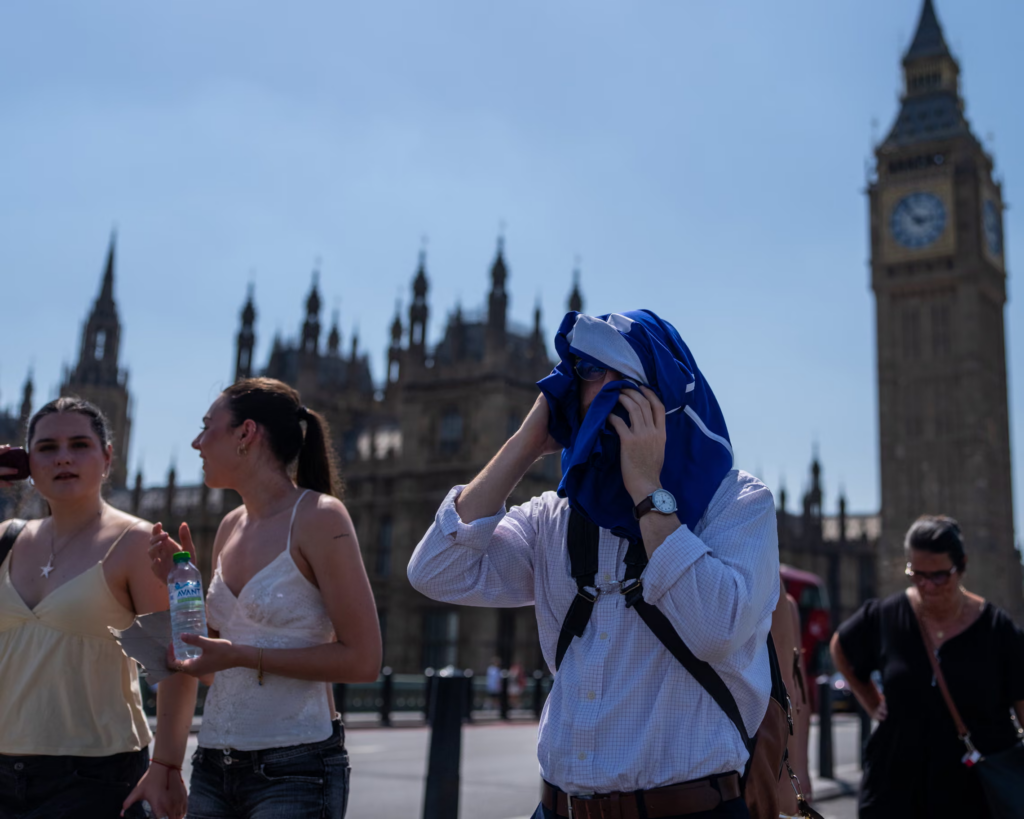
A man holds a t-shirt over his head to shelter from the sun as he walks through central London Photograph: Carl Court/Getty Images
- Teachers in France are risking their own and students’ health in overheated schools as a severe heatwave sets new record temperatures, education unions said, urging staff to strike over “unacceptable working conditions”. Several teaching unions on Thursday issued a joint statement denouncing a “blatant lack of preparation” by the government, after teachers have had to work in classrooms where temperatures reached up to 40C.
- The UK’s new provisional high of 36.4C (97.5F), recorded in Yeovilton, Somerset, surpassed Wednesday’s June record of 36.1C in Gosport, Hampshire, which had beaten the previous peak of 35.6C set in Southampton in 1976.
- The Netherlands issued its first-ever red alert for heat for Friday, warning of “dangerous” conditions as a record-setting heatwave scorched Europe. The national weather institute issued the alert for much of the country, where temperatures are forecast to reach 40C in some places.
- Switzerland registered its hottest ever June temperature on Thursday, with 38C measured in the northern city of Basel, breaking a previous record of 36.9C set eight decades ago, the Swiss weather service said. “Temperatures exceeded 37C for the first time in Switzerland during the month of June, breaking a record set in 1947,” MeteoSuisse said on X, adding that “a temperature of 38C was even recorded at the Basel weather station”.
- France’s main energy provider Thursday shut down two nuclear reactors as an environmental protection measure to avoid discharging too much hot water into rivers already warming in a record-breaking heatwave, AFP reported. Power plants critical to the country’s electricity production use river water to cool their reactors, which heats the water that is then released back into the river.
- In France, a three-year-old has died after finding himself trapped in a car in the Paris region in extreme heat, a prosecutor said, the third such fatality this week, AFP reported. The boy had slipped into the family car while his father thought he was napping, then found himself unable to get out with the child lock in the town of Saint-Gratien, the prosecutor said, after a police source and civil defence also reported the death.
- A heatwave sweeping Europe was starting to peak in Germany on Thursday, with several open-air events cancelled and temperatures expected to top 40C through the weekend, AFP reported. Large parts of the country are already under “severe to extreme heat stress” with temperatures soaring to around 37C, the German Weather Service (DWD) said.
- Italy’s latest heatwave has claimed five lives in less than 24 hours, as temperatures climbed to 41C across much of the country. After a 57-year-old man died while working in a field near Lodi, outside Milan, on Tuesday, four more deaths were reported on Wednesday.
- Over the past four days 212 people have died prematurely in Spain as a result of the heatwave, according to scientists using a system for monitoring mortality. As temperatures rise to 42C in some regions, often not falling below 30C at night, the June heatwave is breaking records that were set this time last year, making it the hottest June since 1950.
- In Germany, the country’s rail operator Deutsche Bahn, or DB, offered passengers booked for this weekend an option to cancel their ticket free of charge. The option is available to all passengers who booked their tickets before 23 June, and were due to travel between today and 30 June.
- The heatwave continues to disrupt the British education system with University College London, one of the UK’s largest universities, cancelling its student open days planned for Friday and Saturday, relieving thousands of prospective undergraduates and parents from travelling to central London.
The United Kingdom has been having a heat health crisis because so many of their hospitals don’t have cooling infrastructure. Here is a story about that from the Guardian:
Hospitals in England declare critical incidents as machines and IT fail in heat | NHS | The Guardian
Hospitals in England declare critical incidents as machines and IT fail in heat
Extreme weather breaks MRI scanners and cooling units, as workload rises for sleep-deprived staff on sweltering wards
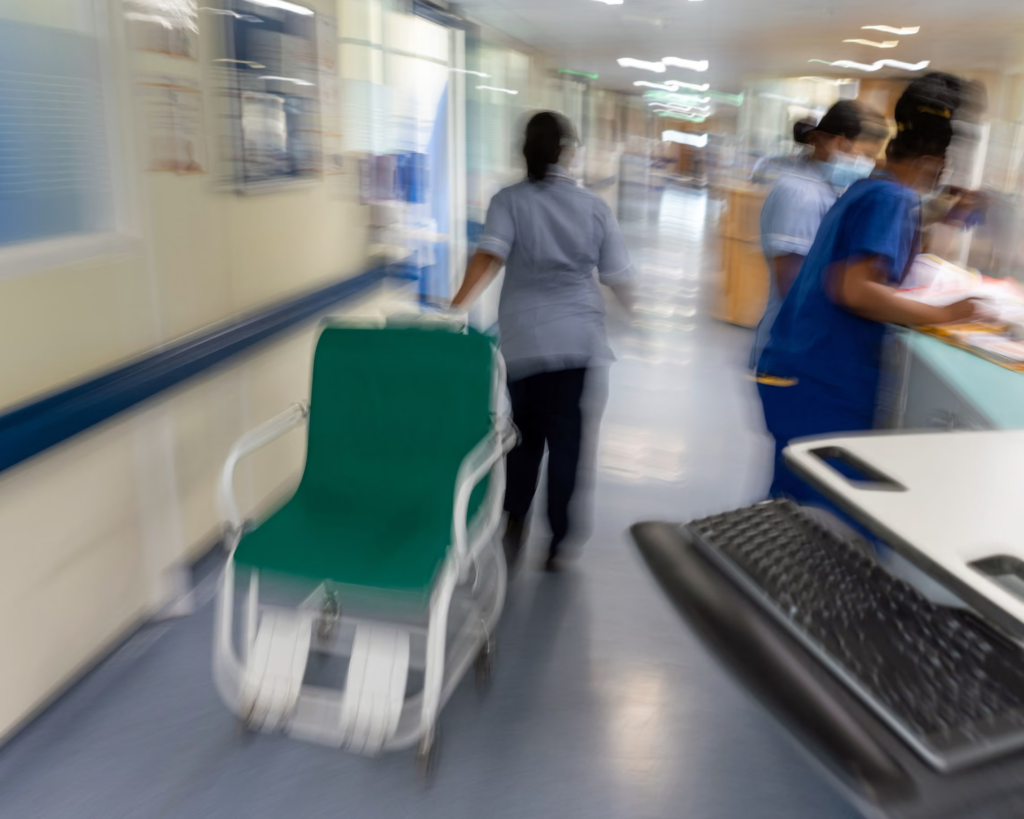
NHS buildings must be upgraded to withstand extreme heat, said the clinical vice-president of the Royal College of Physicians. Photograph: Jeff Moore/PA
The hot weather has also prompted a surge in admissions and people arriving at A&E, causing severe overcrowding in some places and exacerbating heat-related pressures on infrastructure.
“Lots of people, especially older patients, are turning up having collapsed or with dehydration,” one physician said. “In terms of inpatients, the conditions are awful due to overcrowding. Very few places have air conditioning and staff are really struggling.”
Older patients in one geriatric ward had been forced to endure temperatures as high as 35C, a second doctor said. Even wards with built-in air conditioning were affected, as some units were shut down to prevent them being damaged by the extreme heat.
Another doctor said their workplace was “unfit to cope”, with patients and staff experiencing “awful conditions” in sweltering wards, clinics and corridors.
Lots of people, especially older patients, are turning up having collapsed or with dehydration,” one physician said. “In terms of inpatients, the conditions are awful due to overcrowding. Very few places have air conditioning and staff are really struggling.”
NHS staff were also navigating the challenge of providing care while sleep-deprived. Like much of the UK population, many have struggled to sleep this week. Some medics were unable to work because their children’s schools had closed.
Several NHS trusts in England have declared critical incidents as a direct result of the extreme heat. One hospital had done so after its machines failed in multiple areas, a doctor said. Labs used for testing were also affected and two linear accelerator machines, used to treat cancer patients, had stopped working amid the high temperatures.
The doctor said that although they were working in a relatively new care setting, it was “tacked on to an old Victorian hospital”, creating severe infrastructure challenges. “It’s hopeless, really,” they said.
The doctor also said their NHS trust had faced “major issues” with IT servers overheating on Wednesday. “We thought we were going to lose everything, so we were all asked to turn off non-essential computers and electrical equipment, including lights.”

In Portsmouth, the Queen Alexandra hospital declared a critical incident after extreme heat caused cooling units to fail, leading to “elevated temperatures” across the hospital.
The failure of the cooling units affected the hospital’s digital systems and critical clinical services, including operating theatres, cardiac catheter laboratories and diagnostic scanning facilities, Portsmouth hospitals university NHS trust said.
“The unprecedented pressures created by the current heatwave, combined with the failure of a number of our chiller units, have led to significant disruption across several of our services,” said the trust’s deputy chief executive, Mark Orchard.
Some planned care and appointments were cancelled, while patients attending appointments were advised to bring lots of water as the hospital was “very hot”.
In Norfolk, hundreds of patients had hospital appointments cancelled after MRI scanners stopped working in the extreme heat.
Norfolk and Norwich university hospitals NHS foundation trust declared a critical incident, saying cooling systems that kept its scanners running had been affected by the hot weather and humidity.
It said it currently had “no working MRI scanners” across its Norwich sites, including those at its main hospital and its community diagnostic centre.
Meanwhile, the London ambulance service said it had recorded the highest number of life-threatening emergencies in its history in a single day, “driven by the extreme heat”. Crews responded to a record 642 category one calls on Wednesday. Category one incidents include the most serious, life-threatening injuries and illnesses such as cardiac arrests and patients who are not breathing.
Dr Hilary Williams, the clinical vice-president of the Royal College of Physicians, said the impact on patients and staff exposed an NHS that was dangerously underprepared for this week’s extreme heat. “There are reports of older patients arriving at hospital having collapsed or with dehydration. Patients are facing overcrowding, and there are issues with machines, laboratories and kidney dialysis – all fundamental to providing safe patient care,” she said.
“The impact of heatwaves on staff cannot be overstated. There is a sense of foreboding when we see the weather forecast, because we know what is to come, and there is very little staff can do.”
She added: “It is not as simple as buying fans, which can present a fire risk when used alongside oxygen and may increase the spread of infection.”
The NHS was already under “enormous pressure” owing to rising demand and workforce shortages, Williams said. Coupled with an ageing estate, those challenges intensified with the arrival of record temperatures this week.
“As clinicians, there are immediate steps we can take to protect patients, such as reviewing medications that affect hydration and ensuring they are stored appropriately,” she said. “But this must be matched by system-level change – strengthening infrastructure and embedding resilience into NHS reform.”
Buildings must be upgraded to withstand extreme heat and other climate risks, she said. “Hospitals should be places of safety, not settings where extreme heat puts patients and staff at risk.”
The Department of Health and Social Care said all NHS trusts were required to have effective arrangements to deal with extreme heat. “Trusts are urgently coordinating responses to increased demand on health services and protecting vulnerable patients,” a spokesperson said.
More:
Here are some “ETs” recorded from around the U.S. the last couple of days, their consequences, and some extreme temperature outlooks, as well as any extreme precipitation reports:
Here is More Climate News from Thursday:
(As usual, this will be a fluid post in which more information gets added during the day as it crosses my radar, crediting all who have put it on-line. Items will be archived on this site for posterity. In most instances click on the pictures of each tweet to see each article. The most noteworthy items will be listed first.)