The main purpose of this ongoing blog will be to track planetary extreme, or record temperatures related to climate change. Any reports I see of ETs will be listed below the main topic of the day. I’ll refer to extreme or record temperatures as ETs (not extraterrestrials).😜
Main Topic: Lakes Mead and Powell Continue to be in Crisis
Dear Diary. A very long-term drought continues to plague the western United States, which is a sign that the climate crisis is deepening. The drought has negatively affected Lakes Mead and Powell, two of the biggest reservoirs that seven big southwestern cities depend upon for water and power generation. From time to time, I have emphasized how much in peril the Colorado River system from drought. Today is another of those times.
The one factor which might bring some relief to the drought stricken Southwest and help fill Lakes Powell and Meade is the record strong El Niño building in the Pacific. El Niño’s typically bring beneficial rainfall to California and much of the rest of the Southwest, but can we hang our proverbial hat on this one? Stay tuned.
Here are more details from AP News:
Lake Powell hits record low, threatening key water and electricity supply for millions
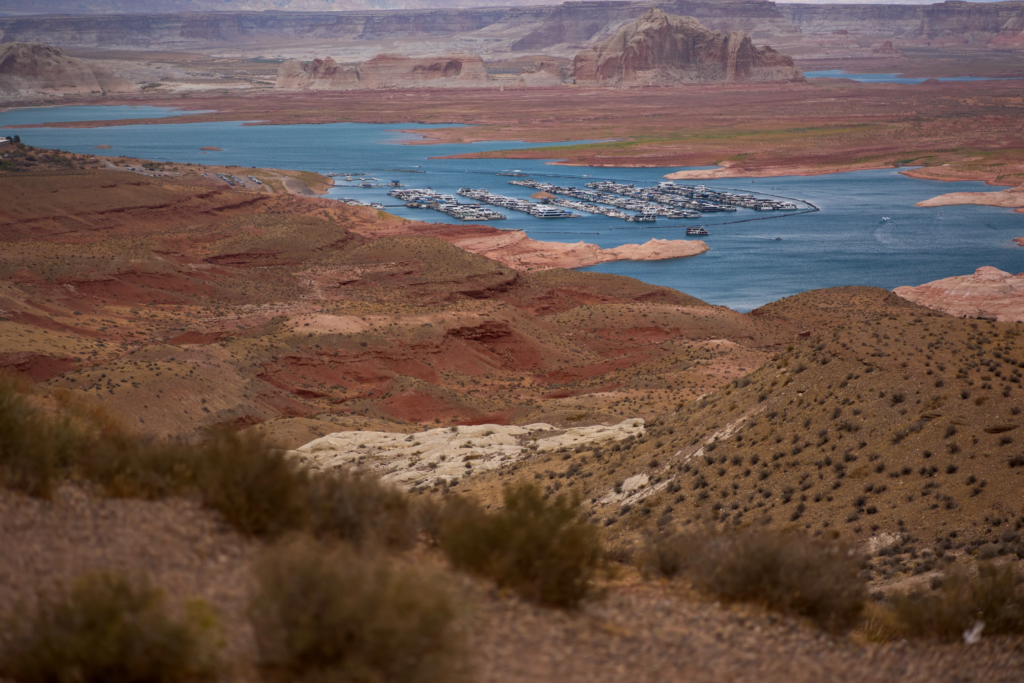
The Wahweap Marina floats on the Glen Canyon National Recreation Area Wednesday July 15th, 2026 near Page, AZ (AP Photo John Locher)
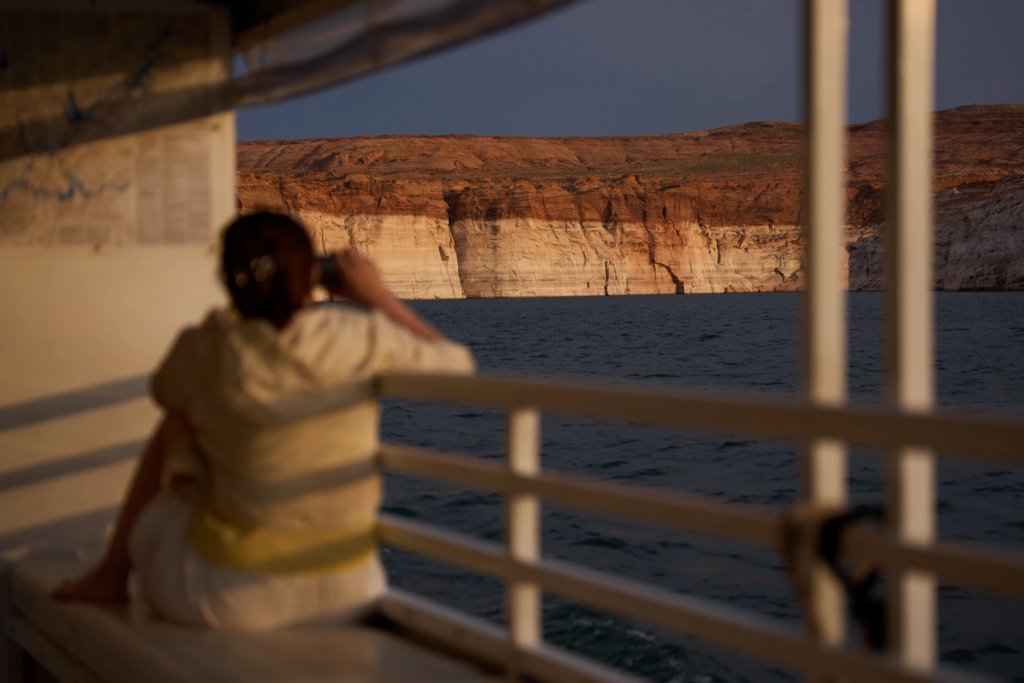
A person takes a picture during a tour on Lake Powell at the Glen Canyon National Park Recreation Area, Wednesday July 15th, 2026, near Page, Ariz. A bathtub ring of light minerals on the canyon wall shows the high water mark of the reservoir. (AP photo/ John Locher)
By THE ASSOCIATED PRESS Updated 5:18 PM EDT, August 16, 2026
The water level at Lake Powell, the United States’ second-largest reservoir, has fallen to a record low, heightening concerns about the ongoing crisis in the Colorado River system.
The alarming milestone at Lake Powell, reached Saturday, comes about a week after the river’s other major reservoir, Lake Mead, also hit a historic low. Plummeting water levels pose a major threat to the Colorado River Basin, which is a key resource for wildlife, hydropower and more than 40 million people in seven U.S. states.
The historic lows come as the federal government and states that rely on the river — California, Arizona, Nevada, New Mexico, Utah, Wyoming and Colorado — struggle to reach agreement on a long-term management plan for the dwindling resource. Persistent overuse combined with a record-dry winter and rising temperatures have been depleting both Lake Powell and Lake Mead.
Lake Powell’s elevation dropped to 3,519.91 feet (1072.9 meters) above sea level on Saturday, dropping just slightly below a previous record set in April 2023, according to data from the U.S. Bureau of Reclamation. The lake is more than 20 feet (6.10 meters) lower than it was at the start of the year, USBR data shows.
The reservoir is now about 30 feet (9.1 meters) away from the point at which turbines would stop producing hydroelectric power. Federal officials warned in April that a “major intervention” would be necessary to avoid reaching that threshold by the end of this year.
USBR in July proposed a 10-year plan that includes major potential water cuts for Arizona, California and Nevada.
The crisis has been in the making for years. Both reservoirs are at the lowest they have been in nearly seven decades, and levels may continue to drop, USBR data shows.
The last time their combined storage was this small was in May 1957 when Glen Canyon Dam that holds back Powell was being built, according to a recent paper published by a group of academics and retired water officials. Powell began to fill in 1963.
The depletion has also impacted Lake Powell’s substantial tourism industry, forcing marinas in the reservoir to adapt. Boat ramps have closed or moved, new ones are being added and marinas have been temporarily relocated to deeper waters.
More:
Here are more “ET’s” recorded from around the planet the last couple of days, their consequences, and some extreme temperature outlooks, as well as any extreme precipitation reports:
Here is More Climate News from Tuesday:
(As usual, this will be a fluid post in which more information gets added during the day as it crosses my radar, crediting all who have put it on-line. Items will be archived on this site for posterity. In most instances click on the pictures of each tweet to see each article. The most noteworthy items will be listed first.)