The main purpose of this ongoing blog will be to track planetary extreme, or record temperatures related to climate change. Any reports I see of ETs will be listed below the main topic of the day. I’ll refer to extreme or record temperatures as ETs (not extraterrestrials).😜
Here is a new feature for this blog, which I will add daily. This is the latest inciteful Green News Report from my friends Desi Doyen and Brad Friedman at Progressive Voices. Hit ‘continue reading,’ listen, then hit return to see my daily topics:

Green News Report with Brad Friedman & Desi Doyen
Episode: 9/17/2026 — More info…
Dear Diary. Fear this El Niño. That is the theme for this summer going into the fall and for good reason. The El Niño currently is growing into what most think will be by far the strongest on record and is already wreaking havoc across portions of Asia. It’s no wonder that Asian nations have put into place plans to mitigate effects from the super-sized El Niño, a monster brought to us by climate change. And yes, most climate scientists now agree that climate change will accentuate El Ninos from now on, making them stronger and more common.
The worst effects from this El Nino across Asia will be extreme heat, drought, and associated lack of fresh water.
Here are more details from the Guardian:
‘Forcing a reckoning’: How Asia is preparing for a ‘supersized’ El Niño
From Sri Lanka to South Korea, governments are preparing for droughts, wildfires, typhoons and floods – with climate plans facing their biggest challenge to date

Fuelled by exceptionally warm ocean conditions across the tropical Pacific – and developing alongside the human-driven climate crisis – El Niño is virtually guaranteed to hit a very strong intensity towards the end of this year and into 2027. Photograph: Aditya Aji/AFP/Getty Images
Oliver Holmes, Hannah Ellis-Petersen in Delhi, Raphael Rashid in Seoul, Justin McCurry in Tokyo, and Danny Vincent in Hong KongThu 17 Sep 2026 19.57 EDTShare
Asian governments are rushing preparations for the most severe El Niño weather event on record, with hundreds of millions of people bracing for multiple crises at once as extreme heat, heavy rain and food shortages hit the region.
Fuelled by exceptionally warm ocean conditions across the tropical Pacific – and developing alongside the human-driven climate crisis – El Niño is virtually guaranteed to grow to a very strong intensity towards the end of this year and into 2027.
The World Food Programme has warned that about 50 million people will probably be pushed into acute hunger due to the exceptionally intense weather system, while UN secretary-general António Guterres said this month that El Niño was “being supersized before our eyes”.
Here are the steps countries in Asia are taking to prepare for El Niño:
‘Climate risk maps’ in China
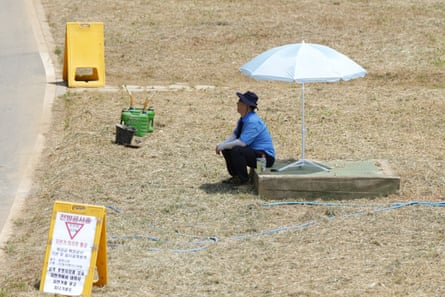
In Hong Kong, authorities have already been forced to revise workplace policies, after the city experienced its hottest day on record on 9 August. During times of extreme heat, companies are expected to reschedule work, provide cooling equipment and rest breaks for their employees.
Employers in the international financial hub could even face prosecution if they fail to provide staff with support at times of sweltering heat.
In mainland China a 100-day campaign has been launched to prepare for extreme weather and help safeguard harvests against the opposing extremes of drought and intense rainfall.
Beijing has plans to upgrade early warning monitoring systems, and in July, it launched a national plan encouraging cities to draw up ‘climate risk maps’ to help identify areas most vulnerable to flooding and severe heat.
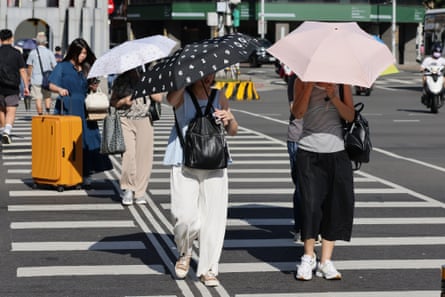
Taiwan, meanwhile, is treating the predicted extreme weather as an emergency situation, and preparing using methods similar to what it would do to train for a terrorist attack or earthquake. In early September, the island nation held a mass exercise simulating three consecutive days of temperatures above 40C. Hundreds of people took part in the field exercises, which simulated power and water disruption, rail problems, air conditioner failure and mass heatstroke.
The government has also been testing its “Cool Map” online platform, which helps to direct vulnerable people to airconditioned and cool spaces.
Sri Lanka plans to process salterwater
El Niño is already wreaking havoc across south Asia; in parts of India there has been a shortfall of monsoon rainfall of almost 50% in September, with knock-on effects on key crops such as rice, pulses, cotton and maize. Concerns are mounting that there could be a diminished harvest in the coming months, likely driving up food prices – already crippling for poor and lower middle class families.
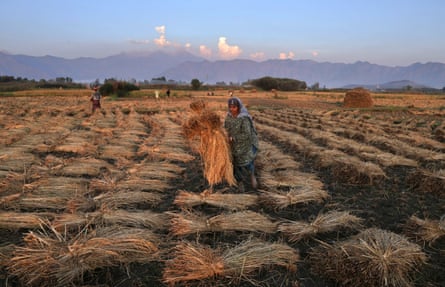
The Indian government has taken a hyper-vigilant approach to establish what the agriculture minister, Shivraj Singh Chouhan, described as a “protective shield for farmers”.
In more than 350 vulnerable districts authorities are boosting water conservation infrastructure and water harvesting, and are encouraging farmers to plant low-water, short duration crops – such as pulses and millets.
But the most intense impact of El Niño in the area is in Sri Lanka, where the absence of rainfall and high temperatures have become so severe that the country is experiencing its worst drought in a decade. More than 160,000 people are now facing a drinking water shortage as several key reservoirs run dry.
Officials have been forced to close the tourist areas of the Yala national park, home to leopards, elephants, crocodiles and spotted deer, and have been bringing in tankers of water to fill the ponds to make sure the animals do not die. In Mullaithivu lagoon, in the north-east of Sri Lanka, thousands of fish were found dead due to the lack of fresh water.
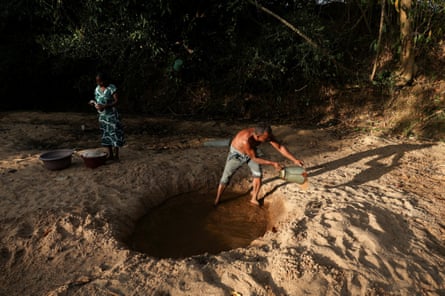
The country’s disaster management centre is preparing for a situation in which freshwater supplies could vanish. “If water sources dry up, there will be no alternative means of obtaining water,” an official said. Colombo would then be forced to process salt water from the sea, although relying on the country’s one desalination plant is not considered workable.https://interactive.guim.co.uk/uploader/embed/2026/09/el_nino_impacts-14sep2026/giv-32554ULz3Nh7sC60i/?dark=false
Tackling an agriculture crisis in south-east Asia
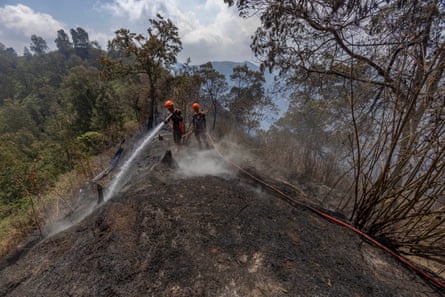
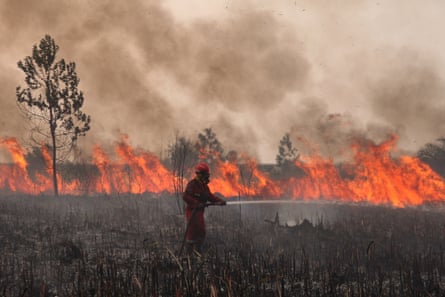
In south-east Asia, El Niño is compounded by a series of ongoing crises. The Iran war has already disrupted global energy and supply chains and inflated fertiliser costs, disproportionately hitting the region. At the same time, severe haze from seasonal fires across Malaysia and Indonesia has choked cities and is damaging plants and trees.
During the 2023–2024 El Niño, south-east Asian governments successfully cushioned agricultural impacts by adjusting planting calendars and managing water, but those strategies will be insufficient to deal with the scale of the crisis, experts warn. Regional rice yields are already projected to fall by 8 to 10%.
“We can’t just assume that this El Niño is going to be the same as the last because there are so many challenges that have been stacking on top of each other,” says Elyssa Kaur Ludher, a climate and food security expert based in Singapore.
The Philippines, Malaysia and Indonesia are particularly vulnerable to food price changes, says Kaur Ludher, a visiting fellow with the Climate Change for Southeast Asia Programme at the ISEAS – Yusof Ishak Institute in Singapore.
“In Singapore, most of our income is not spent on food. It’s under 10%. But for Indonesians, it can be up to 50% or even more as a proportion of income spent on food. So any price rise affects them disproportionately.”
With the potential for price rises to leave people desperate and angry, Kaur Ludher has argued for food security to be reframed as a national security issue. In Indonesia and the Philippines in particular, she said, social stability depends a lot on food prices. “Rice is a lifeline to this region,” she says.
To prepare, south-east Asian governments and farmer cooperatives are promoting regenerative agriculture and shifting toward biofertilisers.
“We have come to a stage where climate change is putting so much pressure on us – on our existing, already crumbling or structurally unsound, systems,” say Kaur Ludher. “Nature will force us to have a reckoning.”
South Korea overhauls its heatwave alert system
South Korea saw the driest July on record in the country’s south-east. Weeks later came a freak reversal, as a weakening storm system dragged in a deluge that dumped some of the heaviest rainfall ever recorded at a Korean weather station. The heat was so intense that farmers described spoilt potatoes as being “boiled” in the ground.
The country’s weather agency has overhauled its heatwave alert system for the first time in 18 years, adding a top tier that triggers official guidance to stop non-emergency outdoor work once feels-like temperatures hit 38C. Nationwide, phones have buzzed for weeks with government alerts urging people to stay indoors during the hottest hours.
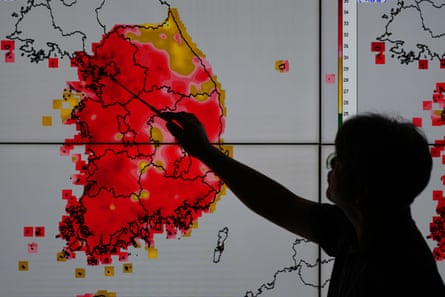
Officials are watching out for a rough autumn, with seas around the Korean peninsula remaining unusually warm for the season and forecasters expecting the north-west Pacific to produce far more powerful storms than usual this year, since a strengthening El Niño is weakening the high pressure that has so far kept them away.
Japan prepares for ‘cruelly’ hot days and typhoons
Japan is also bracing for the arrival of so-called super-typhoons, which experts attribute to a combination of El Niño and human-induced global heating.
El Niño was once associated with slightly cooler summers in Japan. But rising sea surface temperatures mean it is having the opposite effect, blanketing many parts of the country in record-breaking heat and humidity in 2023-4, the last time the weather pattern materialised.
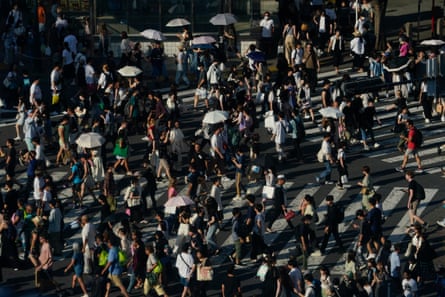
Japan recorded its first official “cruelly hot day” – or kokushobi – in July, just after the start of the current El Niño event. The Japanese term, introduced in April to underscore the threat to health posed by rising temperatures, refers to days when the mercury exceeds 40C.
Now, as the summer heat dissipates, the country is bracing for the arrival of potentially destructive typhoons.
The public is encouraged to take measures to protect themselves and their homes, such as heeding official evacuation warnings and stocking up on food and water. People living in apartments are urged to secure or bring inside flower pots and furniture – anything that could become a dangerous flying object during a storm.
This month the infrastructure ministry said it had identified several high-risk underpasses on national highways that would be closed preemptively during heavy rain. Underpasses – which allow cars to travel beneath other roads or railway lines – became a focus of concern last month after two trapped motorists drowned during record-breaking rain in Chiba prefecture, east of Tokyo.
Yu-chen Li contributed to this article
Here are some “ETs” recorded from around the U.S. the last couple of days, their consequences, and some extreme temperature outlooks, as well as any extreme precipitation reports:
Here is More Climate News from Friday:
(As usual, this will be a fluid post in which more information gets added during the day as it crosses my radar, crediting all who have put it on-line. Items will be archived on this site for posterity. In most instances click on the pictures of each tweet to see each article. The most noteworthy items will be listed first.)