The main purpose of this ongoing blog will be to track planetary extreme, or record temperatures related to climate change. Any reports I see of ETs will be listed below the main topic of the day. I’ll refer to extreme or record temperatures as ETs (not extraterrestrials).😜
Here is a new feature for this blog, which I will add daily. This is the latest inciteful Green News Report from my friends Desi Doyen and Brad Friedman at Progressive Voices. Hit ‘continue reading,’ listen, then hit return to see my daily topics:

Green News Report with Brad Friedman & Desi Doyen
Episode: 11/5/2026 — More info…
Dear Diary. Unfortunately, the effort to keep the planet below +1.5°C above preindustrial conditions is dead. The United Nations made that particular figure in the sand for a reason according to many scientists who came up with pegging the figure via consensus decades ago. As we ultimately cross it in the next few years, tipping points will fall such that the planet’s ice will melt. Not all of it but enough to send sea levels high enough to threaten all coastal cities. Indeed, that event will be a great stressed on our civilization.
Here are more details from the Guardian:
Cryosphere faces permanent damage when world overshoots 1.5C, scientists warn
UN-backed report finds even temporary rises above Paris agreement target could cause harm to glaciers and polar ice sheets
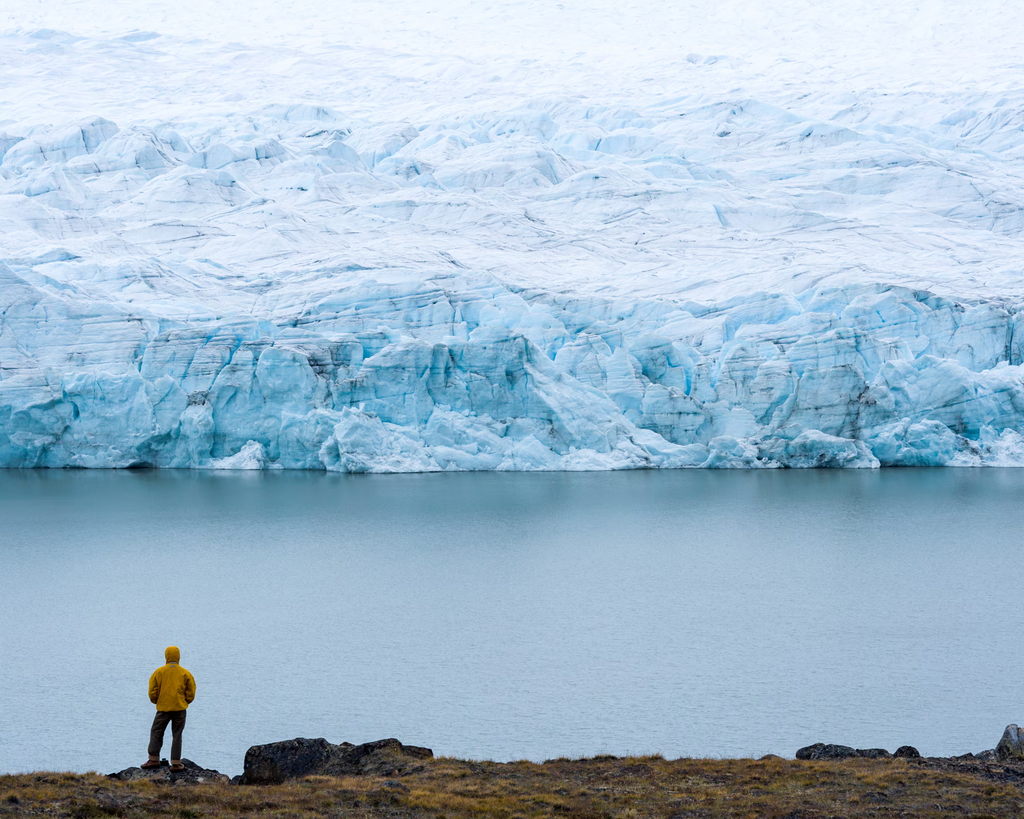
Ice sheets covering Greenland and Antarctica are melting about six times faster today than in the 1990s. Photograph: Jason Edwards/Getty Images
Sun 1 Nov 2026
Earth’s icy regions face such dangerous melting that global heating should be brought back below 1C after an inevitable period of overshooting global temperature targets, a UN report has found.
Permanent and widespread losses of snow and ice expose a “persistent myth” that overshooting the 1.5C target of the Paris climate agreement – to 2C or 3C – could be manageable or even preferable to urgent cuts to emissions, the report found.
The planet has heated by 1.3C since pre-industrial times and failures to curb greenhouse gas emissions and protect nature have led scientists to conclude that some level of overshoot is inevitable as they fight to keep end-of-century warming to 1.5C.
But extreme effects on the cryosphere – Earth’s water in a solid state, including all its ice and snow – mean temperatures must rise above that threshold for as short a period as possible, the scientists urged. Added to this, enough planet-heating carbon should be removed from the atmosphere to bring long-term warming down much further, ideally below 1C by 2150.
The high overshoot expected under current policies – with peak temperatures of about 3C – would thaw nearly all near-surface permafrost, make “severe and possibly abrupt” disruption to ocean circulation likely, and lead to widespread acidification, the report found. The latest scientific research suggests sea ice recovers more slowly than previously thought.
The report, written by 80 scientists brought together by the International Cryosphere Climate Initiative (ICCI) and the UN Environment Programme (UNEP), found much of the damage would be permanent even if global temperatures were brought back down to 1.5C, such as glacier melt raising sea levels and threatening water security.
James Kirkham, a glaciologist at ICCI and the lead author of the report, said the cryosphere is “one of the most sensitive components of the climate system”, and the consequences of its loss affect the whole planet.
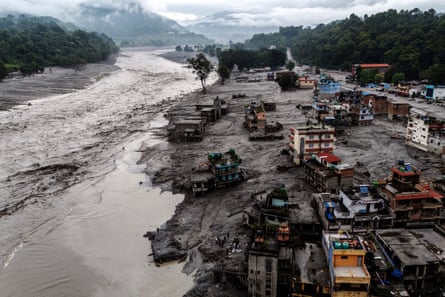
“This year, we’ve already seen one of the largest and most deadly ice rock avalanches ever recorded, on the Nepal-China border – it killed thousands of people and left damage equivalent to 10% of Nepal’s GDP in a single event,” said Kirkham. “Switzerland has lost 20% of its glacier ice in the last five years, and thousands of glaciers worldwide are expected to become extinct in the coming decade, every single year.”
The report, which comes as world leaders and diplomats converge on Turkey for the 31st annual Cop climate conference, documented rapid and accelerating melting of the cryosphere and polar oceans, with damages that range from the loss of the Greenland and Antarctic ice sheets, driving sea level rises that threaten hundreds of millions of people, to thawing permafrost, which releases more planet-heating gas.
Glaciers, which are still responding to historical warming, would only preserve about 70% of their current volume over a timescale of centuries if long-term heating were brought back down to 0.8C, the report found.
Meanwhile, the ice sheets covering Greenland and Antarctica, which are melting about six times faster today than in the 1990s, would continue to lose ice even in scenarios where overshoot is brief and temperature rise returns to 1.5C, the report found. The scientists said a safe, long-term temperature limit for polar ice sheets lies much closer to 1.0C of global heating, and possibly even lower.
“Snow and ice respond rapidly to every fraction of a degree of warming,” said Kirkham. “But most of these systems will take centuries or millennia to recover after overshoot, especially if tipping points are crossed that cause changes to become essentially irreversible.”
Last month, a UNEP report found the world must cut emissions by 18% by 2030 and by 45% by 2035 to have a good chance of keeping temperatures from rising 1.7C above preindustrial levels. It found there were “no good outcomes” of remaining above 1.5C.
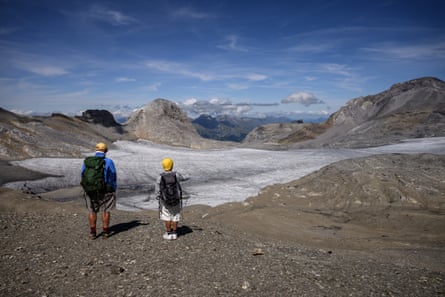
The cryosphere report found that current policies, which will result in 2.8C of global heating, would reduce the mass of glacier ice to below 10% in the Rockies, Alps, Iceland and Scandinavia. If warming was limited to 1.5C, about 20-35% of the mass would remain.
In the Hindu Kush Himalayas, where glaciers are a source of water for nearly a quarter of humanity, current policies will leave just 41% of the ice mass. If warming was limited to 1.5C, 83% would remain.
Bill Hare, a climate scientist and the CEO of Climate Analytics, a policy institute, who was not involved in the report, said: “Ice sheets melting six times faster than 30 years ago, sea ice and mountain glaciers disappearing at record speed, sea levels inexorably rising, the life-giving polar oceans acidifying: all irreversible now on human timescales, all laden with worldwide consequences, and all taking climate impacts past limits of adaptability.”
He added: “Every government minister and every fossil fuel executive who’s ever succeeded in watering down climate action can look at this report and see how their actions have fundamentally damaged the world we live in.”
Here are more “ET’s” recorded from around the planet the last couple of days, their consequences, and some extreme temperature outlooks, as well as any extreme precipitation reports:
Here is More Climate News from Saturday:
(As usual, this will be a fluid post in which more information gets added during the day as it crosses my radar, crediting all who have put it on-line. Items will be archived on this site for posterity. In most instances click on the pictures of each tweet to see each article. The most noteworthy items will be listed first.)