The main purpose of this ongoing blog will be to track planetary extreme, or record temperatures related to climate change. Any reports I see of ETs will be listed below the main topic of the day. I’ll refer to extreme or record temperatures as ETs (not extraterrestrials).😜
Here is a new feature for this blog, which I will add daily. This is the latest inciteful Green News Report from my friends Desi Doyen and Brad Friedman at Progressive Voices. Hit ‘continue reading,’ listen, then hit return to see my daily topics:
Dear Diary. On Wednesday of last week, I let all know that the Trump Administration had ordered a multi-million-dollar ocean instrument system to be dismantled:
This development is very unfortunate in light of a new report that indicates that the rate of global sea level rise has increased considerably the last couple of decades. Obviously, this is putting stress on coastal areas. From now on we will see a slow retreat from the seas as more coastal land sinks into an abyss of our own making via the burning of fossil fuels.
Here are more details from the Guardian:
‘Severe’ stress on oceans as rate of sea level rise doubles in 10 years, UN warns | Oceans | The Guardian
Seascape: the state of our oceansOceans
‘Severe’ stress on oceans as rate of sea level rise doubles in 10 years, UN warns
Global effort needed to limit effects of pollution, industrial fishing and climate crisis, World Ocean Assessment says

Waves crash over Tynemouth pier in north-east England. Sea levels were rising at 2mm a year before 2015 but the rate reached 4.3mm a year by 2023. Photograph: Owen Humphreys/PA
Mon 8 Jun 2026 12.45 EDT
The world’s oceans are under “severe and accelerating” pressure from human activities, with the rate of sea-level rise double that of a decade ago, according to a damning assessment from the United Nations.
The “intensifying” stressors, which include pollution and large-scale industrial fishing, are cumulative, said the report, resulting in widespread biodiversity loss and putting ocean systems under “severe strain”.
The UN’s third World Ocean Assessment, which reflects the work of nearly 600 scientists from 86 countries, looked at the oceans’ health from 2021-25. The previous report, that covered up to 2018, found persistent degradation of the marine environment.
Five years on, scientists know more about the cumulative impacts of anthropogenic pressures on the ocean, and the latest report shows just how much of the damage has been done in the past few years. The scientists’ key findings include:
Sea levels continue to rise at an increasing rate, from 2mm a year prior to 2015 to 4.3mm a year in 2023.
16% of the increase in global ocean heat since 1955 occurred after 2018.
The greatest relative warming has been observed in the Atlantic Ocean and the southern parts of the Indian and Pacific Oceans.
Large gaps in knowledge persist – with only 27% of the ocean floor mapped by 2025, deep-sea ecosystems remain poorly understood.
António Guterrez, the UN secretary general, said: “We cannot keep treating the ocean as limitless. Urgent global collaboration is needed to protect marine ecosystems.
“We must build a new relationship with the ocean [that is] grounded in science, framed by international law and built on shared responsibility across nations, sectors and generations.”
The report said significant progress had been made in ocean protection, including the landmark high seas treaty, which came into force this year and put in place international rules to protect the two-thirds of the global ocean that lies outside any country’s jurisdiction.
This, as well as 56 other ocean protection treaties, had improved global ability to protect biodiversity, reduce harmful subsidies and manage resources, the report said. However, it concluded that governance remained “fragmented” across sectors and regions and that strengthening coordination was “critical”.
The ocean, which covers more than 70% of the planet, plays a central role in regulating climate, maintaining biodiversity and providing food, minerals and energy for humans. According to the report, it has already absorbed 90% of the excess heat and 30% of the carbon dioxide released into the atmosphere by the burning of fossil fuels.
Ocean currents redistribute heat at global and local scales, but currents are changing and their impacts on future climate breakdown are poorly understood, the report found.
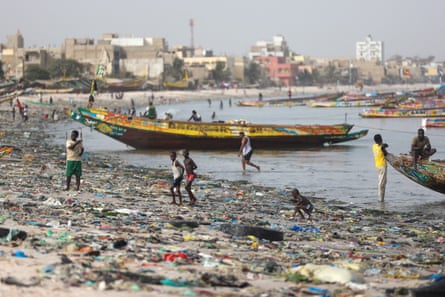
The report also calculated that 52.1m tonnes of plastic a year enter the ocean, contributing to the 24.4tn microplastic particles that impact more than 4,000 marine species.
Rafael González-Quirós, joint coordinator of the group of experts for the third World Ocean Assessment, said: “The imperative for a healthy and resilient ocean has never been more urgent. Global collaborations and research, and our increased understanding of the ocean, provide essential insights into the state of marine ecosystems, the profound changes they are undergoing, and the need for our care.”
The main drivers affecting the marine environment include human population growth and demographic changes, technological advances, changing governance structures, and social economic and geopolitical instability, the report found.
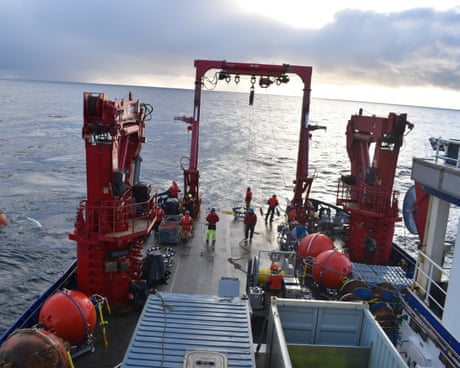
For instance, the global population increased from 7.7 billion in 2017 to 8.2 billion by late 2024. More than a third of people live within 100km of coasts and 11% live on land less than 10 metres above sea level.
Greenpeace said the findings of the report, published on World Oceans Day, should serve as an “urgent wake-up call” to governments to protect “our planet’s last untouched frontier” from deep-sea mining and industrial fishing.
Lukas Meus, Greenpeace’s global ocean campaigner, said: “We are calling on governments to create fully protected ocean sanctuaries that will close vast areas of the ocean off from extractive human activities. Governments have promised to protect 30% of the world’s ocean by 2030 – the minimum scientists say we need for the ocean to be able to recover.”
Here are some “ETs” recorded from around the U.S. the last couple of days, their consequences, and some extreme temperature outlooks, as well as any extreme precipitation reports:
Here is More Climate News from Monday:
(As usual, this will be a fluid post in which more information gets added during the day as it crosses my radar, crediting all who have put it on-line. Items will be archived on this site for posterity. In most instances click on the pictures of each tweet to see each article. The most noteworthy items will be listed first.)