The main purpose of this ongoing blog will be to track planetary extreme, or record temperatures related to climate change. Any reports I see of ETs will be listed below the main topic of the day. I’ll refer to extreme or record temperatures as ETs (not extraterrestrials).😜
Here is a new feature for this blog, which I will add daily. This is the latest inciteful Green News Report from my friends Desi Doyen and Brad Friedman at Progressive Voices. Hit ‘continue reading,’ listen, then hit return to see my daily topics:

Green News Report with Brad Friedman & Desi Doyen
Episode: 9/24/2026 — More info…
Dear Diary. Pleading, pleading and more pleading. That is what António Guterres has been doing for 20 years during his entire tenure as U.N. Chief on climate and other issues. For all intents and purposes, that position is the closest we have as President of Earth. I wish that this position had real teeth instead of just for guidance when it comes to climate.
I admire António Guterres not only because of his stance on climate but also because he has had the patience of Job. I’ve listened to his speeches from time to time, and his warnings have been getting more dire. Because the U.N. has no teeth most of the tine his warnings fall on deaf ears. People may remember his last speech if 2027 is as bad as forecast with approximately 450,000 people dying from excess heat alone as reported by yours truly yesterday.
Here are more details on that last speech before the U.N. General Assenbly from the Guardian:
‘It’s my duty to tell the truth’: UN chief on the climate crisis, capitalism and reasons to be hopeful
Before his final general assembly, António Guterres speaks about why he put climate at the centre of his UN tenure
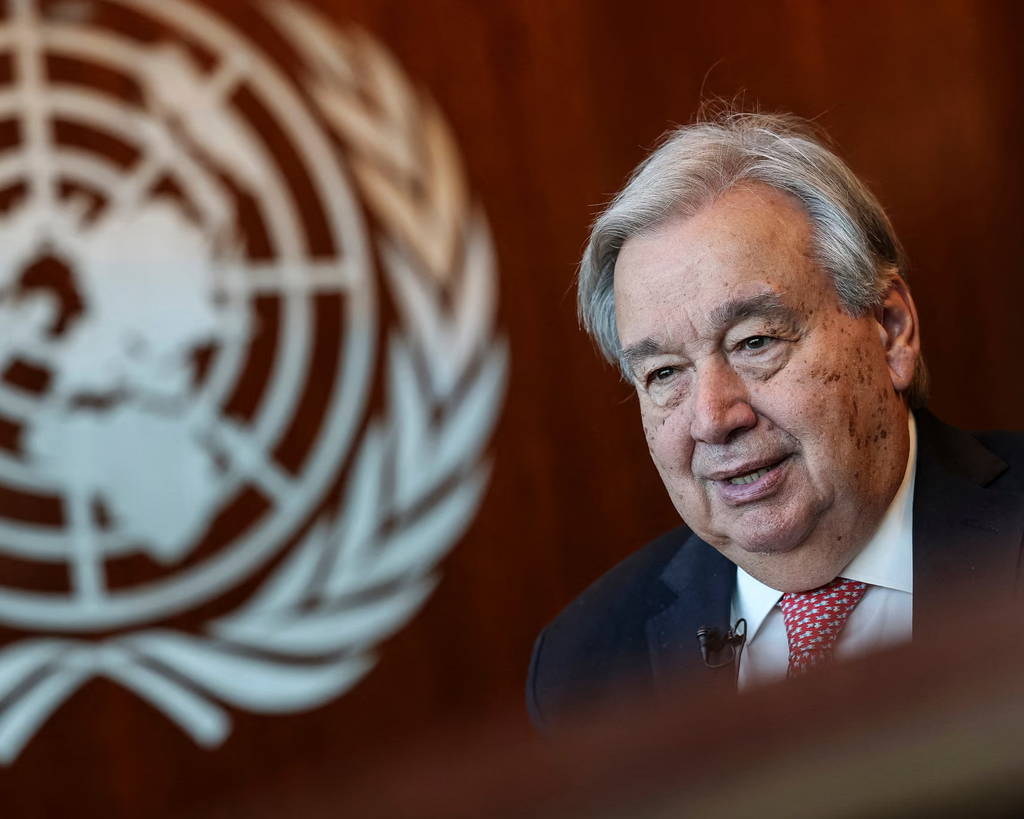
António Guterres has criticised ‘immoral’ fossil fuel companies for their ‘grotesque greed’. Photograph: Angela Weiss/AFP/Getty Images

Fiona Harvey Environment editor
Tue 22 Sep 2026
António Guterres, who will finish his second term as UN secretary general on 31 December, has spoken out more strongly on the climate crisis than any of his predecessors. He has criticised “immoral” fossil fuel companies for their “grotesque greed”, warned that we have “opened the gates of hell” and hailed the new “clean energy age”.
Why are you so forthright on the climate crisis?
Climate is an existential threat. We see political leadership around the world diverted by lots of short-term objectives. Political life lives by the hour, and climate is something whose dramatic consequences will only be seen in the long term. That is why I believe the UN has the obligation to, at every moment, put the climate in the centre of the concerns of the international community, because climate is the most relevant global existential threat.
Why have we failed to tackle global heating up to now?
There are vested interests that are interested in maintaining the present development model based on fossil fuels. You have a systematic campaign that is strongly financed by the huge profits of the sector that tries to divert attention [from] the impacts of fossil fuels.
But also, most people have not yet interiorised the level of risk that we are all facing. I hope public opinion will be more and more impressed by the devastating impacts of climate change, and disasters becoming more and more dramatic. Heatwaves have terrible impacts on health, so there will be a growing consciousness of the devastating impacts of climate change as things get inevitably worse.
Is climate breakdown a threat to national security?
As the crisis in the Gulf has demonstrated, to base an economy on fossil fuel imports is a severe risk for any country, and security is something that tends to have an enormous importance in decision-making.
Scientists tell us we’re coming very close to tipping points that can dramatically accelerate the impacts of climate change. The Gulf Stream [or Amoc, Atlantic Meridional Overturning Circulation] is slowing, as we know. And we could face a huge acceleration of rising sea levels.
It will become a world problem, and it’s a clear security problem – an extremely dramatic problem for the security of all countries in the world.
Still in many security establishments, energy security is still seen in terms of fossil fuels. But there is a new generation of institutions and thinktanks alert to the risks of climate change and [the crisis in] biodiversity.
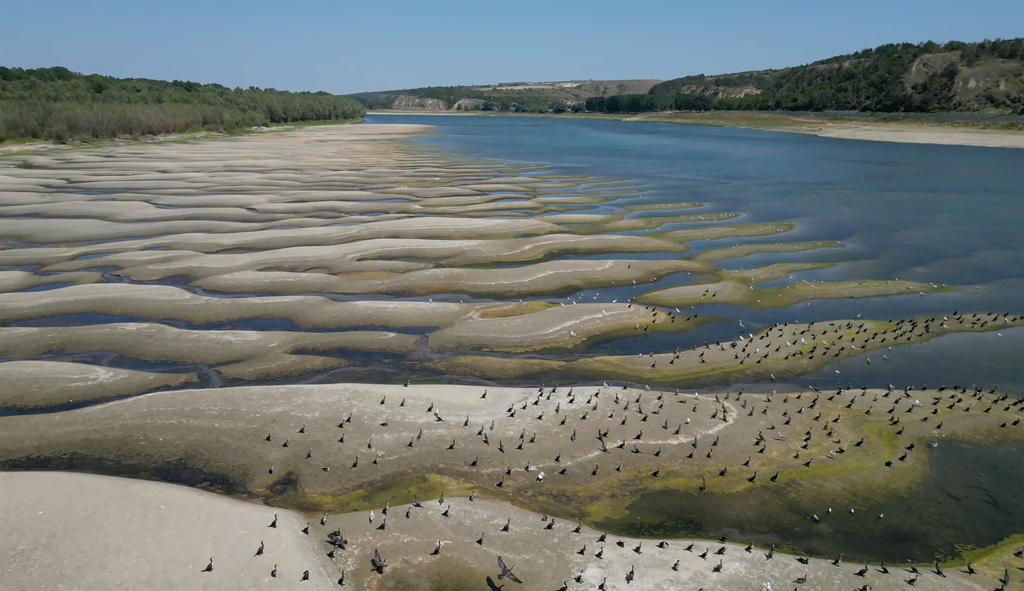
The dried-out riverbed of the Danube River in Romania during a heatwave in August. Photograph: Daniel Mihăilescu/AFP/Getty Images
What difference can the UN secretary general make?
The secretary general of the UN has not much power, and there is no money. But there is one thing that I have: a voice. It’s my duty to use that voice without any compromise, to tell the truth and to alert the international community to the dangers it faces. I have not the power to all of a sudden make everybody invest in renewables, but I have the duty to tell people that unless we accelerate the transition from fossil fuels to renewables, unless we drastically reduce emissions in the next decade, we will be facing dramatic problems that will impact on the whole of humankind.
Have you any regrets about your 10 years in office?
We should have done more in building powerful alliances outside the traditional political spectrum. We should be able to do more building those alliances [with grassroots organisations and subnational and local governments]. We have given too much importance to our dialogue with the top political decision-makers and not done enough in the mobilisation of society and establishing a stronger alliance with local authorities.
Our democratic systems need to be modernised, and communication with the people, especially with young generations, needs to adapt to the new forms of communication [on the internet and social media].
Some people argue that capitalism is the underlying problem and we cannot solve the climate crisis without fixing that. Do you agree?
A market economy can be a very good form of allocation and resources. If you call capitalism the market economy, the problem is not capitalism. But a market economy requires effective governance. And that governance must be made through regulations, and that governance must be within the monopoly of political power, democratically elected.
So we can have a market economy – and I still believe it’s the best way to allocate resources, as planned economies didn’t prove to be effective – but we need to have regulatory frameworks established by politically democratic institutions. Unfortunately, in many circumstances we have seen regulatory bodies being controlled by private interests. We need to make sure that doesn’t happen.
But many of the biggest emitting countries, and countries with the biggest fossil fuel reserves, are autocracies. What can be done with them?
I’m in favour of democracies everywhere, but even in non-democratic regimes [tackling the climate crisis] is important – and it’s important that [modern communications] technologies are not used to increase the authoritarian nature of those regimes.
Are there any reasons to be hopeful?
Clearly we are not doing enough. But they are developing renewable energy at enormous speeds. The crisis of the Gulf will accelerate that trend, because many of the emerging economies that are the biggest emitters are net importers of fossil fuels and they have a vested interest in developing renewables.
Here are some “ETs” recorded from around the U.S. the last couple of days, their consequences, and some extreme temperature outlooks, as well as any extreme precipitation reports:
Here is More Climate News from Thursday:
(As usual, this will be a fluid post in which more information gets added during the day as it crosses my radar, crediting all who have put it on-line. Items will be archived on this site for posterity. In most instances click on the pictures of each tweet to see each article. The most noteworthy items will be listed first.)